In 1986 two brothers, themselves fishermen, discovered the remains of an ancient wooden boat buried in the mud on the shore of the Sea of Galilee near Migdal. The 7-meter-long boat has been dated to 40 BCE (plus or minus 80 years) based on radiocarbon dating and 50 BCE to 50 CE based on pottery (an oil lamp and cooking pot) and nails found in the boat, as well as hull construction techniques. The boat is now on exhibit at the Yigal Allon Center at Kibbutz Ginnosar.
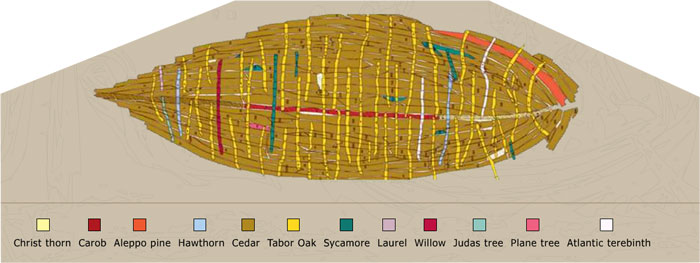
The ship’s deep, round stern and bow are of fine design, and the planks were affixed to the shell with mortise and tenon joints, locked into place with tapered hardwood pegs. The superior quality of the construction shows that the boat builder was an excellent craftsmen. The boat was constructed of Lebanon cedar with Tabor oak used for the framing. The evidence of repeated repairs shows the boat was used for several decades, perhaps nearly a century. Numerous types of wood were used, a profusion of native trees – Christ Thorn, Carob, Aleppo pine, Hawthorn, Sycamore, Laurel, Willow, Judas tree, Plane tree and Atlantic Terebinth.
Lebanon cedar (Cedrus libani) is a coniferous tree that grows to 40 m tall. The trees were used by the Phoenicians for building commercial and military ships, as well as houses, palaces, and temples. Foreign rulers from both near and far would order the wood for religious and civil building projects, the most famous of which are King Solomon’s Temple in Jerusalem and David’s and Solomon’s palaces. Because of its significance the word cedar is mentioned 75 times in the Bible.
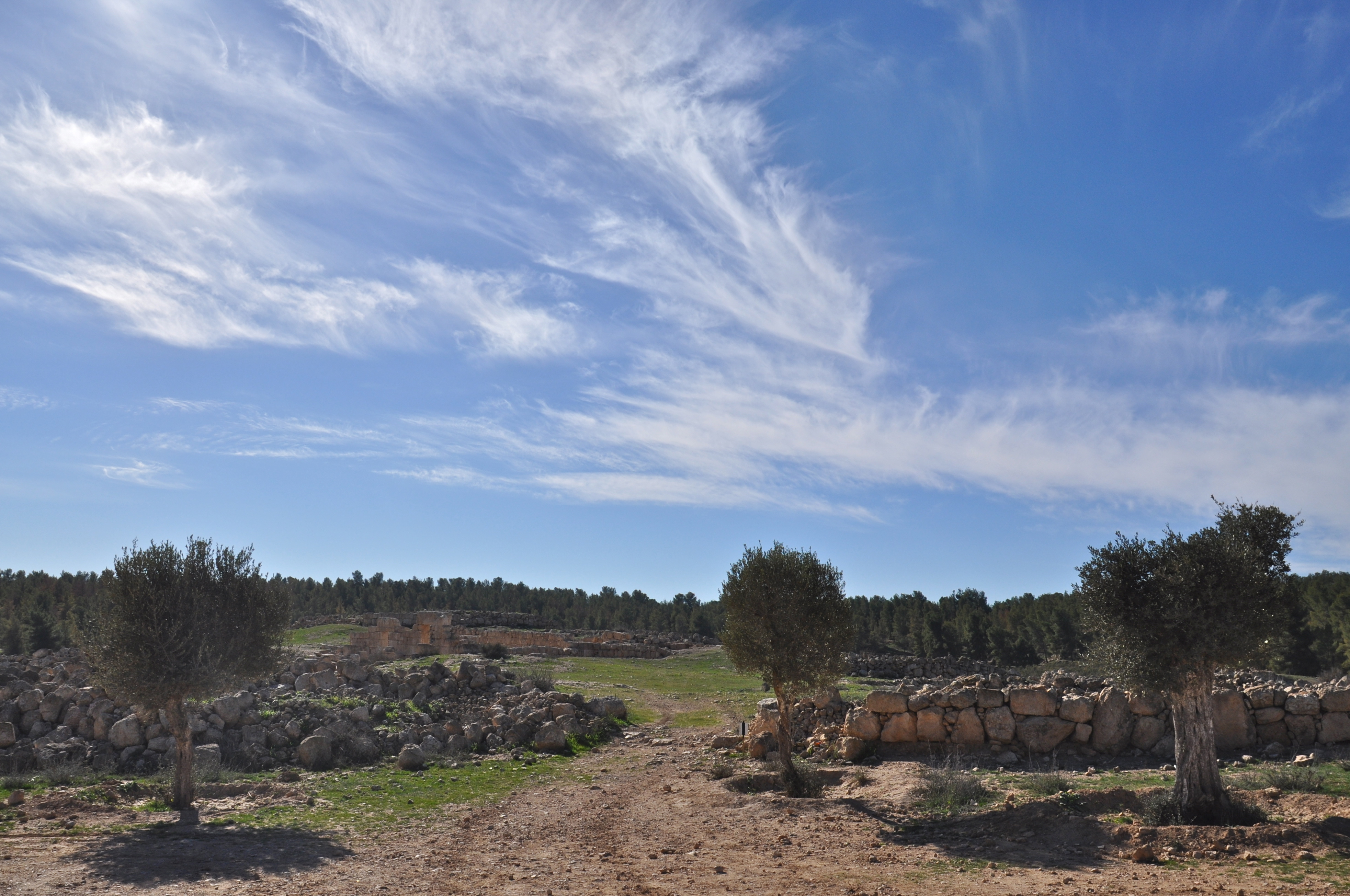
Tabor oak (Quercus ithaburensis) is a deciduous tree that may reach a height of more than 10 meters. A famous group of large, old oaks can be seen at Hurshat Tal. Eurasian Jays (Garrulus glandarius) like to eat the acorns and bury some in the soil as a cache, which turns out to be the proper depth from which they can germinate and grow into a new oak.
Over the years when repairs had to be made a variety of woods were used:
- Christ Thorn (Paliurus spina-christi) is a deciduous shrub or small tree growing to 3–4 m tall. The name reflects the view that the spiny branches were used to make Jesus’ crown of thorns.
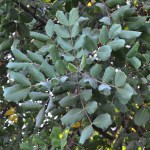 Carob (Ceratonia siliqua) is a species of flowering evergreen tree growing to 10 m tall in the pea family, Fabaceae. It is widely cultivated for its edible legumes, the seed pod is crushed and used as ersatz chocolate. Most carob trees are dioecious, meaning separate male (male flowers, produce a characteristic odour, reminiscent of semen) and female (flowers that are pollinated by wind and/or insects become fruit) trees.
- Aleppo pine (Pinus halepensis) is a small to medium-size tree, 15–25 m tall, its leaves/needles appear in pairs (occasionally threes) and its cones are well, narrow conic. The Jewish National Fund has planted the Aleppo Pine extensively in the Yatir forest in the northern Negev, the largest (30 square kilometers) planted forest in Israel. Native forests can be found in the Carmel and Galilee regions.
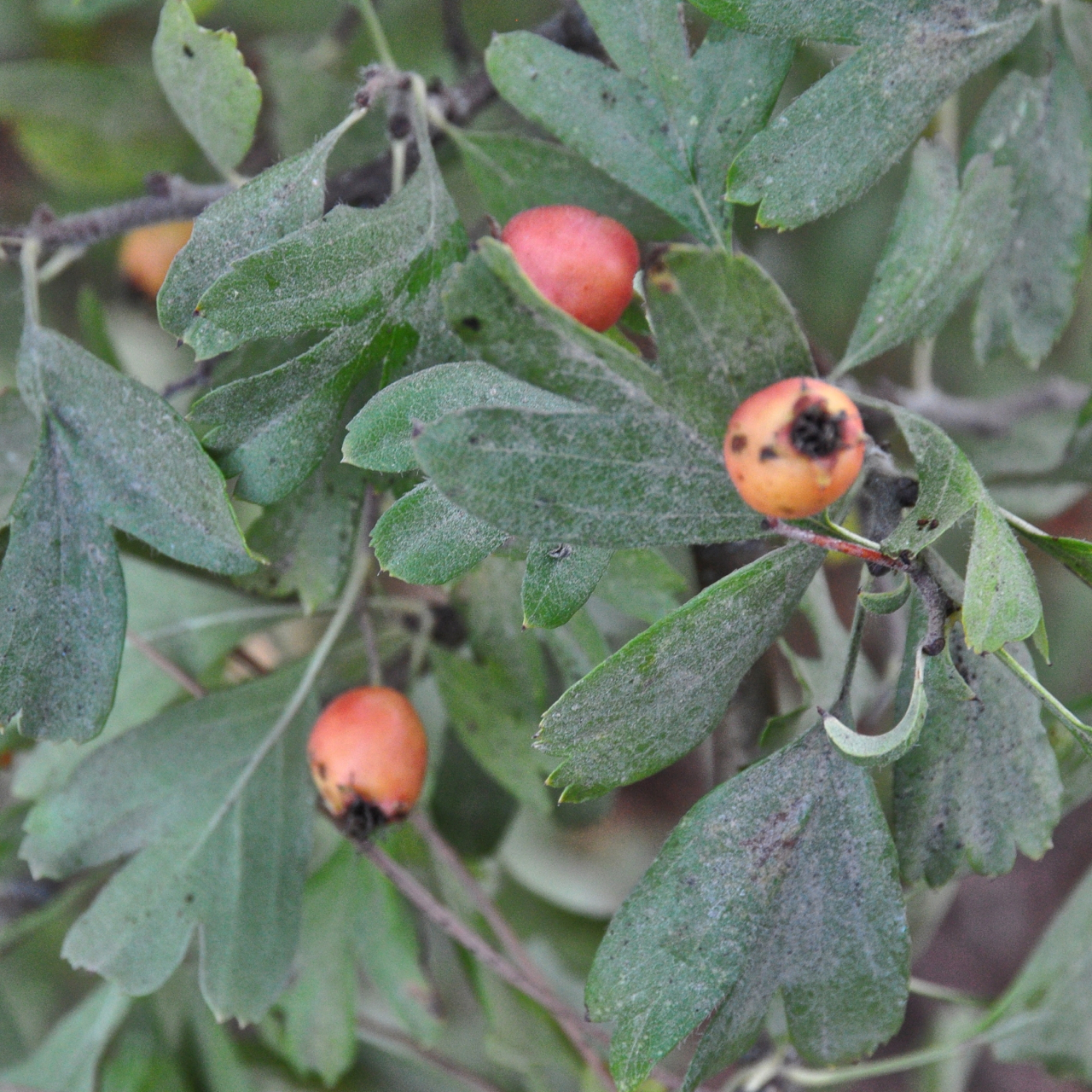
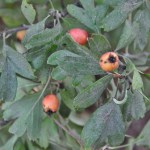 Hawthorn (Crataegus monogyna) is a small tree that grows in oak forests. It has small, edible fruit like rose hips. This tree may be the one described in Song of Songs, “Like an apple tree among the trees of the forest, so is my lover among the young men”.
- Laurel (Laurus nobilis) is an aromatic evergreen tree or shrub with green, glossy leaves, native to the Mediterranean region. Its leaves are known as bay leaves used in cooking. The laurel is dioecious.
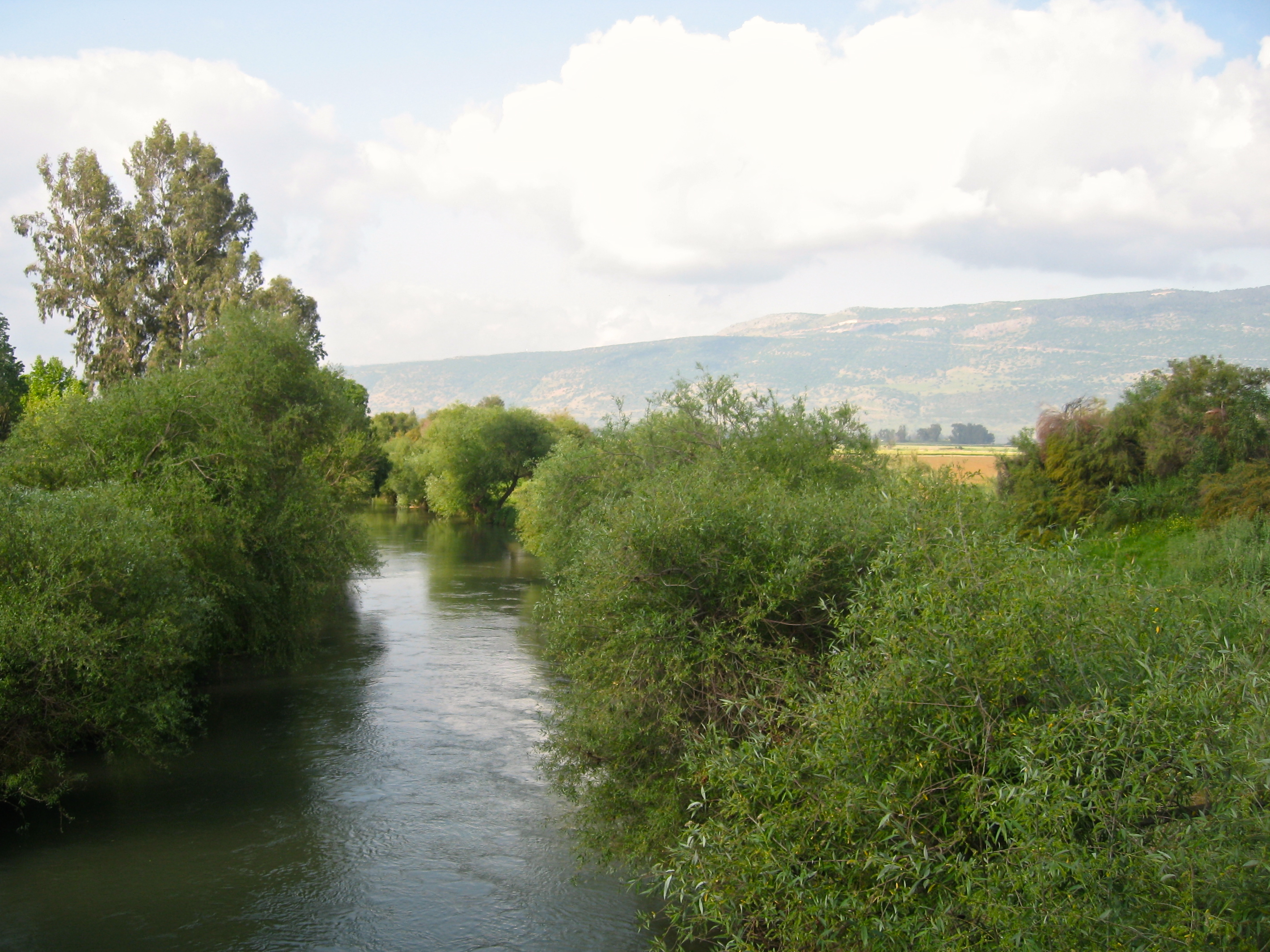
- Willow (Salix acomophylla) comes in 400 varieties (species) of which only a few grow in Israel along river banks. The willow is mentioned as one of the Four Species used on the festival of Tabernacles (Sukkot) along with the palm frond, myrtle and citron. Willows are dioecious.
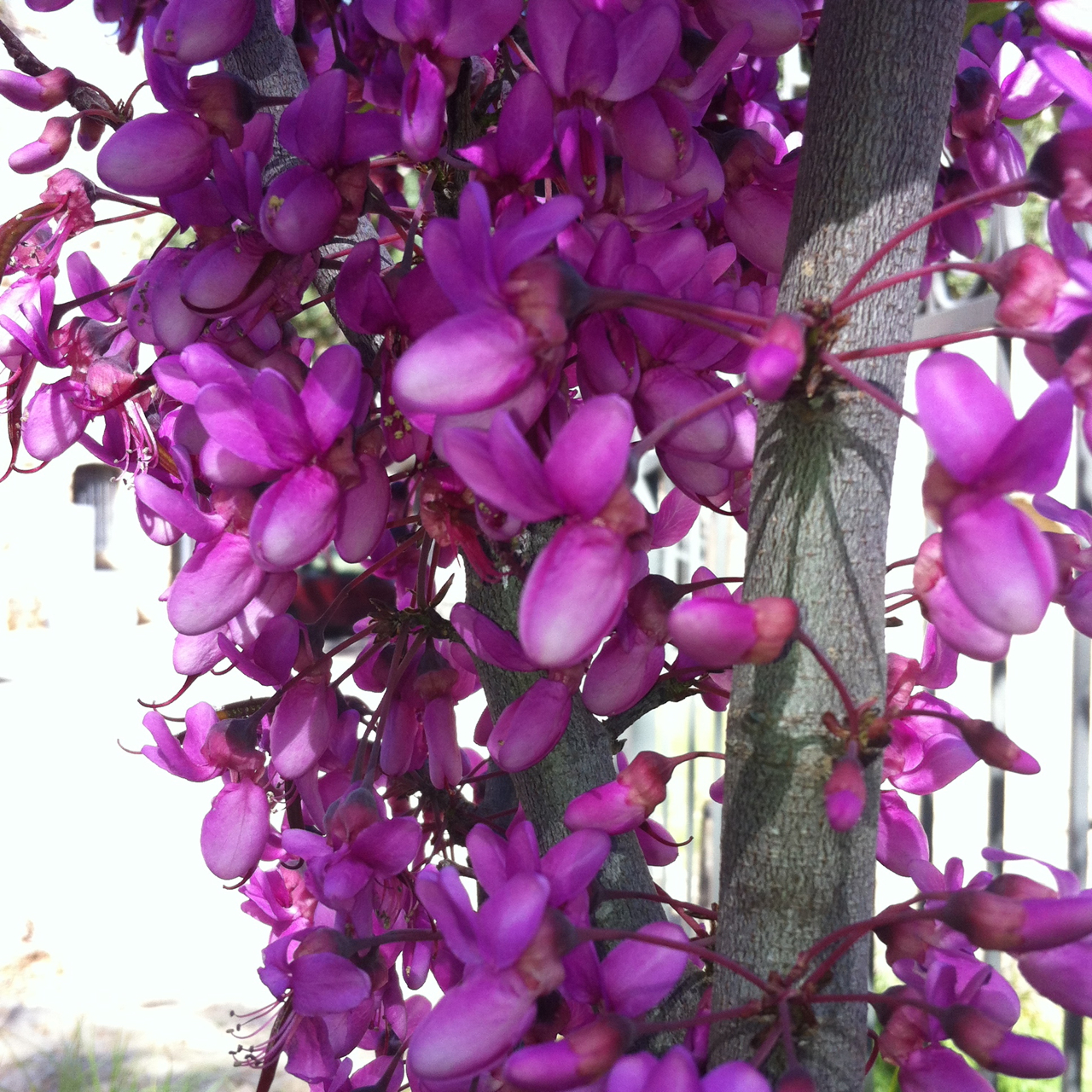
- Judas tree (Cercis siliquastrum)
 is a small deciduous tree with small pink flowers in the spring. The tree gets its name from the legend that Judas Iscariot hanged himself from a tree of this species.
- Atlantic Terebinth (Pistacia atlantica, in Hebrew elah) Because of its large size and great age, pistacia trees were planted beside tombs and became well-known landmarks.
- Sycamore is a name applied in various times and places to three very different trees.
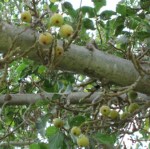 In our case, it is probably Ficus sycomorus, mentioned in the Bible; a species of fig, also called the sycamore fig or fig-mulberry, native to the Middle East and eastern Africa.
- Plane tree (Platanus orientalis)is a tall (up to height of 25 meters), deciduous, rapidly growing tree with a thick trunk, with white and green patches. The leaves are large, deeply split into 5 emarginated lobes (common to many species such as the fig, castor oil plant and maples that are not related to each other). In the past people considered it a sacred tree and it was planted in holy places near running water.
When you’re visiting Kibbutz Ginnosar you can check out these trees as the kibbutz has planted each by the path.
For an interesting read about how the boat was extricated from the mud and preserved see http://www.jesusboat.com/jesusboat-archive/the-galilee-boat-from-jesus-time
For my friend Bob Gottlieb who has built and repaired boats in Maine.








 Israel Tours