Category Archives: Jerusalem

Walking underground to Robinson’s Arch

The 12th annual City of David Archaeological conference marked the official opening to the public of Jerusalem’s central drainage channel in the Tyropean valley from the Second Temple period. Thanks to the excavations by Reich and Shukron it is now possible to begin on the Herodian street beside the Siloam Pool, walk underground up the hill on the western stairs and then take a left to the drainage channel and continue, exiting on the Herodian street by the western wall below Robinson’s Arch, a distance of 650m. This is an incredible experience or in Hebrew, a havaya. You are walking on 2000 year old paving stones and in the drainage channel where Josephus writes that Jerusalem residents hid from the Romans until either they succeeded to flee the city or were discovered; you can see paving stones smashed so Roman soldiers could enter the channel.

It was Bliss and Dickie who in 1898 first discovered and documented the stepped street with a stone pavement and an underlying large drainage channel when they excavated a line of 9 shafts sunk across the width of the Tyropean 425m to the south of where Warren had excavated. In this southern section the channel is built of ashlars (large square cut stones) on bedrock and is covered with heavy stone slabs that are actually the paving stones of the street above.
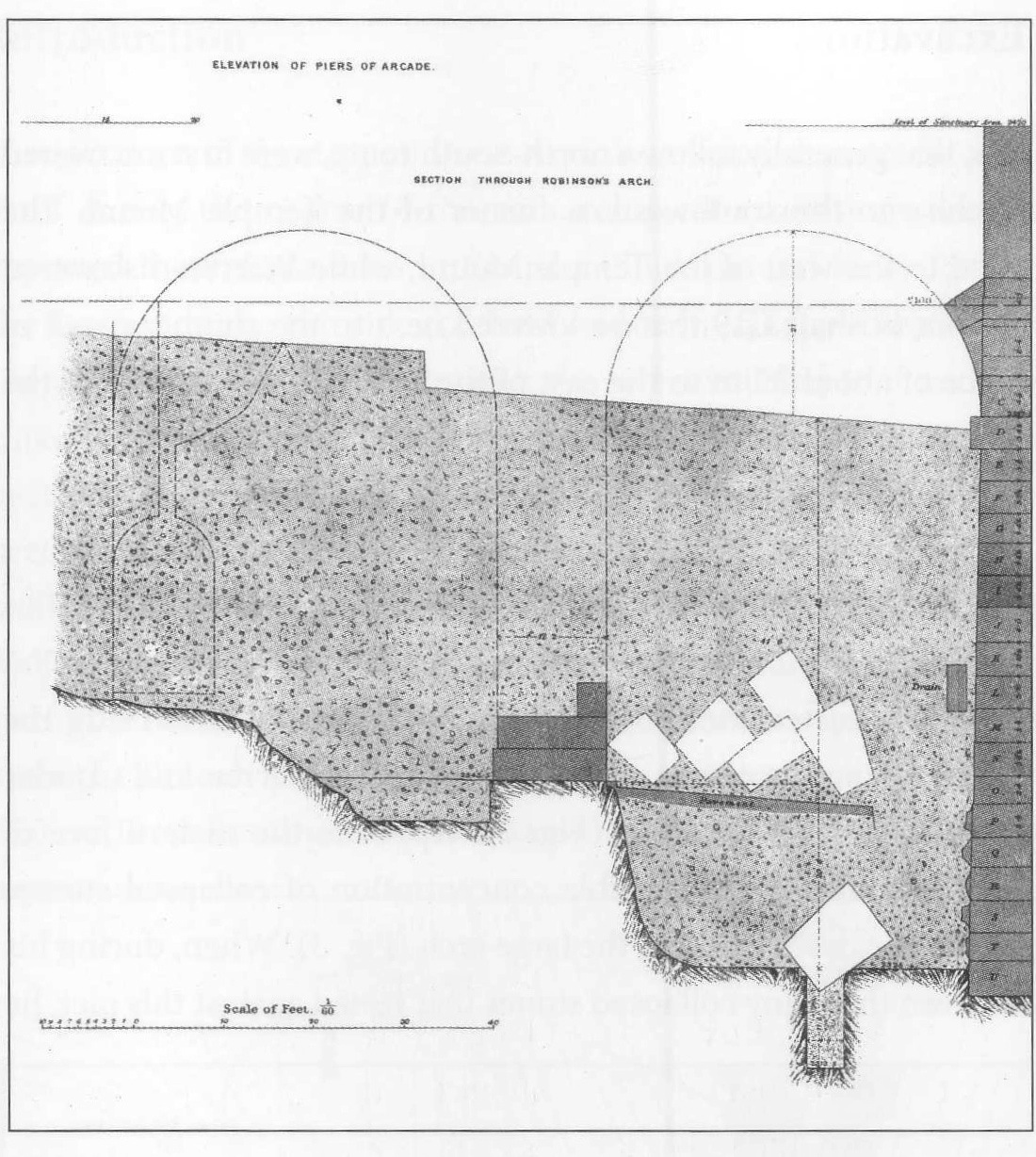
Earlier Warren had sunk 7 shafts across the Tyropean at Robinson’s Arch. In a report for the Palestinian Exploration Fund (PEF) in 1867 he described two drainage channels, running generally north south, the western channel was unearthed about 4m from  the western wall and the eastern channel about 37m east of the southwestern corner. The western channel is quarried into the bedrock, about 4m deep and 1.2 m wide and roofed with an elongated vault. In two places, a large voussoir (a wedge-shaped stone used to construct an arch) fell during the building of Robinson’s arch and wedged itself  in the top of the channel; the vaulted roof was built around these stones. According to Mazaar and Ben-Dov who excavated this area in the 1970s, these stones fell before the street pavement was installed. They concluded from this that the channel was built earlier, in the time of Herod, while the street was paved afterward. Excavations by Reich and Billig in 1990s discovered 15 coins in the earth fill between the street and the vault, the latest of which was from the time of Pontius Pilate (23-26CE), implying a late dating of the middle of the first century for the street paving (time of Agrippa II).

In 1869, William “Crimea” Simpson (widely known for his firsthand coverage of the British campaign in the Crimean War) was sent by his employer the Illustrated London News to sketch the opening ceremony and scenes of the Suez Canal. On his way, he took the opportunity to visit Jerusalem on behalf of the PEF and made sketches of the excavations which Warren had undertaken of some ancient water tunnels. To provide sufficient light for him to sketch, they had to burn magnesium wire (Edison only invented the incadescent light bulb in 1879). This sketch was made into a watercolor painting – Henry Birtles, Warren’s assistant, leaning against the wall of the drainage channel with the large voussoir in the foreground. Interesting that we have illustrations and paintings from Warren but no photographs although the process was known from 1839. The daguerreotype, with its silver surface and minute detail, was very popular in both Europe and the US. At virtually the same time, Talbot published working methods for his photogenic drawing and the negative-positive calotype process in 1840. These provided the basis for photography until the digital age. Today you can stand where Birtles stood and take your photograph under the same stone still lodged in the channel.

Jerusalem Tombs

With a history that goes back 4000 years, you can find a lot of tombs in and around Jerusalem. I’ve already blogged about Nicanor’s tomb, tombs at Ketef Hinnom, Caiaphas tomb, Mary’s tomb – you can see all the articles by clicking on Tombs in the right hand column under Categories. Todd Bolen posted a link to a Jerusalem Post article about some significant Jerusalem tombs, King David’s tomb, a Mamluk tomb, Herod’s so-called family tomb (Herod himself chose to be buried at Herodium – one of my favorite sites to guide) and Jason’s tomb and suggested that a couple of photos would enhance the article. I’m happy to oblige and I even mapped out the sites on Google Maps to make them easier to find.


“Top Ten” Jerusalem Sites

The first 3 must see sites in Jerusalem are associated with the 3 monotheistic religions that make up Jerusalem’s religious fabric:

1) the Western wall (Judaism) built by Herod 2000 years ago during his renovation of the Second Temple,

2) the Church of the Holy Sepulcher (Christianity) built originally by Emperor Constantine and extensively rebuilt by the Crusaders in 1149 and

3) the Haram el Sharif, with the Dome of the Rock and Al Aqsa mosque (Islam) built originally in the 8th century by the Umayyad caliph Abd al-Malik.

Here is my personal list of 7 other sites not to be missed. Add a comment to suggest sites you think should be in the “Top Ten”.

4) For a unique view of Jerusalem, take the Ramparts Walk starting at Jaffa Gate where you actually walk on the stone walls built in 1540 by the Ottoman Turkish sultan, Suleiman the Magnificent for a birds eye view of the city. Check out the 8 gates in the city walls, including the remains of the Roman gate below today’s Damascus gate.

5) Visit the Church of Santa Anna in the White Father’s compound, the ruins of a Byzantine church and a Crusader chapel resting on a dike between two pools (there’s no water in them today). This is where Jesus performed one of the two miracles he did in Jerusalem, curing the cripple of 38 years (John 5). There is also a complete Crusader church with incredible acoustics (try it out by singing Amazing Grace or other liturgical melody).

6) Visit the archaeological park at the Davidson Center and see the massive stones that were hurled down onto the Herodian street by the Romans and the steps to the Temple Mount where Jesus would have walked, the Umayyad palaces from the Early Arab period and Byzantine and Crusader ruins.

7) Reserve a Western Wall Tunnel tour and see a model of King Herod’s Second Temple (there is also a model up on the roof of the Aish HaTorah building and a model of Jerusalem in 66CE including the Temple on the grounds of the Israel Museum) and walk 488 meters under the city along the Western Wall on the Herodian street to the spot closest to the Holy of Holies, the holiest site to Judaism.

8) Tour the ancient City of David to understand the importance of water in the history of Jerusalem. Bring “water” shoes and a flashlight and walk 45 minutes through Hezekiah’s Tunnel a manmade canyon cut in the limestone with water up to your knees – quite an experience. The tunnel brought the water of the Gihon Spring to the Siloam Pool, inside the walls of the city. This is where Jesus performed the second miracle in Jerusalem, curing the blind man (John 9).

9) After extensive renovations the new Israel Museum has been open a year and one million people have visited – the Archaeology wing has been completely redone, the Ethnography section has been expanded and the Art gallery includes a new section on Israeli art. The museum includes the Shrine of the Book, where the Dead Sea Scrolls and other artifacts from Qumran are on display. Beside it is the 1:50 model of Jerusalem in 66 CE just before the Jewish Revolt against Rome which led to the destruction of the Second Temple and Jerusalem by TItus. Walk around and enjoy the Billy Rose sculpture garden designed by the Japanese-American sculptor Isamu Noguchi.

10) Take a guided tour of the Mahane Yehuda market or participate in a scavenger hunt. More than an outdoor vegetable market, it is a great place to walk around to get a feel for the characters and local cuisines of Jerusalem. You can request a detailed map of the market at https://israeltours.wordpress.com/2008/05/31/map-mahane-yehuda-market/

Tisha b’Av

Yesterday evening marked Tisha b’Av, the 9th day of the Hebrew month of Av, which commemorates the destruction of the Temple built by King Solomon and destroyed by the Babylonians in 586 BCE. The Babylonians razed Jerusalem and exiled the Jews from their land. But Babylon fell to the Persians shortly thereafter and Cyrus, the Persian king gave permission to the Jews to return and rebuild the Temple. So a remnant of the Jewish people came back to Jerusalem from the Babylonian exile 50 years later and built the Second Temple, a much more modest structure. A young person living in Jerusalem could have seen the splendor of the First Temple, lived through the Babylonian exile and seen the Second Temple.

Almost 500 years later, King Herod built four stone supporting walls around the Temple Mount and filled the area with earth and a series of arches to expand the quadrilateral platform (about 250 meters on each side); the longest supporting wall is 488 meters long. Herod rebuilt the temple, a magnificent structure, decorated with gold and marble that stood 50 meters high. Even the Rabbis who were not great fans of Herod record that “whoever has not seen Herod’s Temple has not seen a beautiful building in his life” (Baba Batra 4a). Herod built a main street with a drainage channel underneath that runs along the length of the western wall and at the southern end a staircase that begins parallel to the street and crosses over the street (like a highway interchange) that led to the Royal basilica; today the remains of the vault that supported the staircase is known as Robinson’s Arch. The same street continues south all the way to the Siloam Pool. The Romans destroyed the Temple and Jerusalem on the 9th of Av in 70CE.

The supporting walls of the Temple Mount are standing to this day and you can walk on the 2000 year old Herodian street and see the large ashlar stones with their signature frames in a pile from when the Romans pushed them off the top of the wall. I sat on the paving stones of the street yesterday evening to read Eicha (the book of Lamentations) and remember the destruction and our return.

Yesterday the Israel Antiquities Authority announced two new finds in a press release.

During the course of work the Israel Antiquities Authority carried out in Jerusalem’s ancient drainage channel, which begins in the Siloam Pool and runs from the City of David to the archaeological garden (near the Western Wall), impressive finds were recently discovered that breathe new life into the story of the destruction of the Second Temple. …

A 2,000 year old iron sword, still in its leather scabbard, was discovered in work the Israel Antiquities Authority is doing in the channel, which served as a hiding refuge for the residents of Jerusalem from the Romans at the time of the Second Temple’s destruction. In addition, parts of the belt that carried the sword were found.

Roman sword made of iron used by soldier stationed in Jerusalem in 66CE. Photo by Clara Amit, Israel Antiquities Authority.

According to the excavation directors Eli Shukron of the Israel Antiquities Authority and Professor Ronny Reich of the University of Haifa, “It seems that the sword belonged to an infantryman of the Roman garrison stationed in Israel at the outbreak of the Great Revolt against the Romans in 66 CE. The sword’s fine state of preservation is surprising: not only its length (c. 60 cm), but also the preservation of the leather scabbard (a material that generally disintegrates quickly over time) and some of its decoration”.

A stone object adorned with a rare engraving of a menorah was found in the soil beneath the street, on the side of the drainage channel.

Stone inscribed with five-branched menorah. Photo by Vladirim Naykhin.

According to Shukron and Professor Reich, “Interestingly, even though we are dealing with a depiction of the seven-branched candelabrum, only five branches appear here. The portrayal of the menorah’s base is extremely important because it clarifies what the base of the original menorah looked like, which was apparently tripod shaped”. The fact that the stone object was found at the closest proximity to the Temple Mount to date is also important. The researchers suppose a passerby who saw the menorah with his own eyes and was amazed by its beauty incised his impressions on a stone and afterwards tossed his scrawling to the side of the road, without imagining that his creation would be found 2,000 years later.

Gold Jewelry

A gold bell, 1 cm in diameter, with curved markings was discovered during wet-sifting of material from the drainage channel below the Herodian street near Robinson’s Arch. This is indeed a rare find. According to the press release “The bell looked as if it was sewn on the garment worn by a man of high authority in Jerusalem at the end of the Second Temple period.” Not a regular item of jewelry. The only reference to golden bells in the Bible are bells on the vestments of the high priest (Exodus 28:33-34; 39:25-26).

And beneath upon the hem of it you shall make pomegranates of tekhelet and argaman (purple) and of scarlet, round about its hem and bells of gold between them round about.

Now you can hear the gold bell “tinkle” in this short video.

Jim Davila of the PaleoJudaica blog suggests that the women of Jerusalem wore bangles on their ankles which “tinkled” and had lots of jewelry (based on Isaiah 3:16-23). It seems plausible that they might well have worn bells as jewelry and that some of those bells might have been made of gold.

I find it fascinating that people were able to make a bell out of gold 2000 years ago. So I asked my good friend Michael Parkin, a sculptor and jeweler, if he could explain how it might have been constructed. This is his response:

It appears to have a seam on the right hand side so this is my best guess or at least how I would do it using first century methods:  First the bell’s maker formed 2 hemispheres using a rounded bit of (cow?) horn or antler and a wooden mallet to drive the metal into a depression in a piece of wood.  Each hemisphere would then be filled with either pitch (conifer sap mixed with dried powdered clay or perhaps beeswax (to hold its shape).  The surface decoration was probably done with a bronze tool shaped like a very dull cold chisel and driven using a mallet similar to but smaller than the one used to hammer on the horn tool.  The completed parts and a bit of gold wire (drawn or more likely hammered) could then be welded together in a tiny charcoal forge with a blow pipe to raise the temperature locally at the seam.

Photo courtesy of IAA

This reminds me of another rare find discovered in the excavations in the Givati parking lot across from Ir David, south of the Old City Walls. One gold earring was found, made up of a large pearl inlaid at the top center and surrounded by a coiled gold hoop. Two pendants hang below the focal pearl, each one with an emerald in a gold frame and a strung pearl. The earring was discovered in the ruins of a building that dates to the Byzantine period (4th-5th Centuries AD), but archaeologists at the site believe it is much older and that it was created during the Roman period, about 2,000 years ago.

A Morning on Mount Scopus

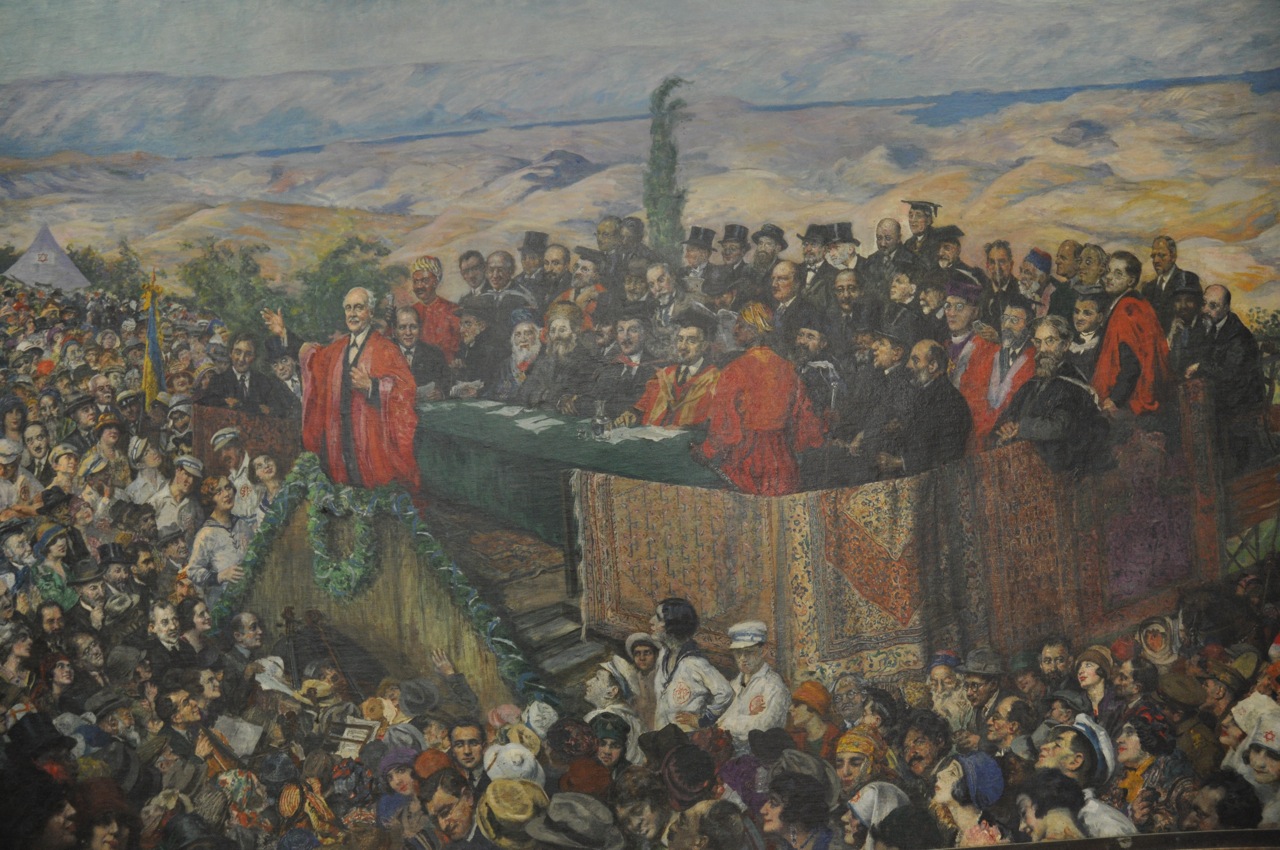
Construction of the campus of the Hebrew University began in 1918 on land purchased from the Gray Hill estate. The dedication ceremony was held in 1925 in the presence of many dignitaries, including Lord Balfour, Viscount Allenby, Sir Herbert Samuel, Chief Rabbi Abraham Isaac Hacohen Kook, the poet Haim Nahman Bialik, Ahad Ha’am, Dr. Chaim Weizmann and many others.

A design for the university campus by Sir Patrick Geddes positioned the university buildings on the slopes of Mount Scopus, below a domed, hexagonal Great Hall recalling the Star of David, as a counterpoint to the octagonal Dome of the Rock in the Old City. This plan was never implemented, but Geddes designed the university library, today the Faculty of Law building. The master plan for the campus was taken over by German Jewish architect Erich Mendelsohn in 1935. Mendelsohn greatly influenced the local Jerusalem International Style (Bauhaus).

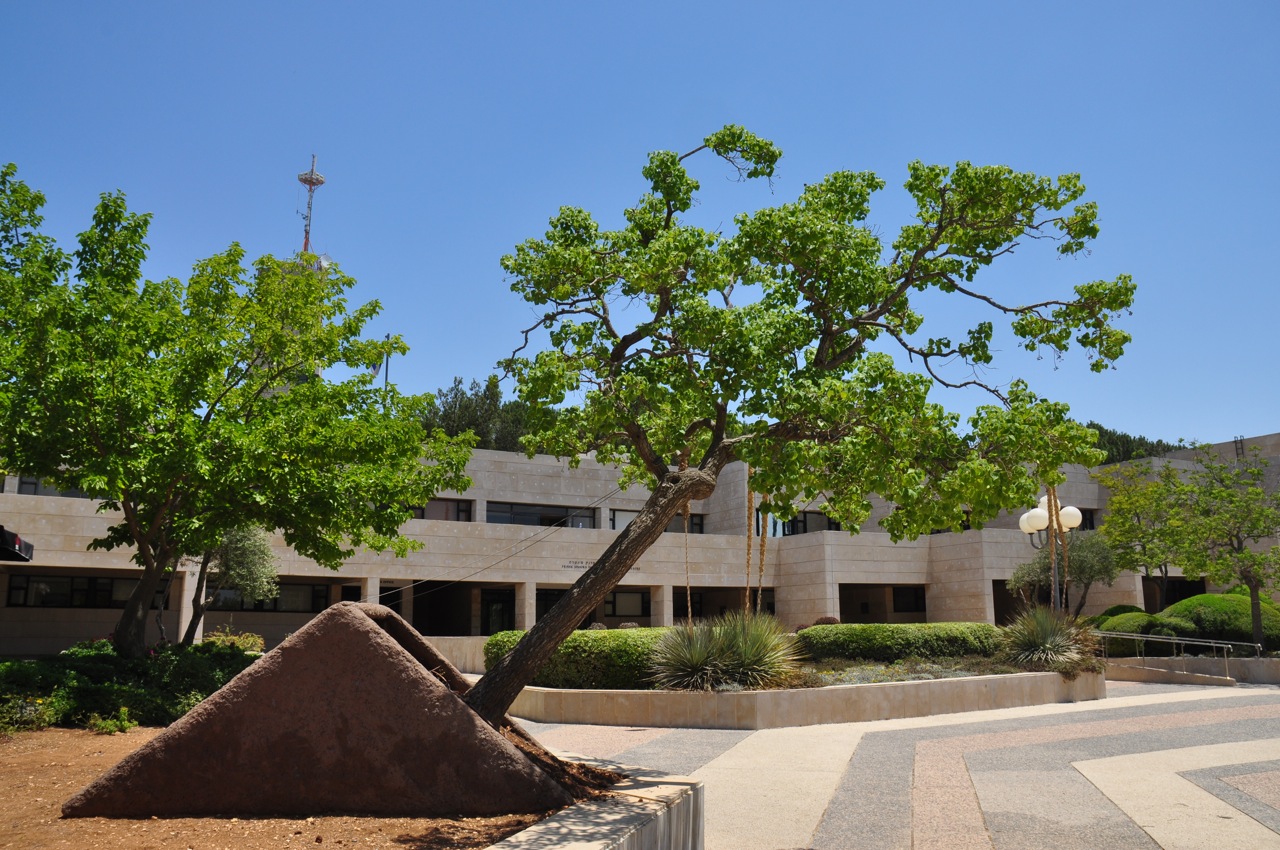
Notice the living sculpture outside of the Sinatra building that commemorates the nine students killed by a bomb left in the university cafeteria in July 2002, a tree growing out of the ground at an angle, by Israeli sculptor, Ran Morin. The Tilted Tree signifies humankind’s ability to withstand even the most disruptive shocks and to continue to grow upwards.

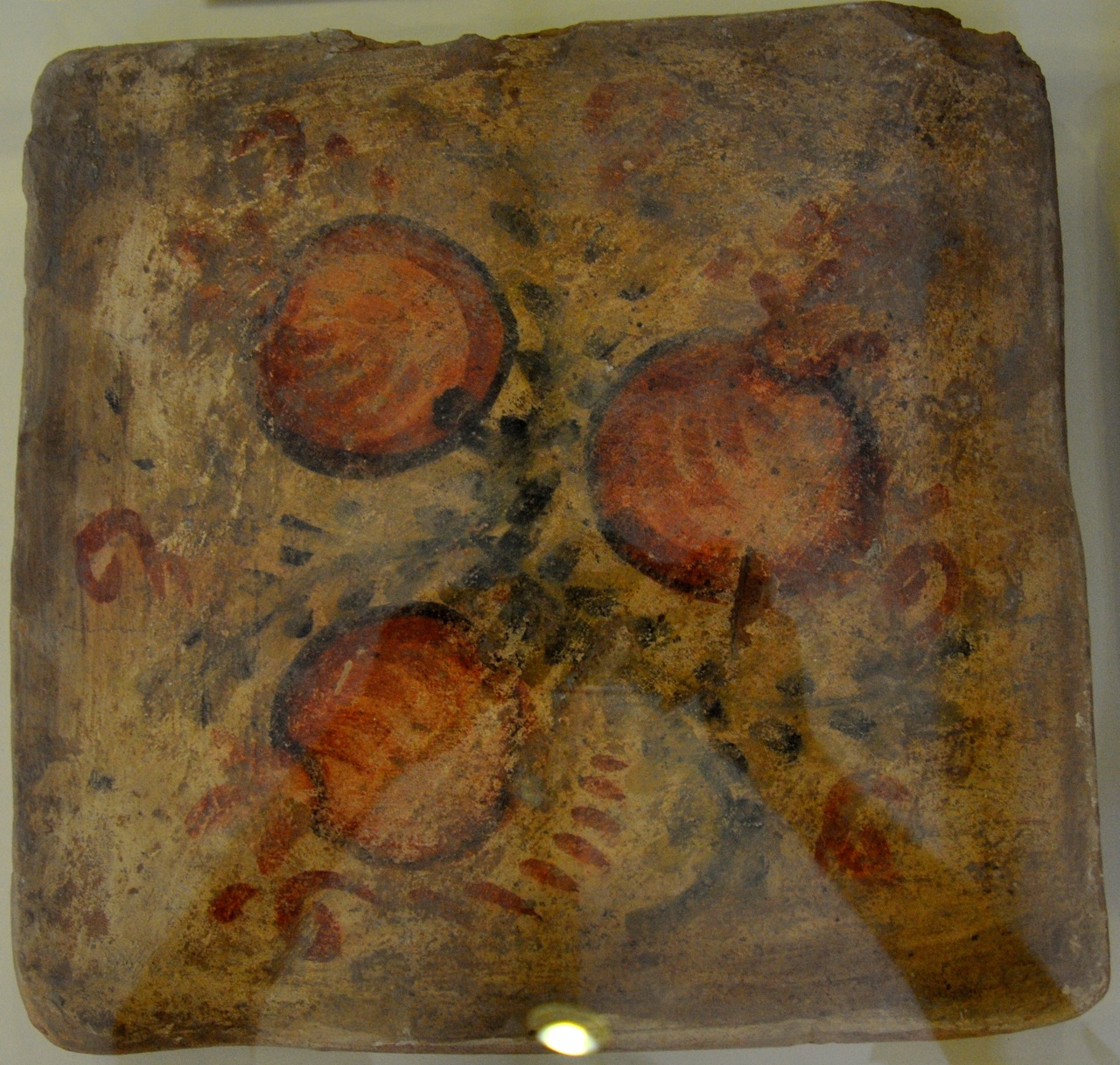
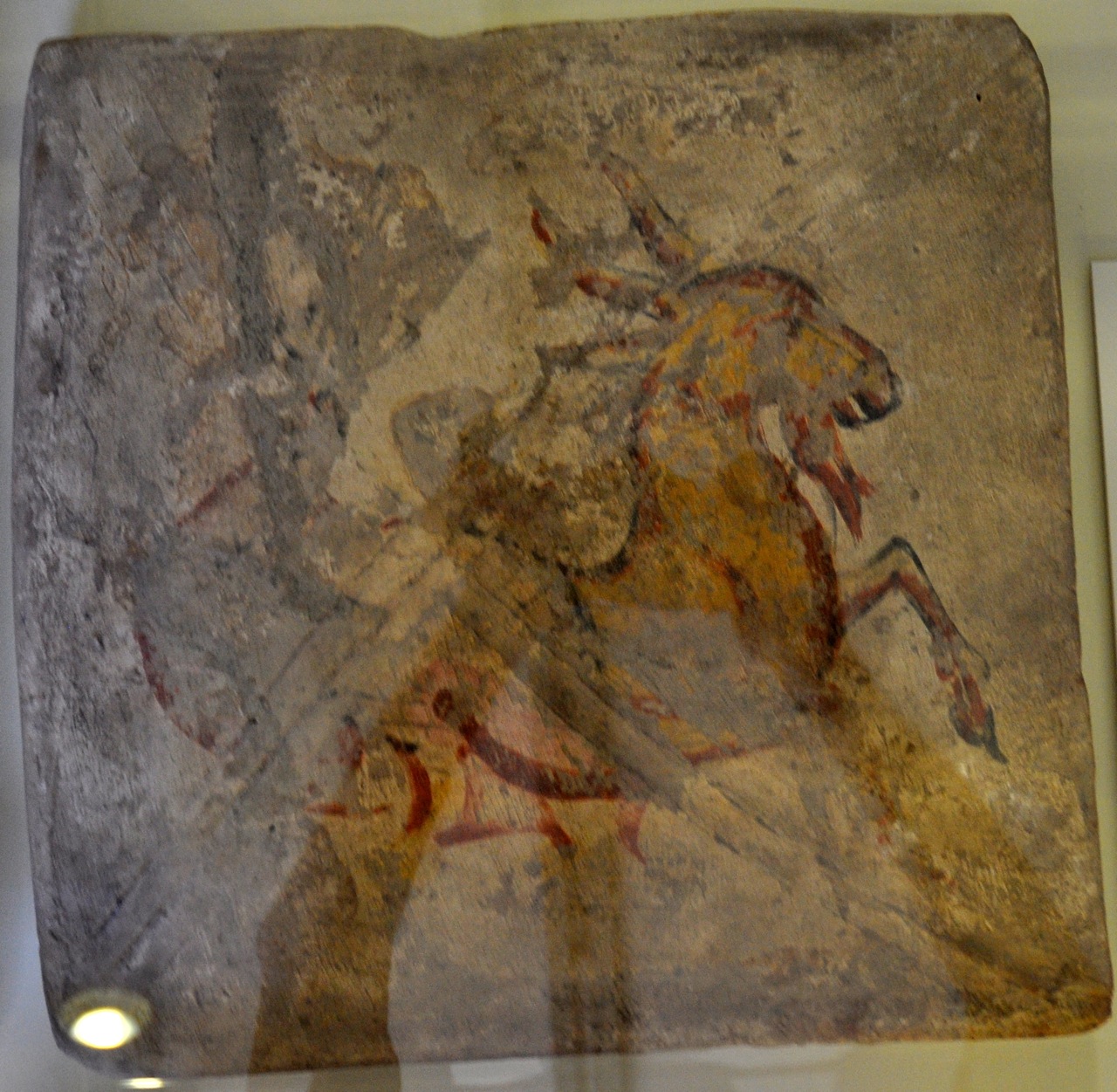
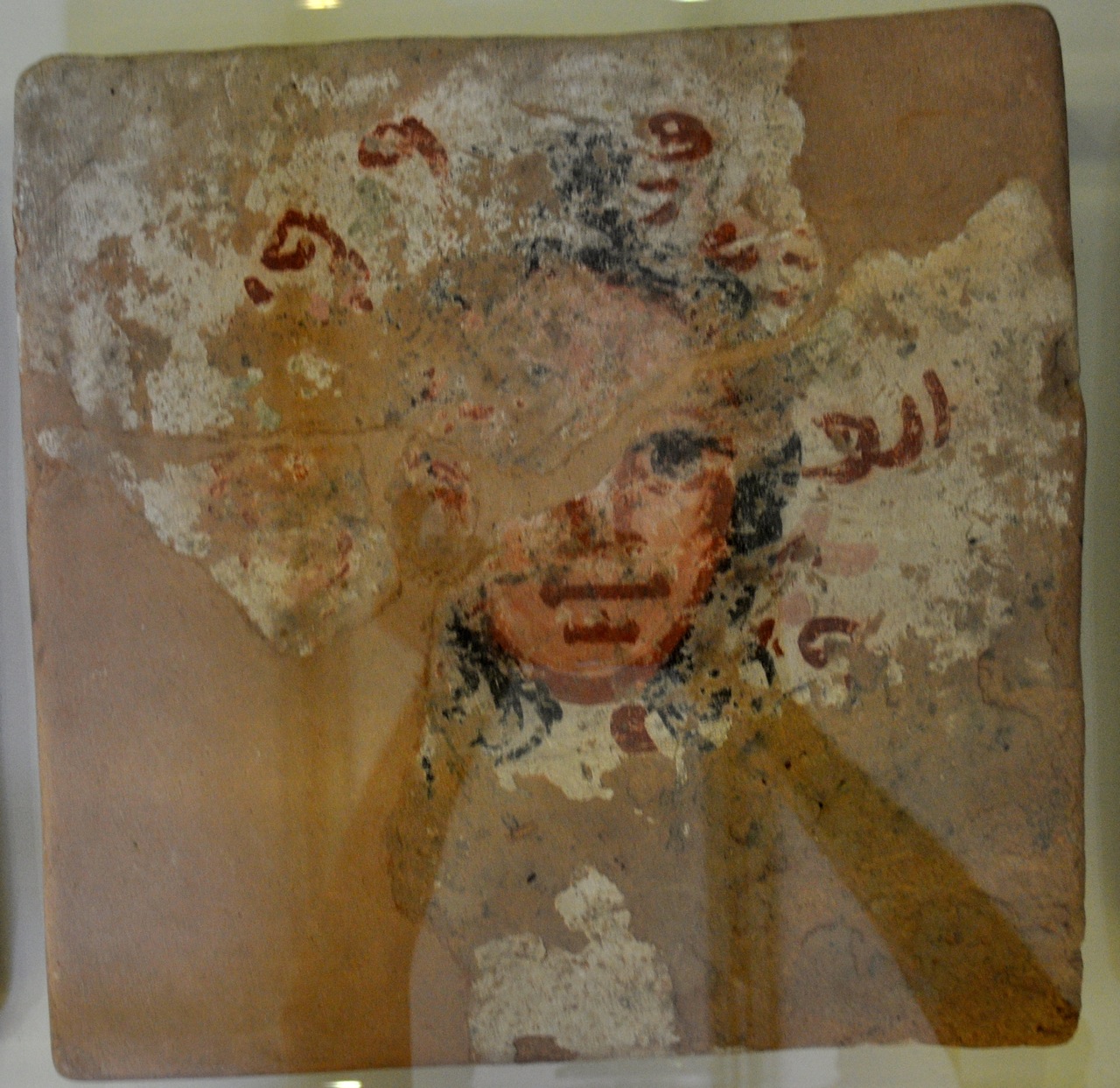
Prof. Sukenik and his colleagues, including Prof. Nahman Avigad, had planned to open a museum on Mount Scopus in 1948 to display items related to the history of the Jewish people in ancient times. Among the artifacts are ceiling tiles from the ancient synagogue* discovered in 1932 in the city of Dura Europos, located in the desert above the banks of the Euphrates in Syria. Sukenik had been invited by the Yale University team to visit the site (in Syria) and join in the publication of the findings. He was given 3 ceiling tiles that he brought back to Israel. The outbreak of the War of Independence with the result that Scopus was isolated within Jordanian-occupied territory made the opening of the museum impossible.


Sixty-three years later, these painted clay tiles and other artifacts have been put on display, including some half dozen ossuaries, mosaics, clay vessels, etc. from excavations in Israel by members of the Archaeology department. The modest museum is open to the public.

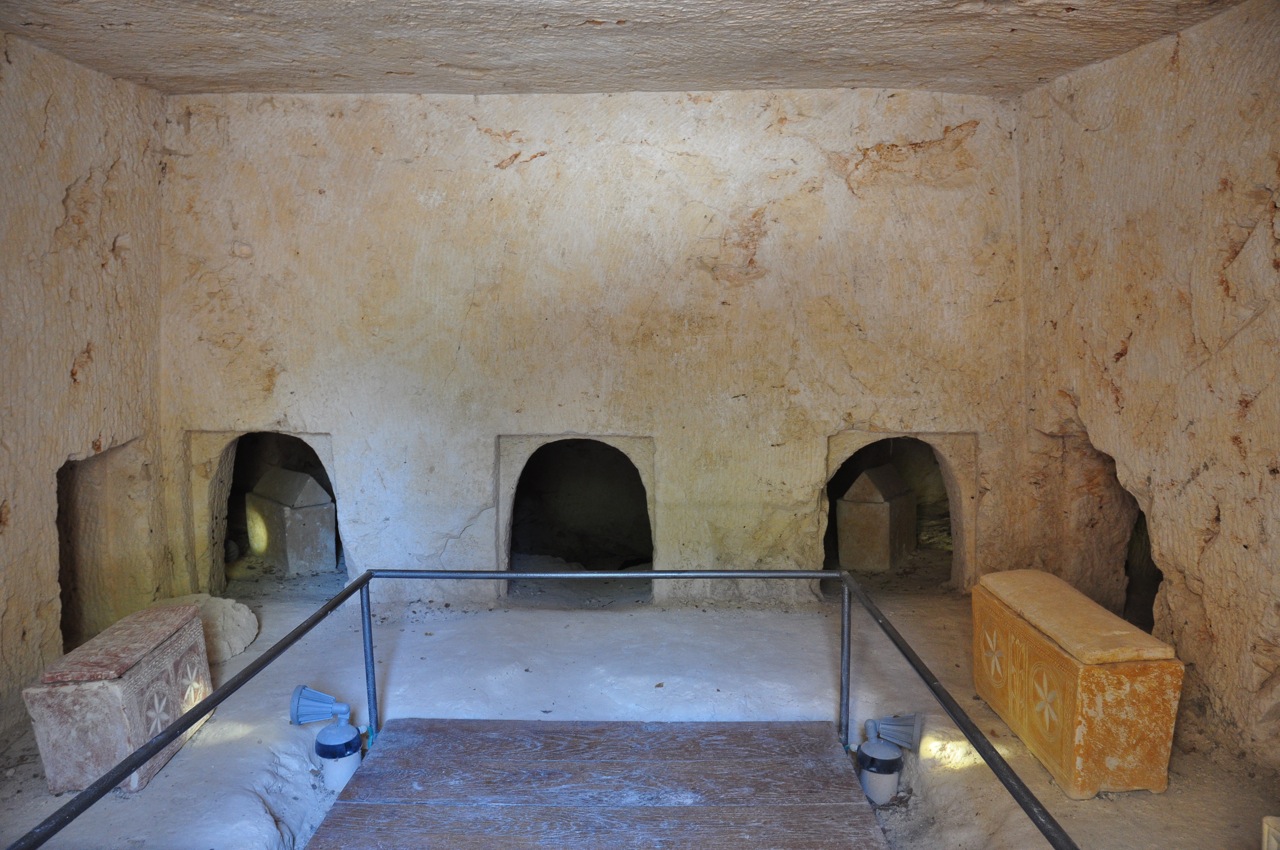
Walk through the botanical gardens organized by Alexander Eig, head of the Botany Department, based on the flora of the Land of Israel planted in 1931 to some caves with Second Temple period tombs. It was here that they found some half dozen ossuaries (the ones displayed on site are replicas, the originals are in the museum) including one with a 4 line inscription in Greek and Hebrew:

[In this ossuary are] the bones of [the family of] Nicanor of Alexandria who made the doors
Nicanor  Alexa

Nicanor is mention in the Babylonian Talmud in Yoma 38a, the donor of the two bronze doors for the Temple. The original ossuary is at the British museum in London.

In 1940s, Pinsker and Ussishkin, early leaders of the Zionist movement, were buried in one of the caves.

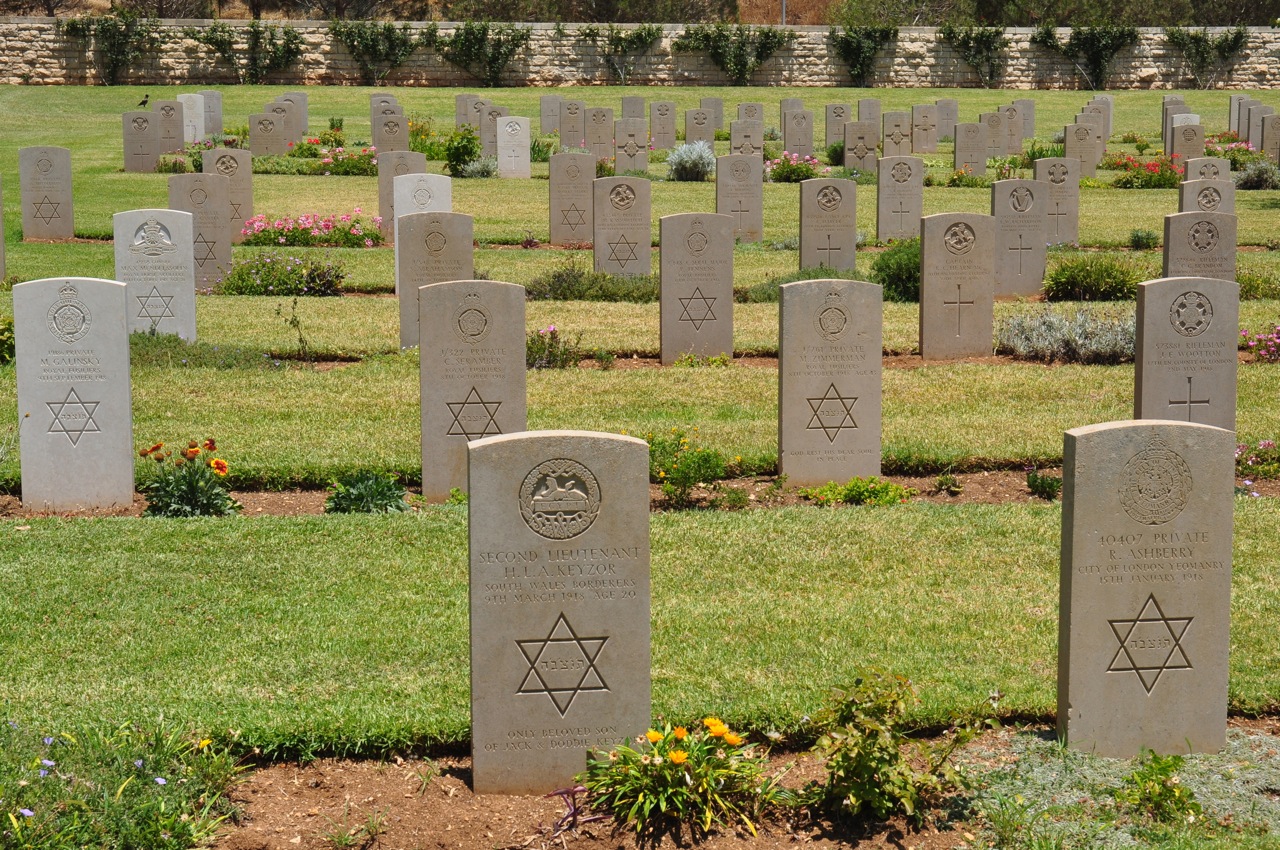
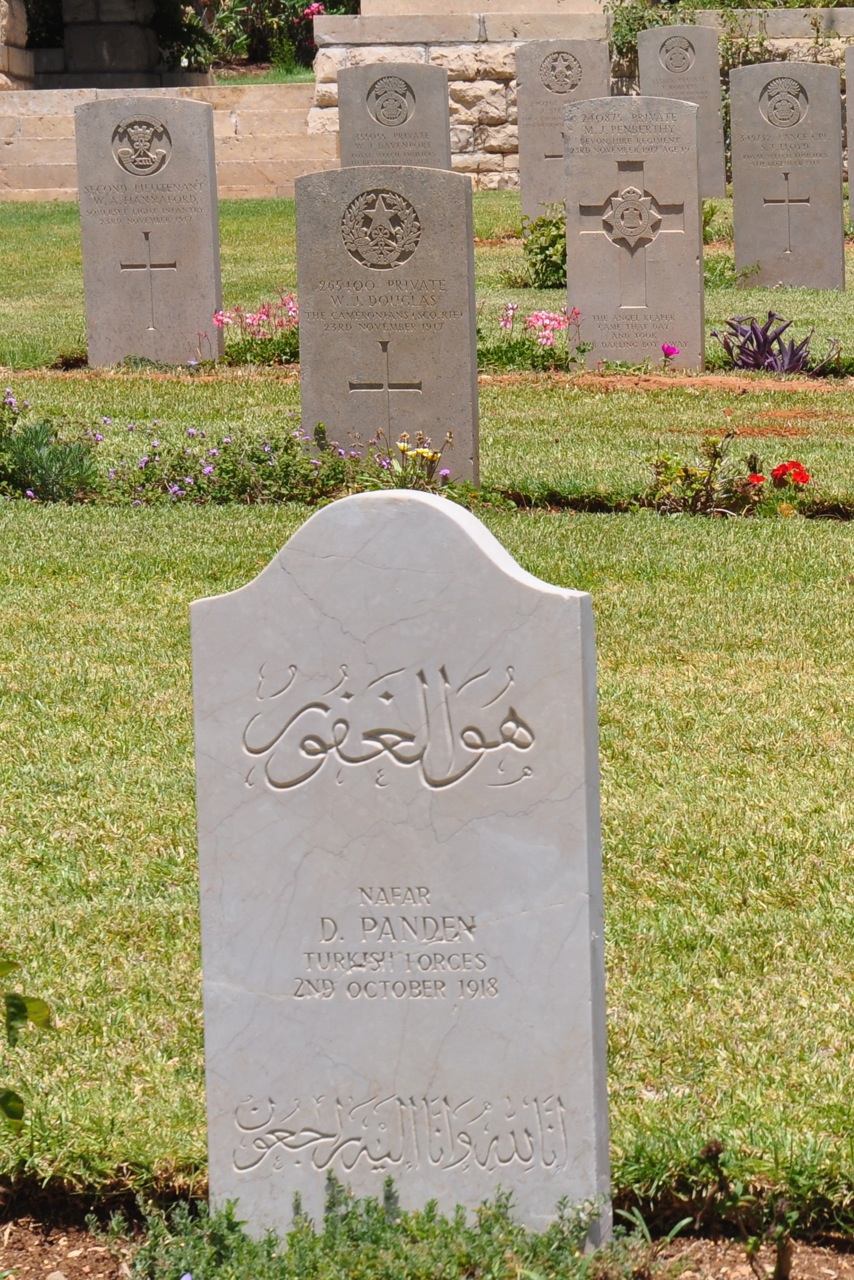
Went back to the Jerusalem War Cemetery on Mount Scopus and found the graves of Jewish soldiers who served in the British army during WWI and fought and died here. In addition, I noticed two gravestones of Turkish soldiers.


Visited the memorial at Givat HaTachmoshet to see the model of Jerusalem and how the city was divided in the ceasefire agreement of Nov 30, 1948 signed by Dayan (Israel) and el-Tell (Jordan). Article VIII of the 1949 Armistice Agreements signed by Israel and Jordan in April 1949 called for a resumption of “the normal functioning of the cultural and humanitarian institutions on Mount Scopus and free access thereto; free access to the Holy Places and cultural institutions and use of the cemetery on the Mount of Olives; resumption of operation of the Latrun pumping station; provision of electricity for the Old City; and resumption of operation of the railroad to Jerusalem.” Jordan did not abide to the agreement. There is a movie with original army footage that relates the events that divided the city in 1948 and shows how Israel recaptured the area from Jordan in 1967 and reunited the city.


http://art-history.concordia.ca/cujah/issue03/3-the-significance-of-the-dura-europos-synagogue.htm