Rockefeller Museum
Although few visit, the historic Rockefeller museum in Jerusalem is definitely worth a visit. A blend of western and local eastern architecture, combining historic architecture with modern innovations, the museum was built in 1938, during the Mandate period by the British architect St. Barbe Harrison.
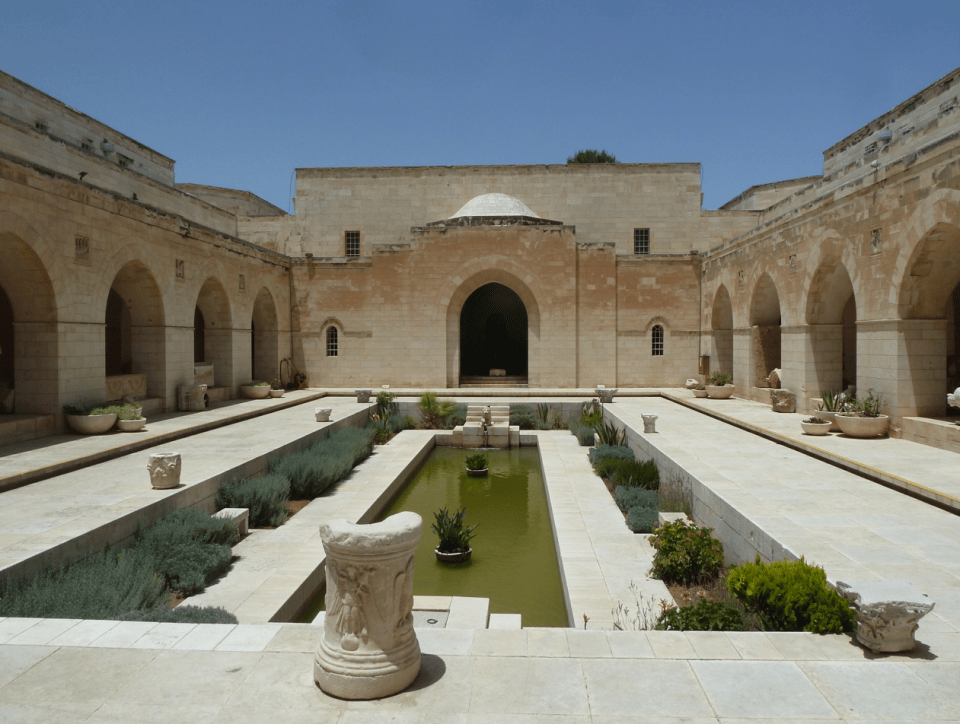
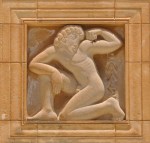
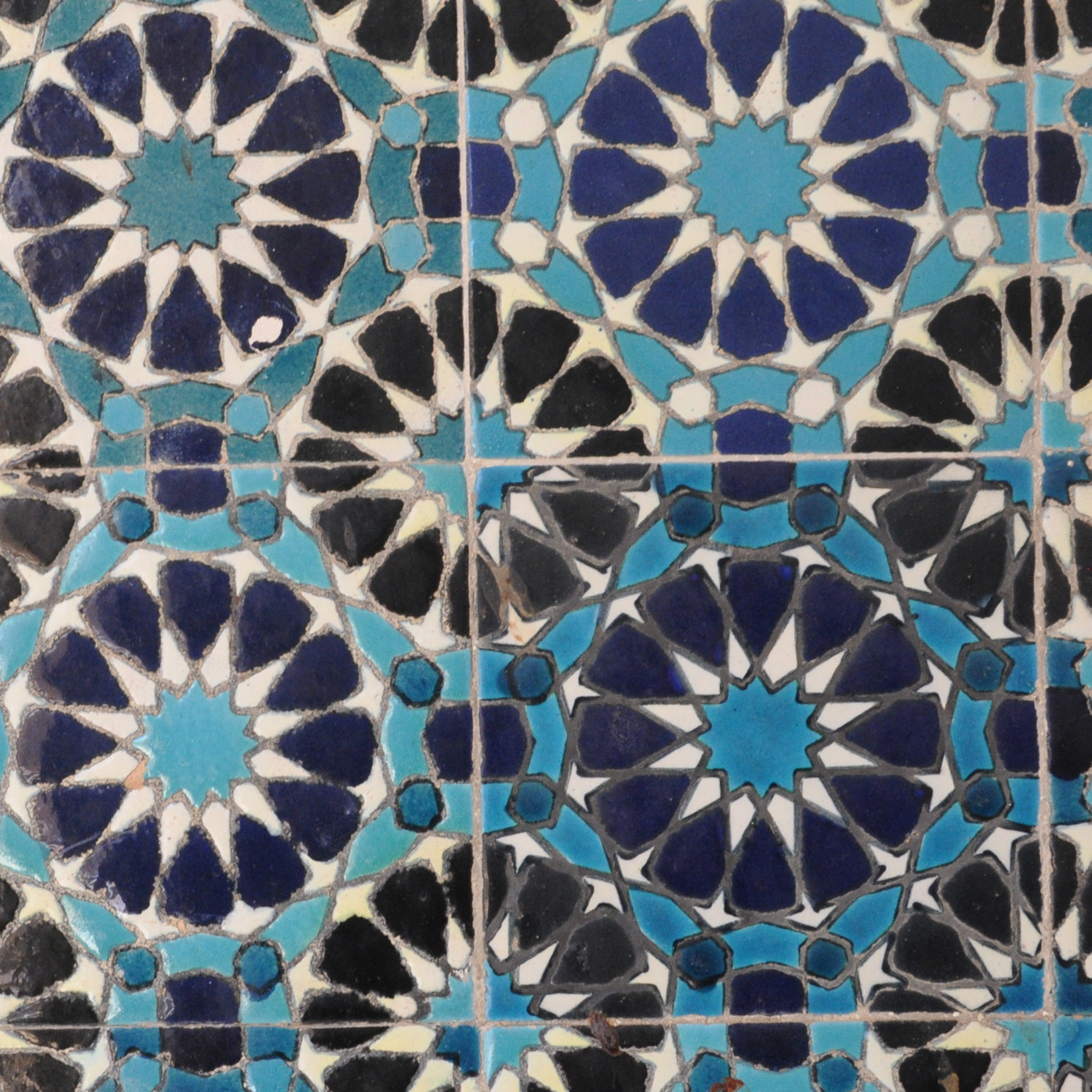
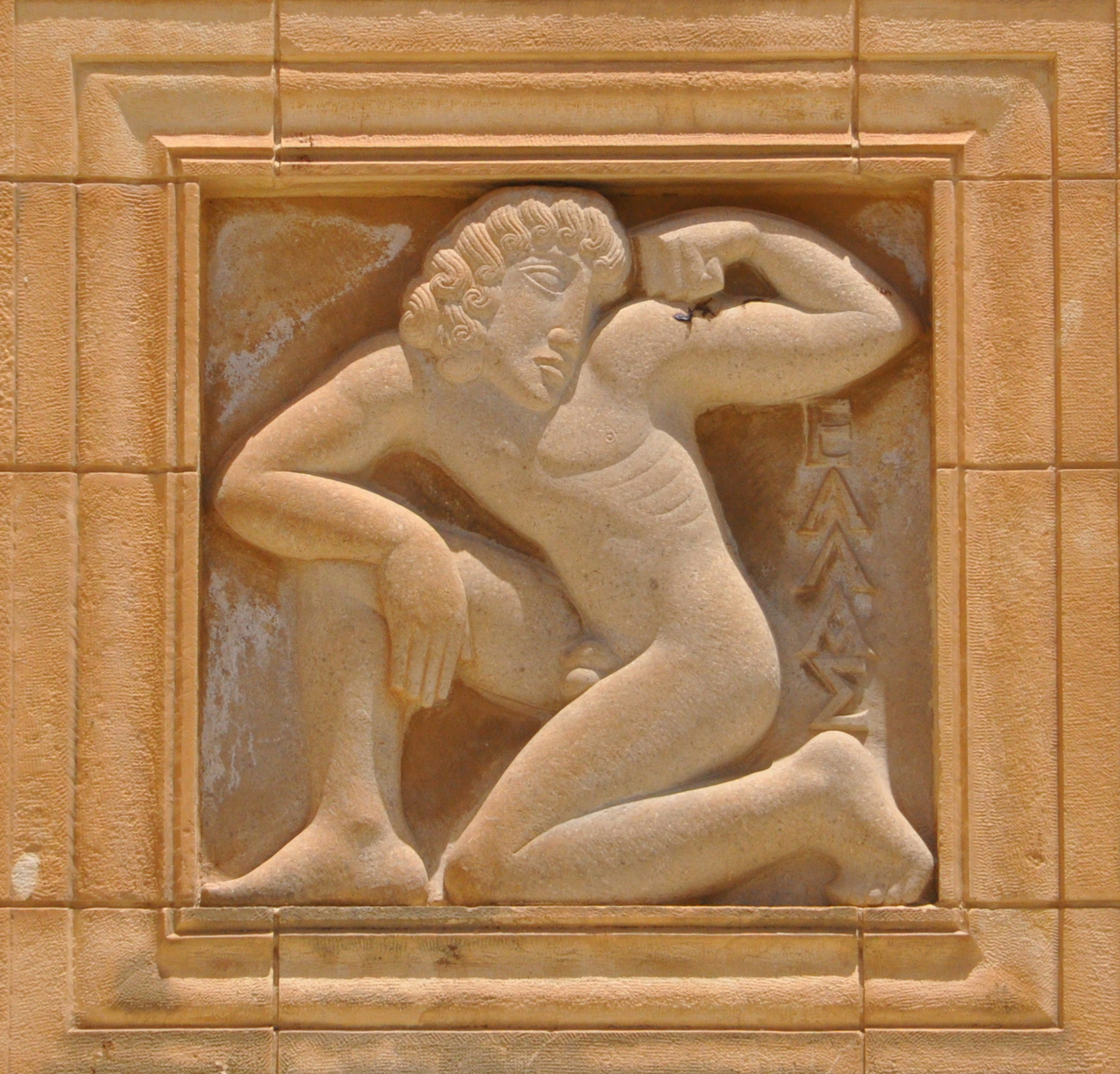
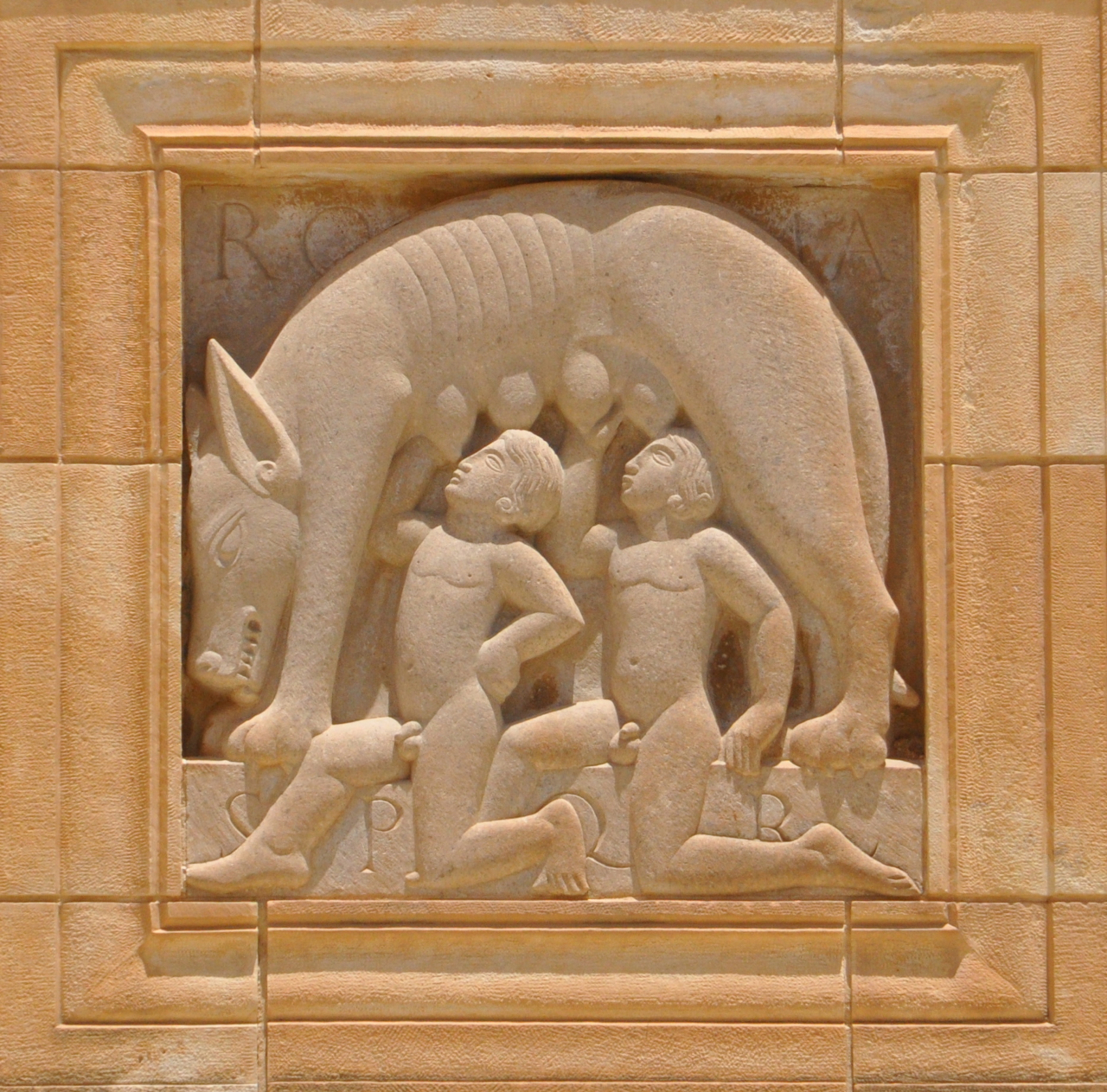
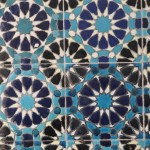 In the main hall is a model of the museum – exit to the courtyard to see the pool, the Armenian mosaics by Ohanessian and the 10 iconic stone reliefs sculpted by Eric Gill representing the major civilizations that left an imprint on this region. Many of the exhibits in the museum are a little dated, walnut wood framed glass cases with dozen of artifacts each, labelling is just a number which you have to cross-reference with a mimeographed book that you can ask for at security. But they have some important pieces:
  the Crusader marble sculpted panels from the lintels of the entranceway to the Church of the Holy Sepulcher, Roman sarcophagi, Umayyad architectural details with their original paint, Crusader capital with goblin from Church of Annunciation, mosaic from an early synagogue, like the one in Jericho also called Peace unto Israel, found in the Druze village of Usifiya.
Having visited the actual site of Hisham’s palace in Jericho and been 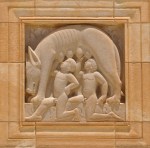 disappointed at how few of the mosaics and artifacts are on display it was heartening to see the impressive exhibit of sculpture and stucco from Hisham’s palace safe at the museum.
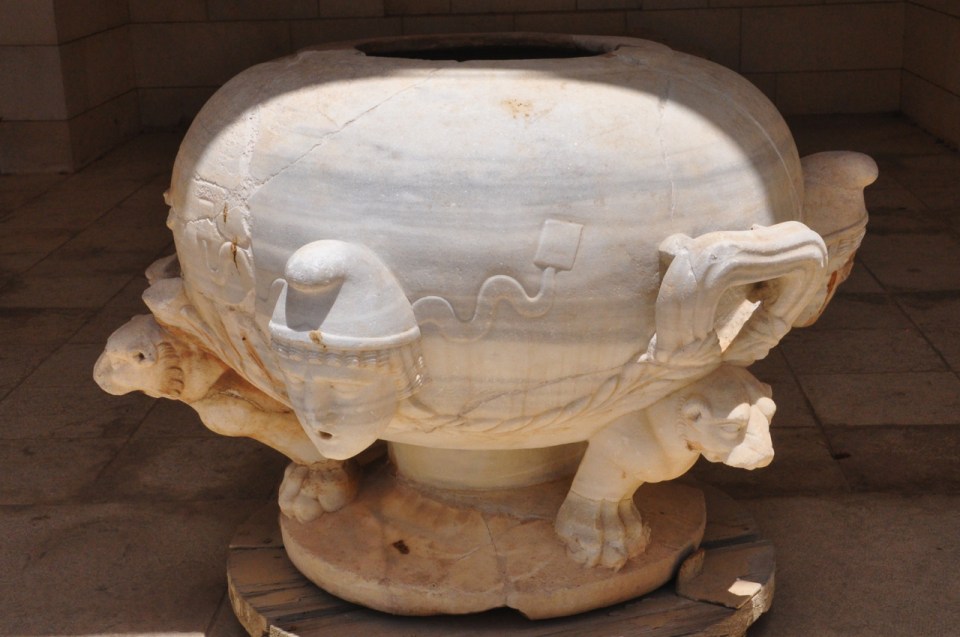
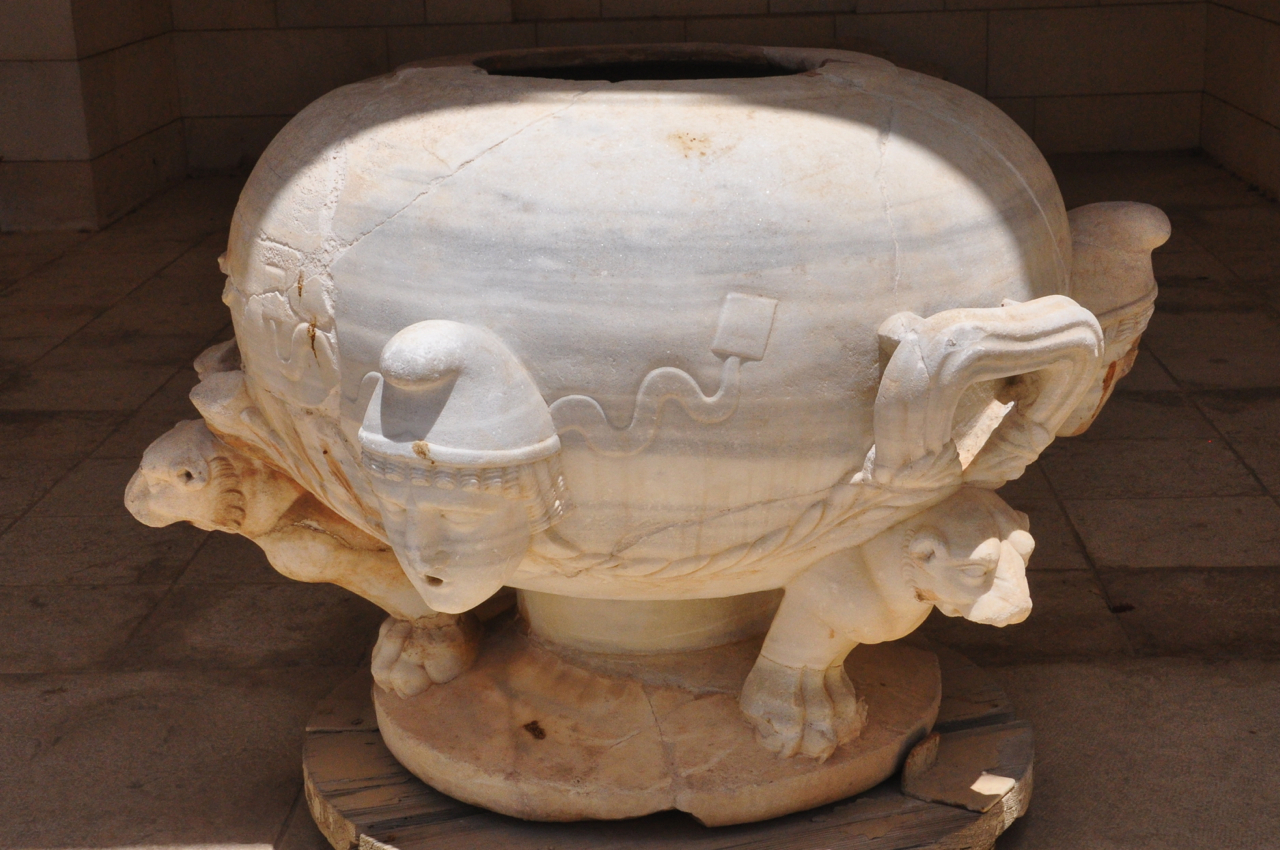
An incredible piece in the courtyard is a Roman wash basin from the 1st century that was found in the Crusader fortress at Montfort – striking how similar it is to the basin that Emperor Augustus sent with Marcus Agrippa as a present for King Herod on display at the Israel museum exhibit on Herod (viewable at https://israel-tourguide.info/2013/02/14/herod-design-realpolitik/).
There is a very interesting article about architects St. Barbe Harrison and Erich Mendelssohn and their contributions to beautifying Jerusalem. http://www.jpost.com/Opinion/Op-Ed-Contributors/Jerusalem-the-beautiful-312517
BBC has an article about the Hula painted frog at http://www.bbc.co.uk/news/science-environment-22770959
A species of frog that was recently rediscovered after being declared extinct in 1966 has been reclassified as a “living fossil”.
Israel’s Hula painted frog had not been seen for nearly 60 years, but in 2011 one was found lurking in a patch of swampy undergrowth. Tests have revealed that the frog belongs to a group of amphibians that died out 15,000 years ago.
BBC interviewed me for their series, In the Prince’s Footsteps and asked me to take them to the Mar Saba monastery in the Judean desert. We talked about photographer Francis Bedford’s 1862 photograph of the monastery on his travels with Edward, Prince of Wales to the Holy Land. You can read my blog post at Mar Saba and Judean Desert Revisited.
You can hear the interview by clicking on the red button.
I am Gabriel A unique 87 line Hebrew inscription, ink on stone, from the beginning of the Roman period, I am Gabriel, is on display at the Israel museum. Its content is prophetic-apocalyptic, its style literary-religious, and its language reminiscent of the later books of the Prophets. Accompanying it are rare ancient manuscripts, the Hebrew Bible, the New Testament and the Qur’an. The exhibition traces the changing roles of the angel Gabriel in the three monotheistic religions.
While thinking about the Israel museum plan to spend a day with Herod the Great, legendary builder and King of Judea. Combines an in-depth guided tour of Herodium, Herod’s palace complex in the desert and the site of his tomb with the monumental exhibit “Herod the Great: The King’s Final Journey”. https://israel-tourguide.info/herod-the-great-tour/
Jerusalem Botanic Garden is open for free on Fridays & Saturdays in the month of June 2013 for residents of Jerusalem with presentation of your teudat zehut. This is a great opportunity to wander around the garden and discover the lovely, shaded areas of green that are one of the best kept secrets of the City. http://en.botanic.co.il/Pages/Show/7
0.000000
0.000000
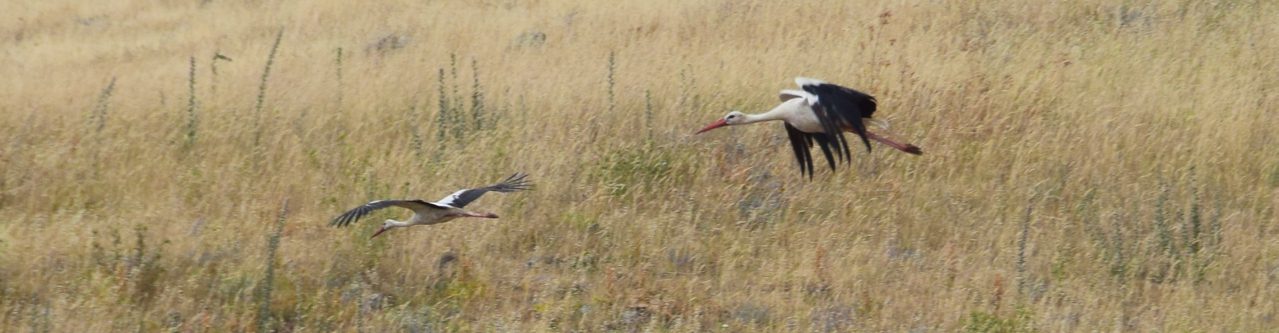
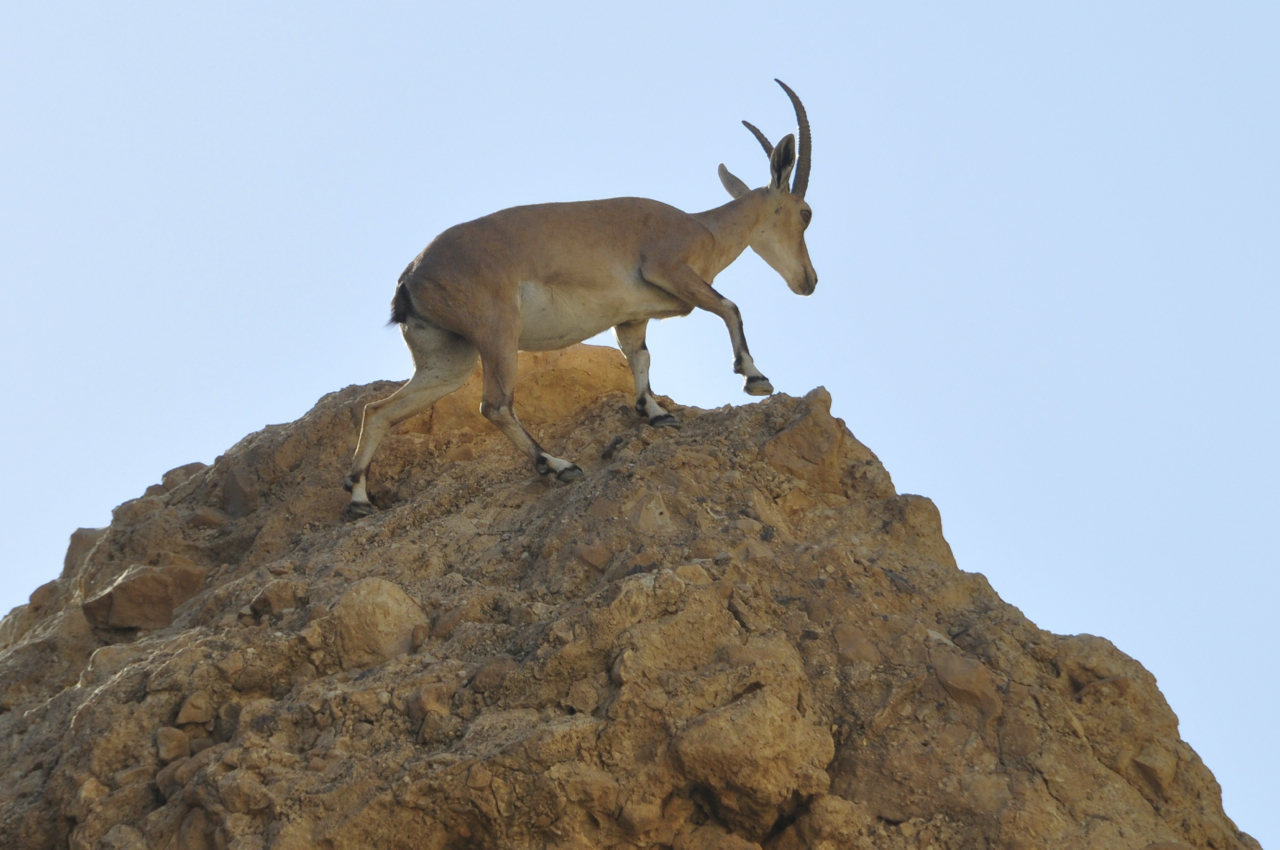
 The technical details – the photo was taken in December 8 years ago with a Nikon point and shoot camera (ISO 100, 8mm, F7.6 at 1/263 sec).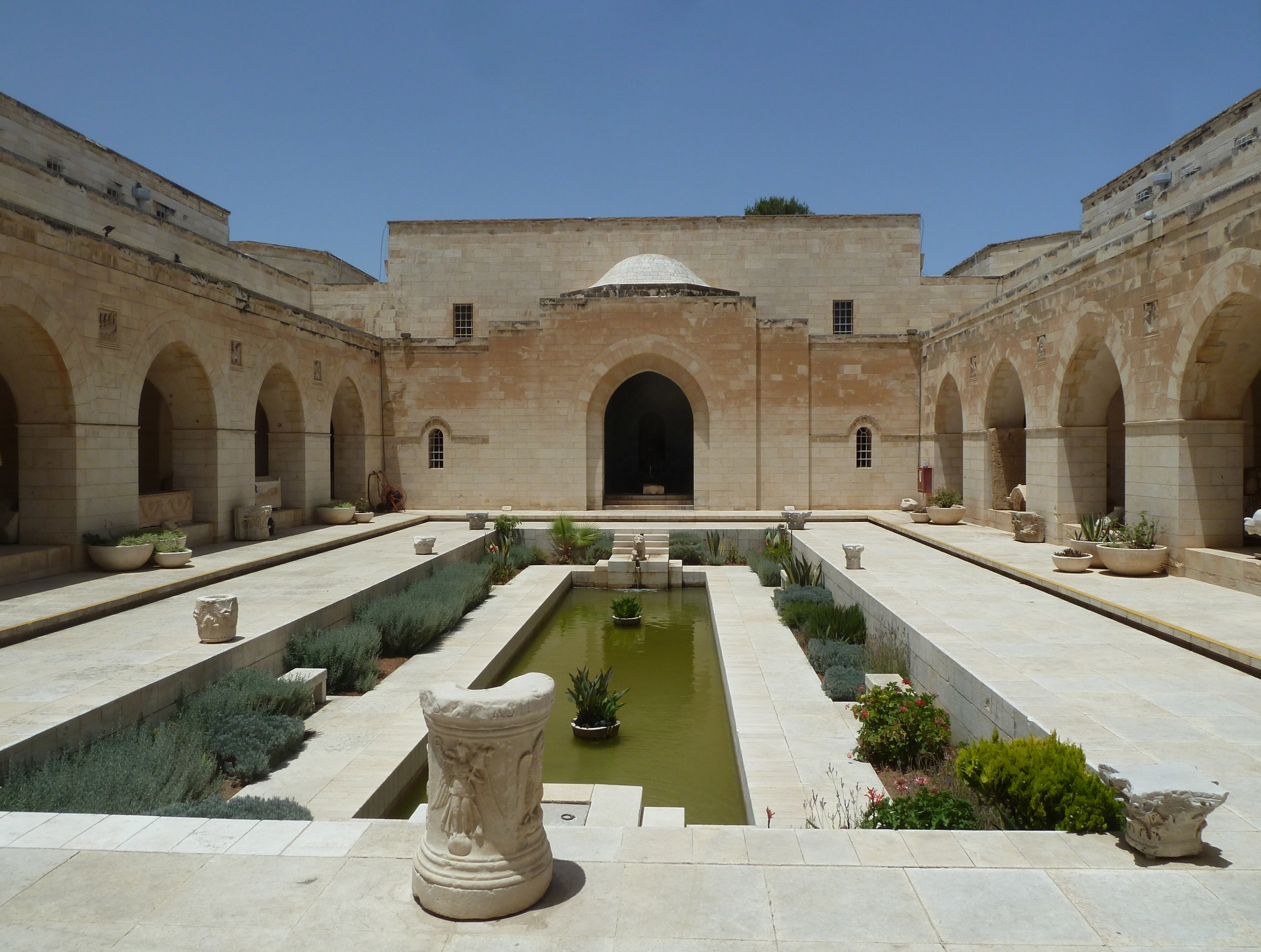


 Israel Tours