Category Archives: Architecture

Photo of the Week – Lower Herodium

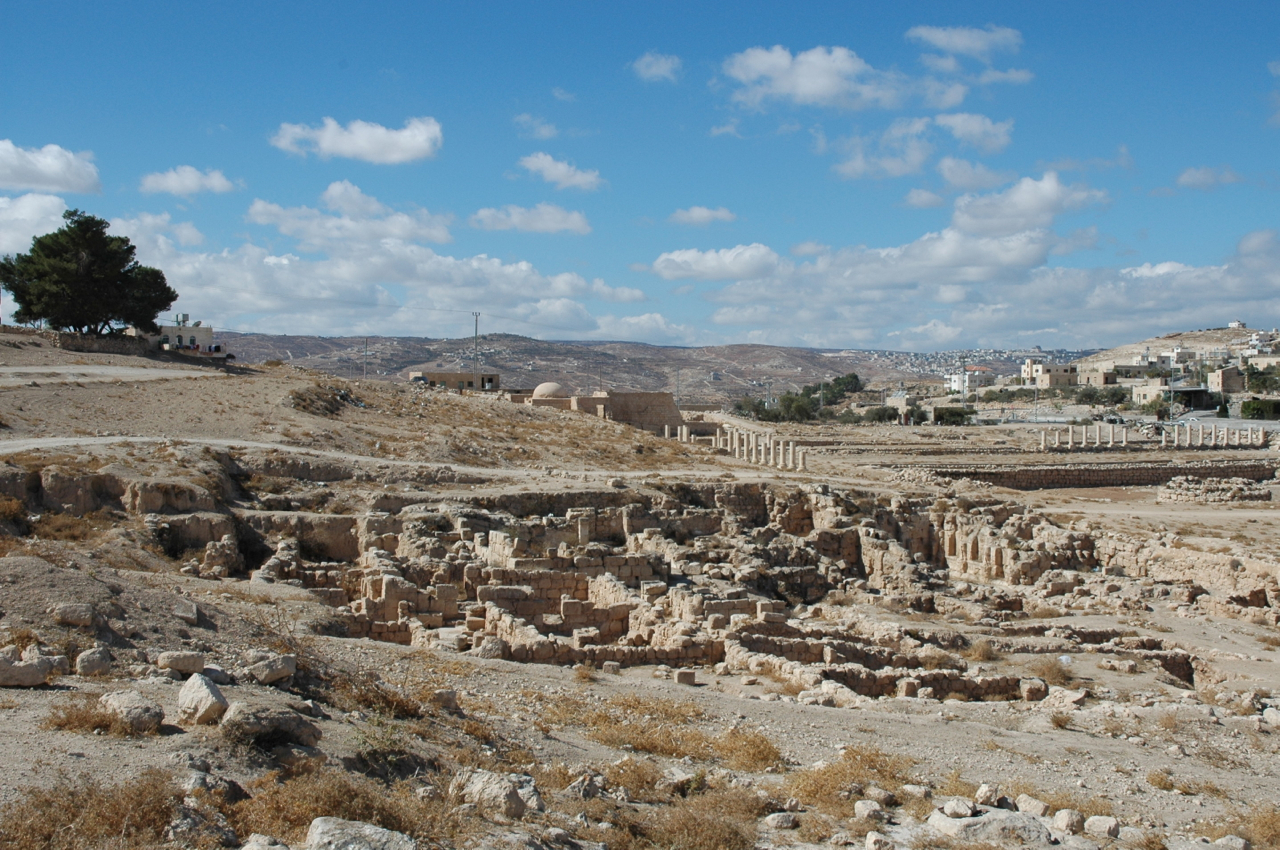
Another photo of an archaeological site, one of my favorites, not far from Jerusalem. Many tours of Herodium take you straight to the park skipping the area of Lower Herodium that was excavated by Prof. Ehud Netzer ז”ל in 1970s. Here you can see the remains of the Monumental building – was this structure built as King Herod’s final resting place? Take a guided tour with me to find out. You can click on the image for a larger view (which may take some time to load depending on your Internet connection). Please share this post with your friends by clicking on the icons at the end of this message.

The technical details – the photo was taken with a Nikon D70 digital SLR camera on November 2 (ISO 200, 25mm, F10 at 1/400 sec).

To read more about the Monumental building check out my post at https://israeltours.wordpress.com/2010/11/11/nymphaeum-herodium/

FYI, the Israel Museum has announced that the exhibit on the latest finds at Herodium, including sarcophagi and secco wall paintings from the loggia of the theater will open February 2013.

Photographs on this website are © Shmuel Browns (unless marked otherwise) – if you are interested in purchasing one of my photos or using one of my photos for your own project please contact me.

Photo of the Week – Bet Shean

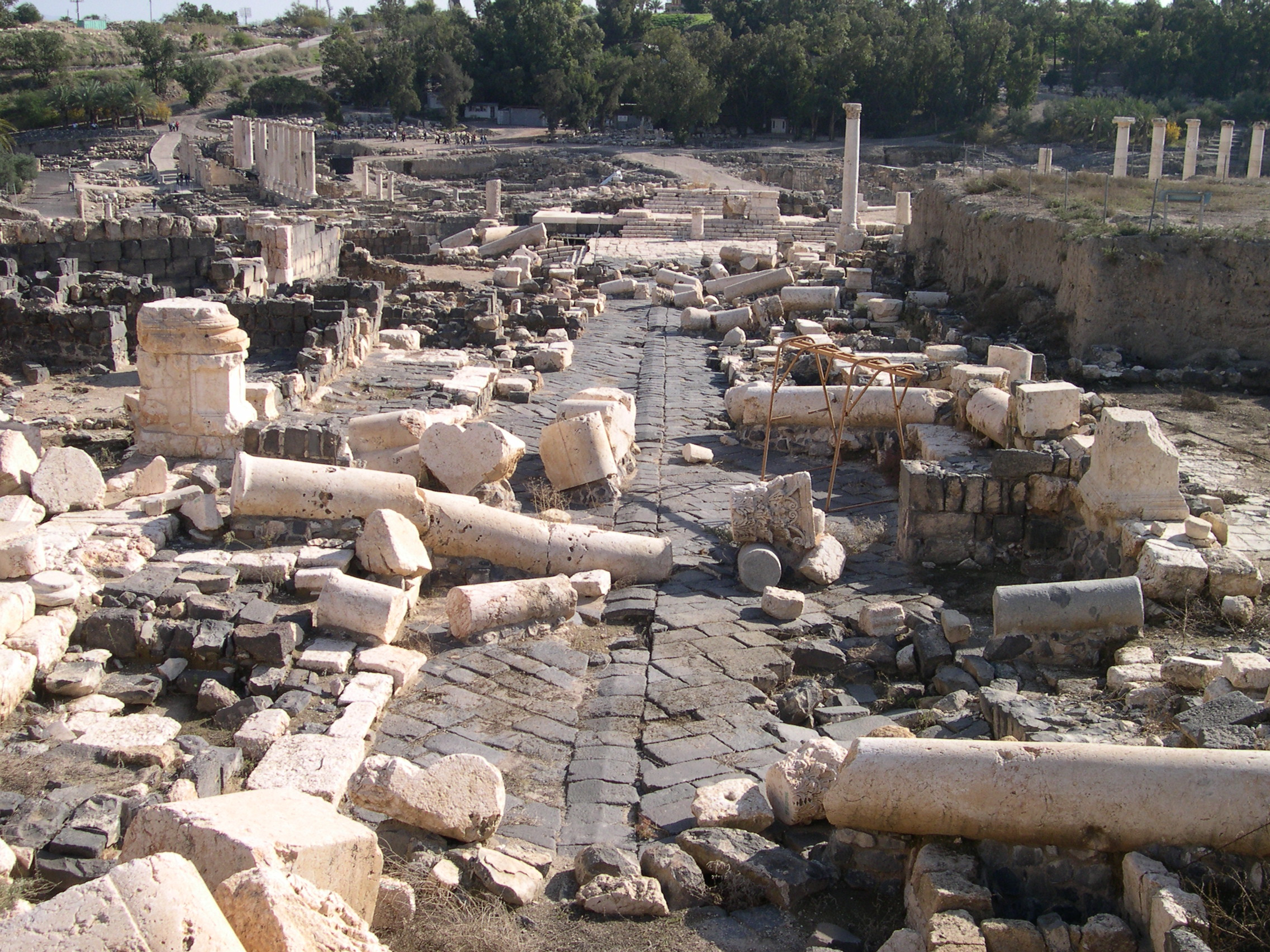
For the last 12 weeks I’ve posted photos of Israel landscapes, today’s post is a photo of an archaeological site in the north of Israel. You can click on the image for a larger view (which may take some time to load depending on your Internet connection). Please share this post with your friends by clicking on the icons at the end of this message.

The photo was taken at Bet Shean in the archaeological park and shows the destruction of the city by the earthquake of 749CE. The technical details – the photo was taken with a Nikon digital point and shoot camera on January 2 (ISO 100, 8mm, F7.6 at 1/135 sec).

Bet Shean is a great site to visit, see my post at
https://israeltours.wordpress.com/2011/01/16/bet-shean-scythopolis/
and if you’re interested in more about earthquakes check
https://israeltours.wordpress.com/2011/01/10/earthquakes-history-archaeology/.

Photographs on this website are © Shmuel Browns (unless marked otherwise) – if you are interested in purchasing one of my photos or using one of my photos for your own project please contact me.

Roman Mausoleum

Because our son Amitai is training new recruits for the Border Police I attended the swearing-in ceremony at Tel Hadid. Hadid is mentioned in Nehemiah 7 in the list of cities to which Jews returned from the Babylonian exile. In excavations at Tel Hadid archaeologists found a typical four room house,  numerous potsherds from the Iron Age (9th-8th centuries BCE) and two complete tablets, written in cuneiform, Assyrian legal documents one recording the sale of land dating from 698BCE and the other a promissory note from 664BCE. The tablets are evidence that with the conquest of Judea by Sargon II foreigners from Babylonia were settled at Hadid.

Continuing north past Tel Hadid along highway 444 (which follows the route of the Via Maris) is a small stone building, a Roman mausoleum, amazingly intact and graced with a magnificent temple-like façade in classical style, two columns with Corinthian capitals framing a single entrance (closed originally with a stone door, note the recesses on the doorposts for a mezuza).

According to the style of the building and the remnants of two sarcophagi (stone coffins) in the floor of the main chamber, archaeologists conclude that it was built in the beginning of the 4th century CE for a wealthy landowner and his wife, although their identities remain a mystery.

A second chamber to the left is a columbarium with about 60 “pigeonholes” where doves were raised for sacrifice to Aphrodite. Of interest is a cantilevered stone staircase leading up to the opening at ceiling level.

Later the Muslims added a michrab, a niche in the southern wall signifying the direction of Mecca, and dedicated the site to Nebi Yihya, associated by local tradition with John the Baptist. In this way, the building was preserved through the ages.


Samaria-Sebaste

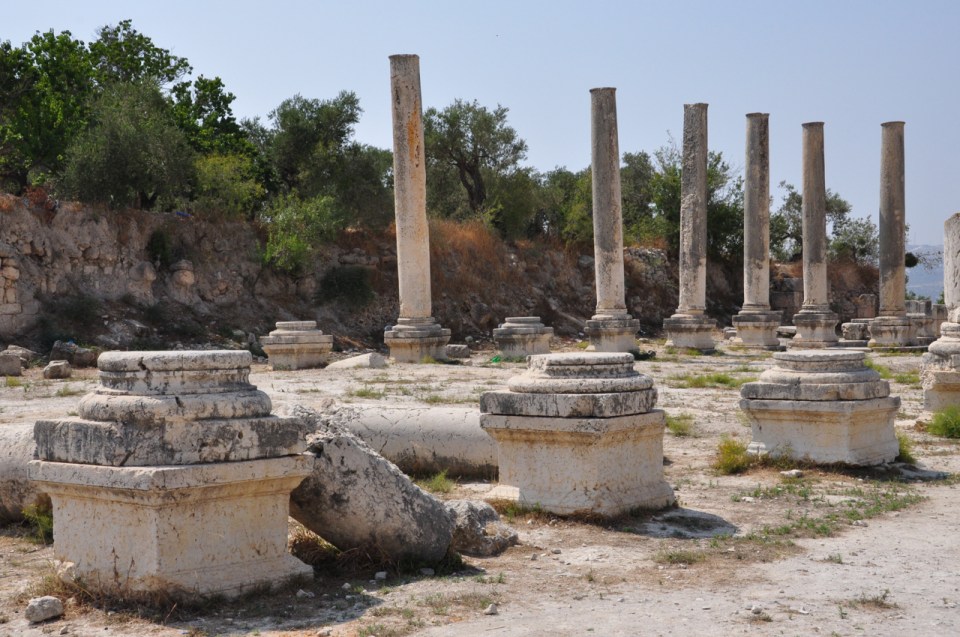
After leaving the archaeological park on Mount Gerizim I went looking for the ancient city of Samaria-Sebaste. Samaria was the site purchased by Omri for two talents of silver from Shemer and made the capital of the Northern Kingdom of Israel (Kings I 16:24-28). Omri’s son Ahab married the Phoenician princess Jezebel and they built a temple to the pagan god Baal which was later destroyed by Jehu, who had Jezebel and 70 princes of Ahab’s family killed. Sebaste, was the Greek equivalent of the Latin Augusta, was Herod’s name for the city when the area was given to him by the Emperor Augustus. Herod rebuilt the city, in full Roman style, a kilometer long cardo of 600 columns, a forum, a Roman basilica, stadium, temple, hippodrome and theater surrounded by a wall and gates.

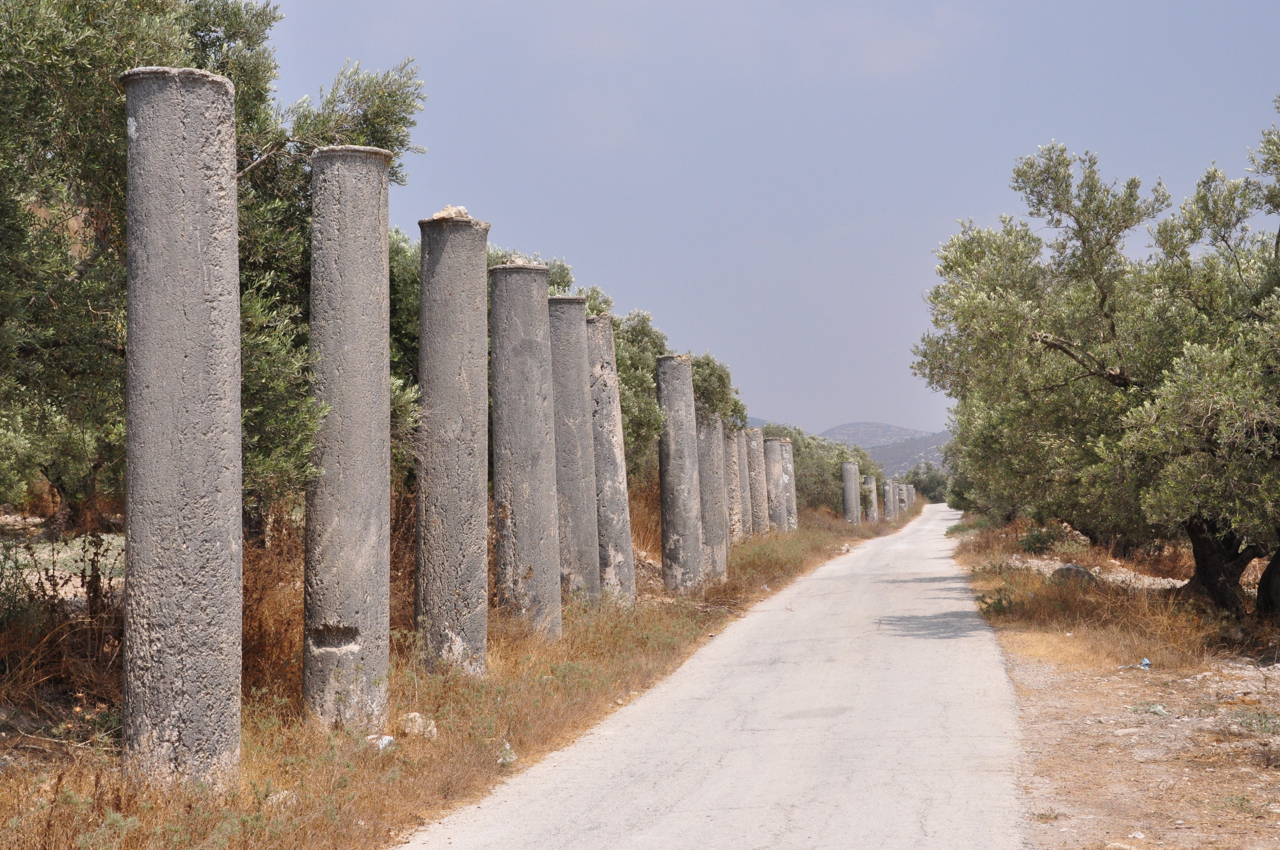
I picked up 2 trampistim (hitchhikers) who were on their way to Shavei Shomron who pointed me in the right direction to Samaria-Sebaste. The road loops around the settlement, a tall concrete separation wall on the left and then heads north. I stopped for directions at an impromptu stand by the side of the road where a Palestinian fellow was selling two kinds of plums, yellow and purple ones – he gave me 2 to taste and pointed to a dirt road on the right heading up the hill. The road is passable by car, just. A short drive and I was on a straight road through a grove of olive trees with two rows of Roman columns, standing along the road and in a row among the trees (cardo).
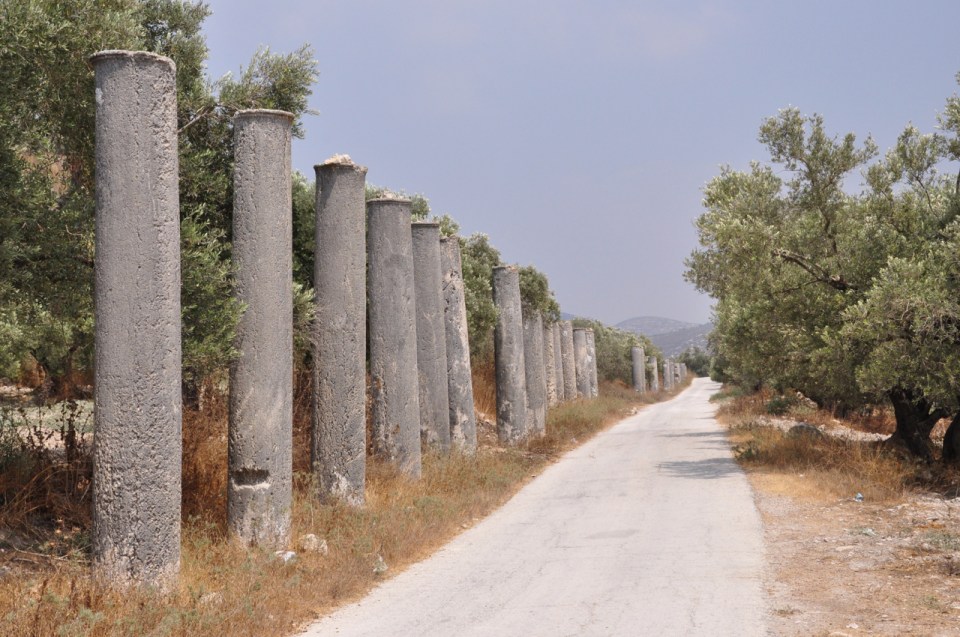
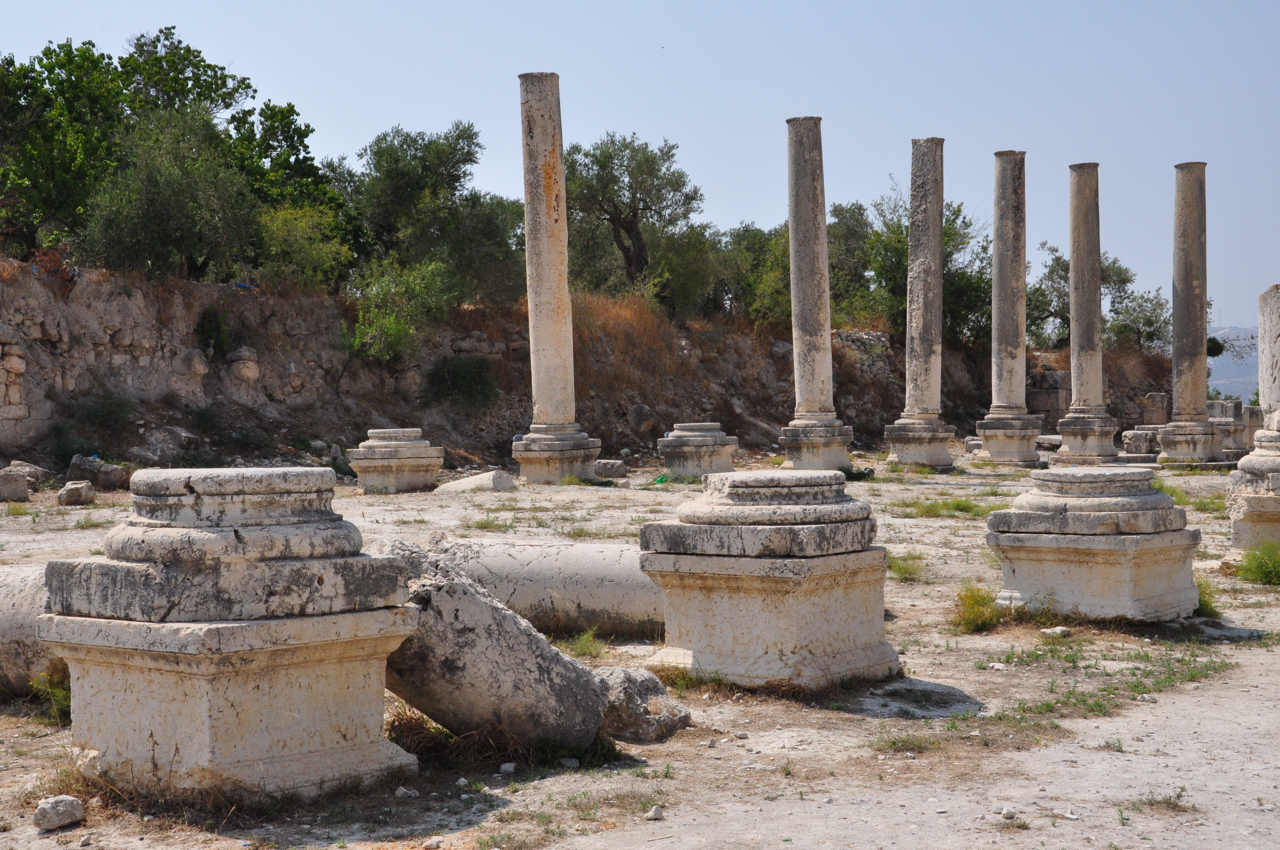
Continuing along the road I passed some excavated ruins and noticed a set of stairs to the left going up the hill (acropolis) as I approached the town. Left turn and I pulled into an open area (forum) bordered by rows of columns and parked the car.
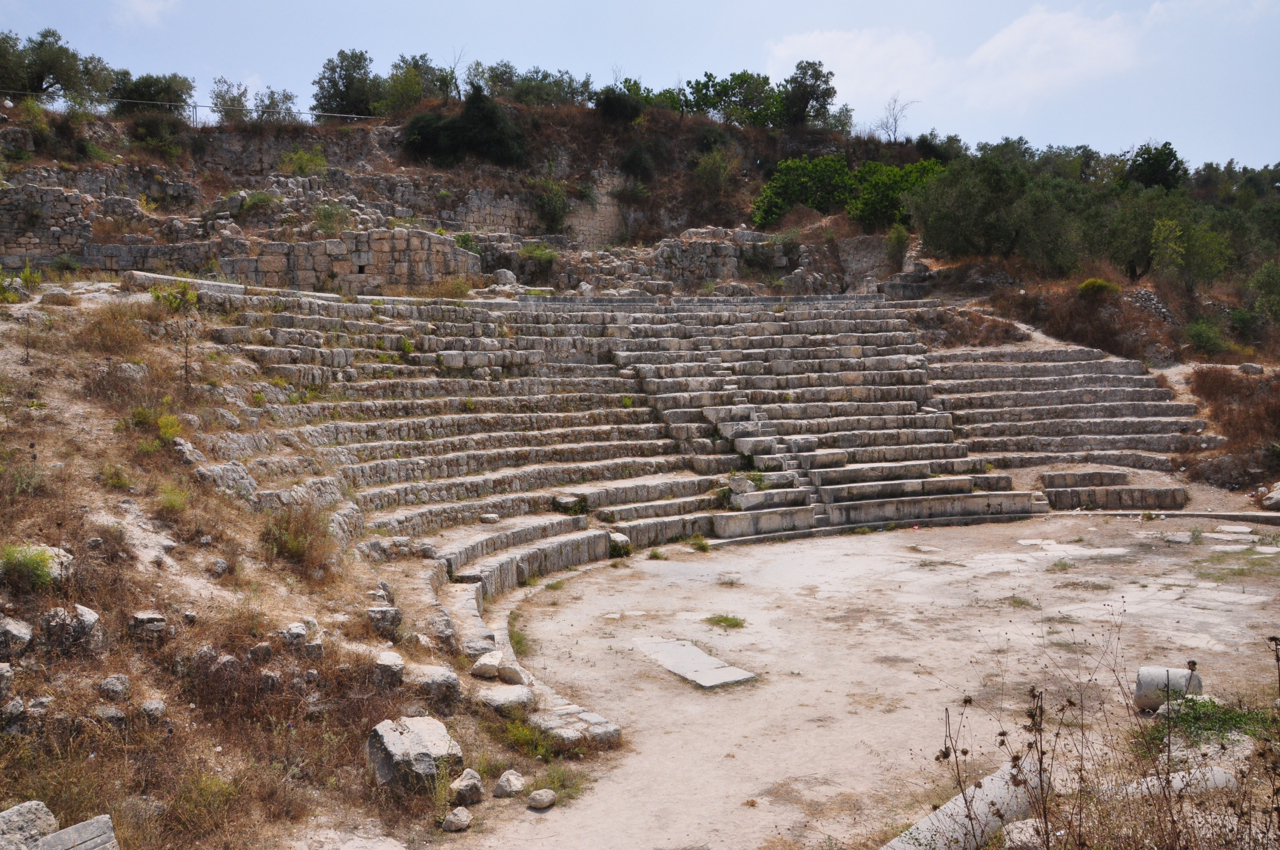
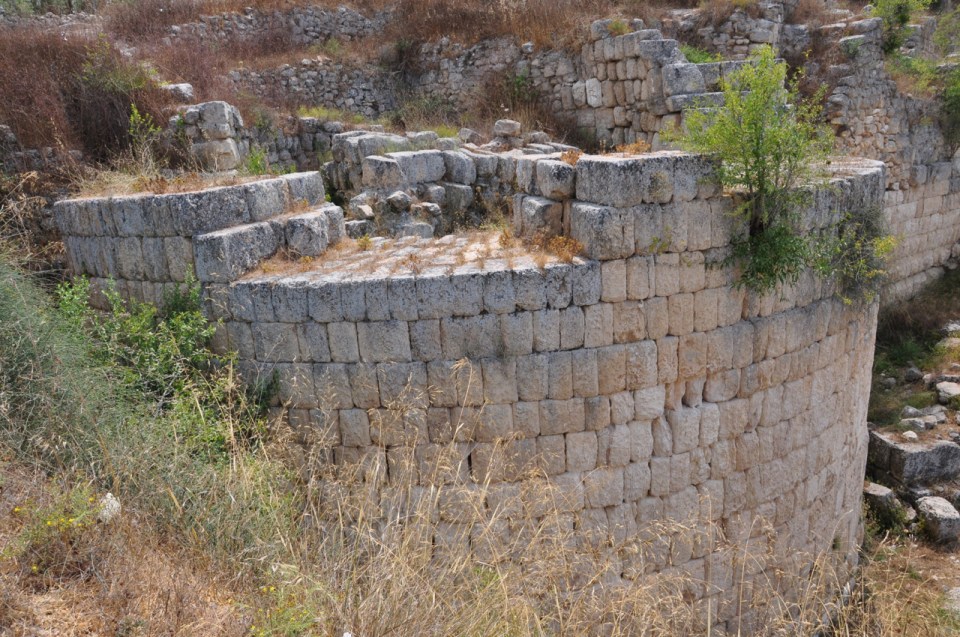
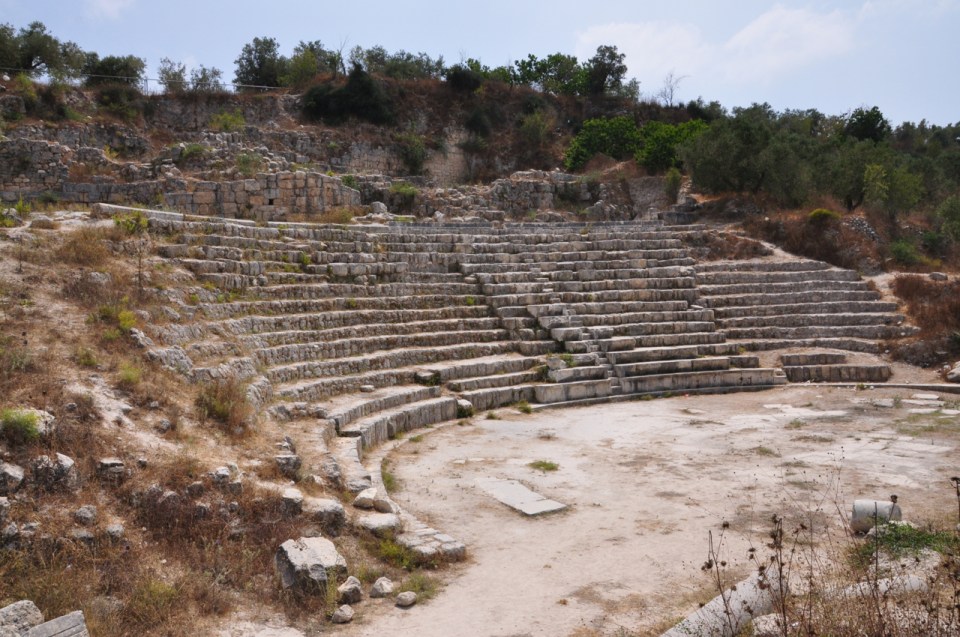
A fellow stepped out of the Samaria restaurant and souvenir shop and greeted me. Sari, who had lived in Alabama for a number of years, there are decals of Alabama sports teams on the window, introduced himself and offered to show me around. First stop was the Hellenistic tower and Roman theater.
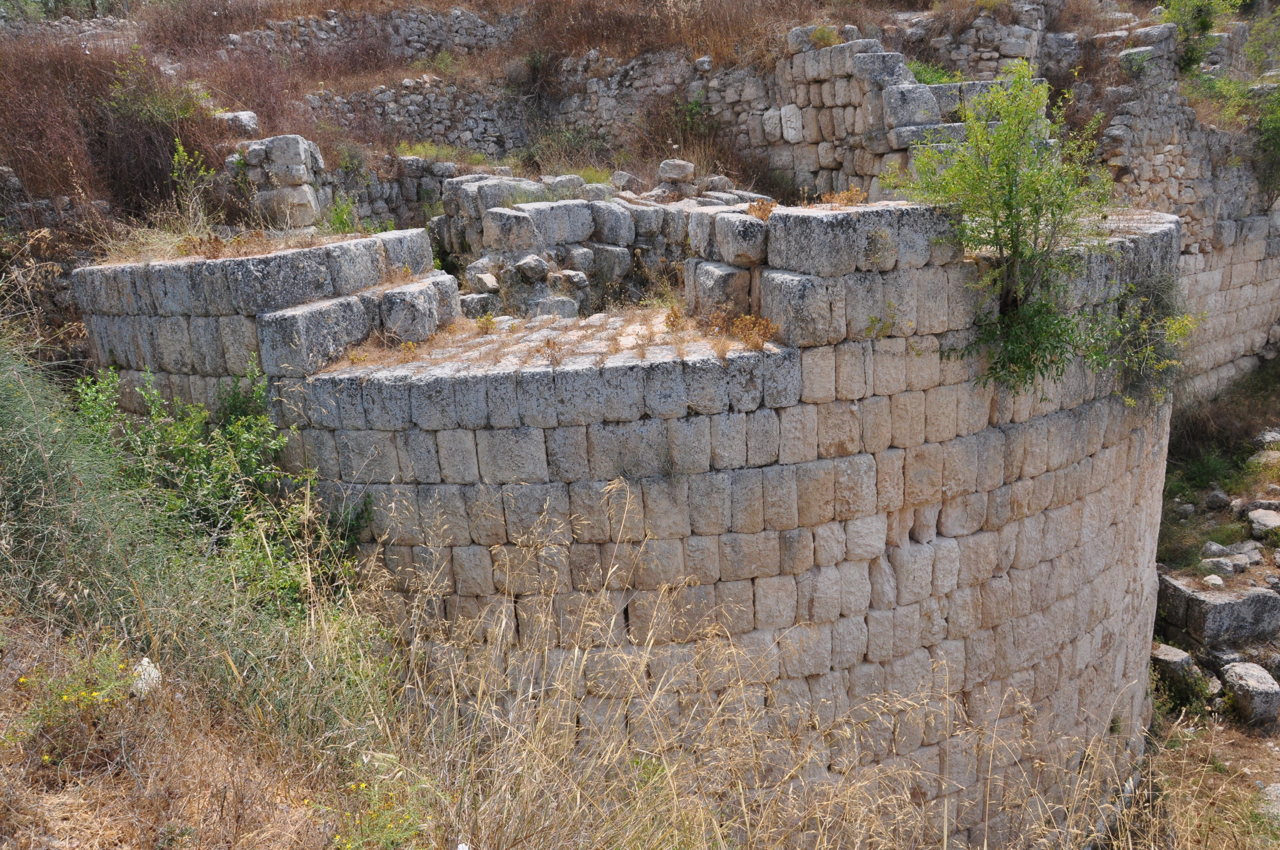
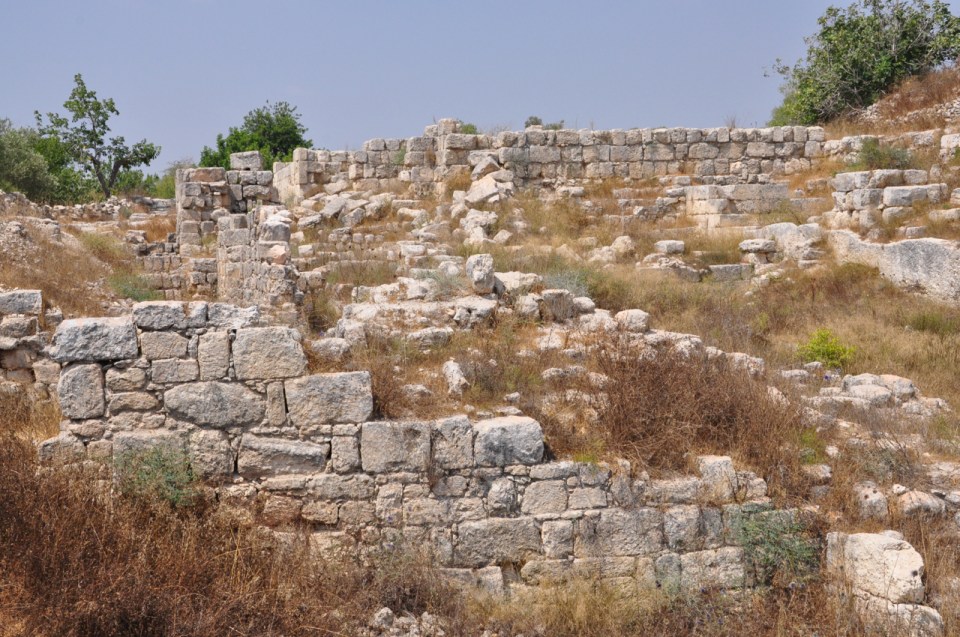
From there we walked to the top of the hill, the acropolis where Herod built a temple to Augustus over the administrative buildings and parts of the palace of Omri from the 8th century BCE.
There is a great view of the surrounding area and specifically the Roman cardo below.

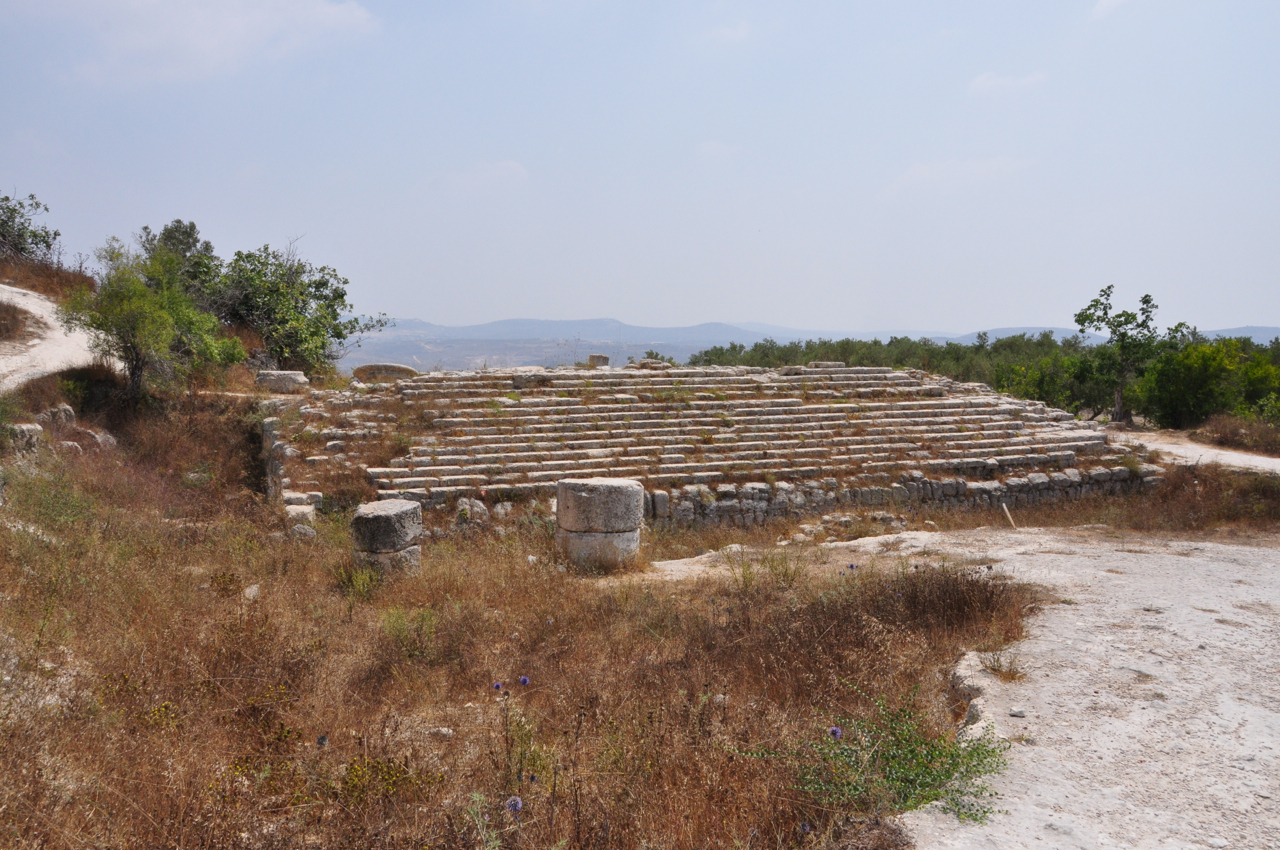
The monumental steps leading to the temple were redone with the rebuilding of the temple during the reign of Septimus Severus (193-211CE).
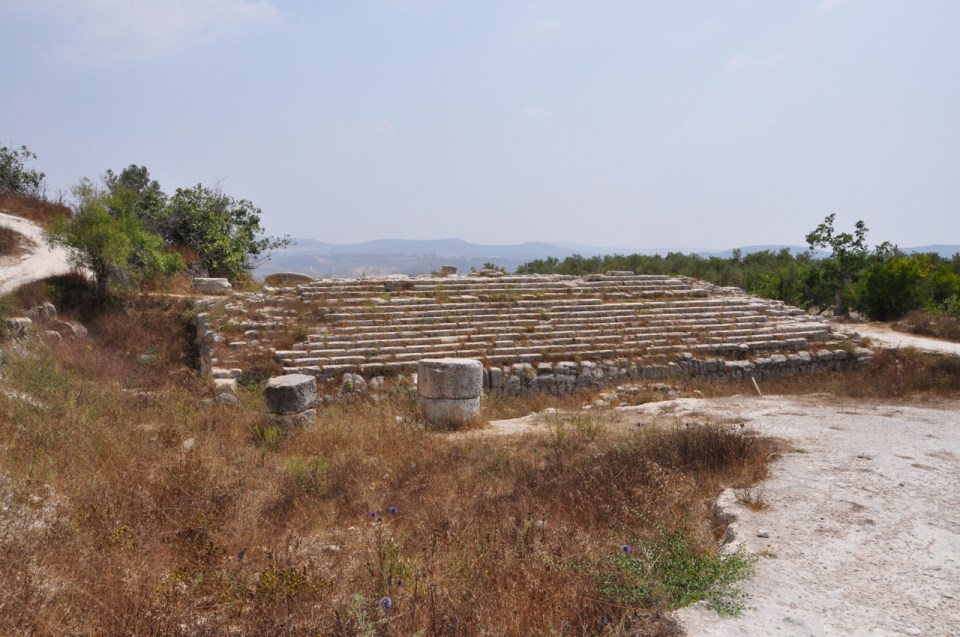
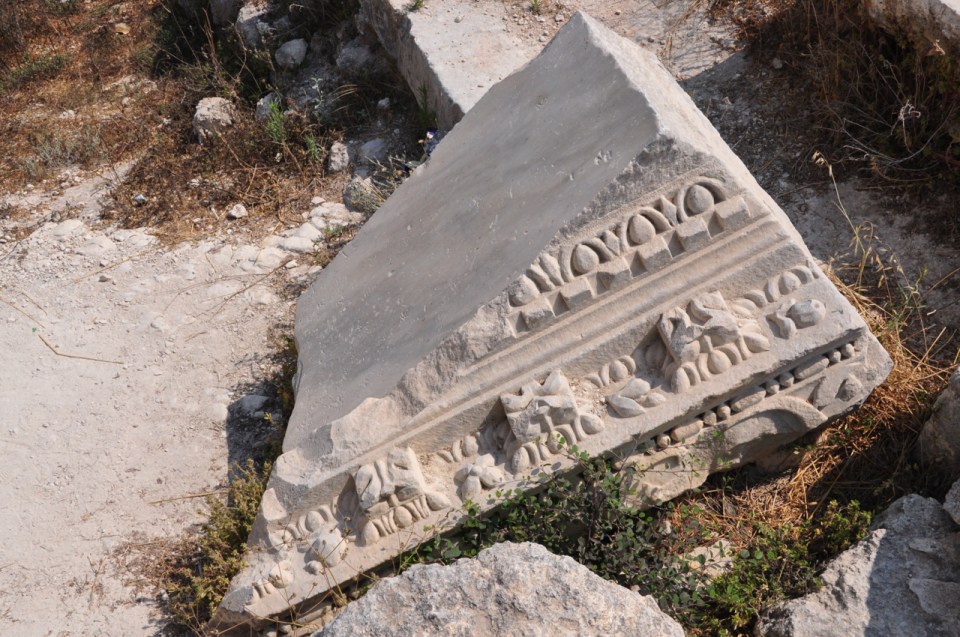
From there we walked to the ruins of a small 7th century Byzantine church with Crusader additions where according to one tradition the head of John the Baptist was kept. It’s then a short walk back to the square. In walking through the forum I noticed a section of a fine marble lintel with egg and dart carving.
A great day trip that I would be happy to guide – the ruins at Mount Gerizim and Samaria-Sebaste. To fill out the day, you can cross Samaria to the Jordan valley and add some of these sites: the mosaic zodiac at Bet Alfa synagogue, the archaeological site at Bet Shean, the Crusader fortress at Belvoir, the monastery in Wadi Qelt, the mosaic museum at the Inn of the Good Samaritan depending on your interests.

Mar Saba, a Judean Desert Monastery

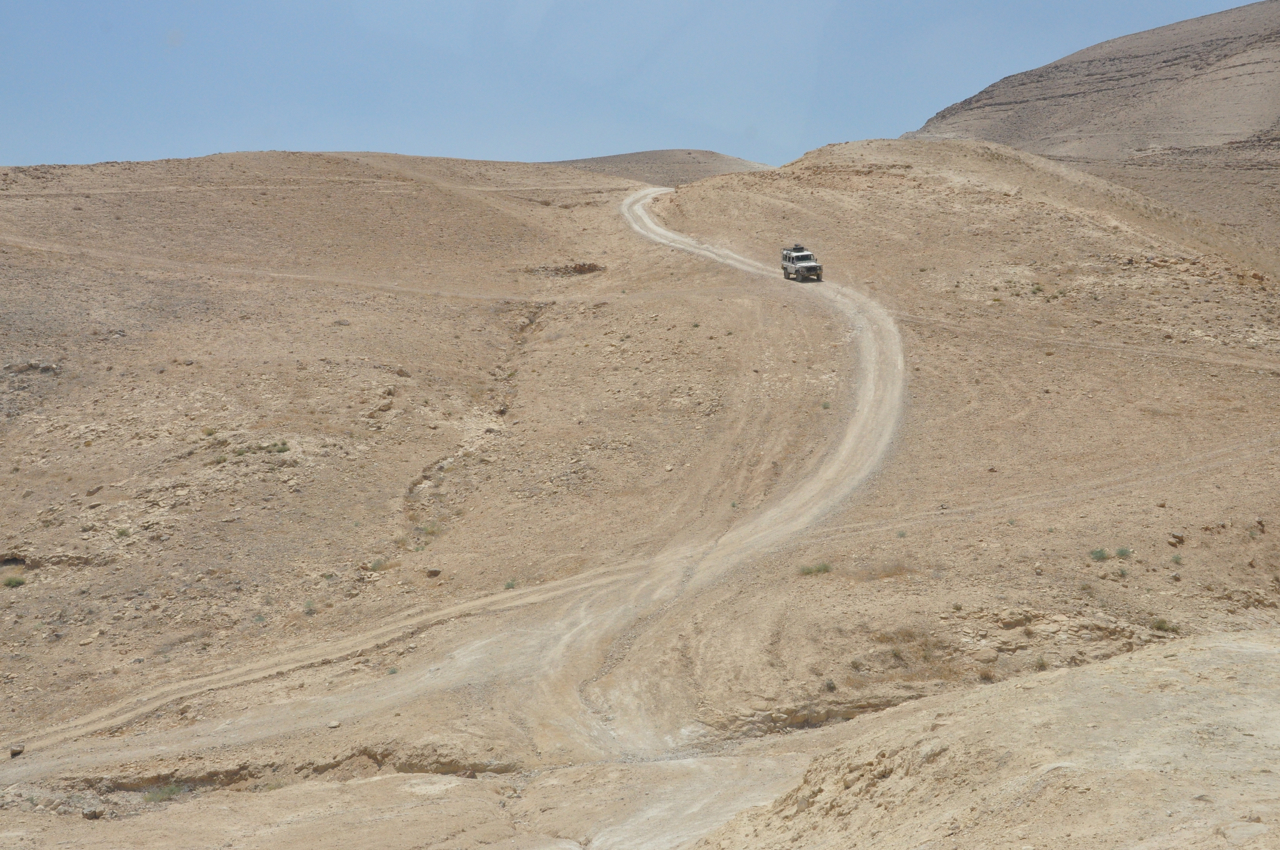
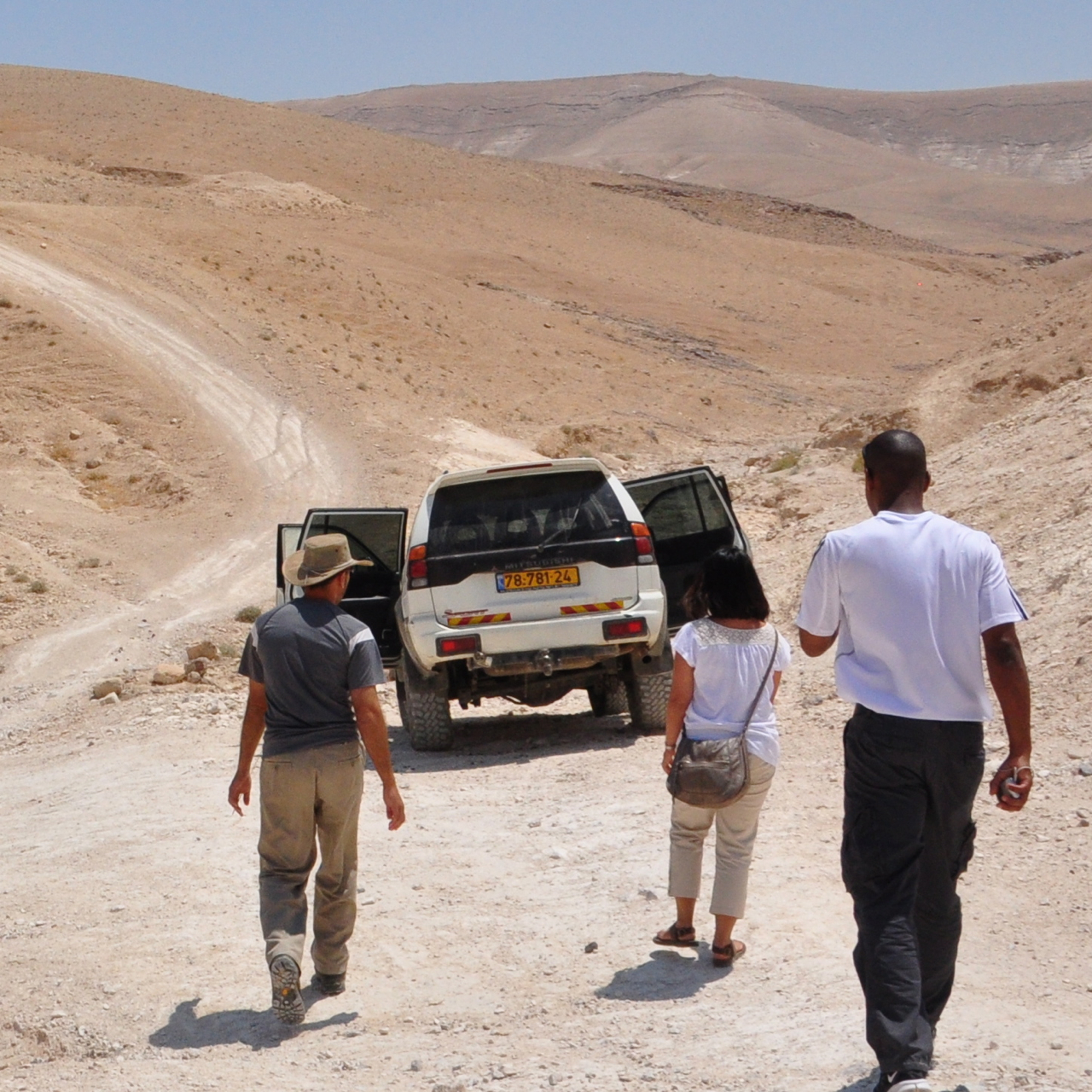
Jerusalem sits on the edge of the Judean desert which make exploring this area a great day trip. It’s a fun adventure to take a jeep and drive off road where all you see is a barren landscape and suddenly bump into camels or have a a cluster of buildings come into view over the hill. It’s also a great place for a photo shoot.


Christian monks came to the quiet of the Judean desert in the early 4th century identifying with Moses, Elijah, Jesus and others who spent time here. Mar Saba, who lived at Euthymius for 12 years before receiving permission to live alone in the desert, found the spring and caves in the Kidron valley. Some 15 years later, in 483CE he built a laura, a cluster of caves for hermits around the monastery, that bears his name to this day.

This is the largest monastery complex in the Judean desert, multiple buildings enclosed by a wall and tower for protection. He directed it for 50 years. At its peak it accommodated hundreds of monks, today there are about 20 monks who live there. Women are not allowed inside the monastery, the closest they can get is to view the complex from the Women’s Tower; interesting that meat and apples are also prohibited.

As a guide, I can take you to experience the desert and discover that isolated monastery in the Kidron valley.

For more information about Mar Saba, including photographs inside the compound see the entry at the excellent BibleWalks site http://www.biblewalks.com/sites/MarSaba.html

It’s worth combining a visit with other sites in the area, the monastery of St. George tucked into the cliff in Wadi Qelt, the monastery of Euthymius and Martyrius, in the midst of an Industrial park and housing project respectively, museum of mosaics at the Inn of the Good Samaritan and Qasr el Yahud, the site on the Jordan River where according to tradition John baptized Jesus.

Model of Herod’s Tomb

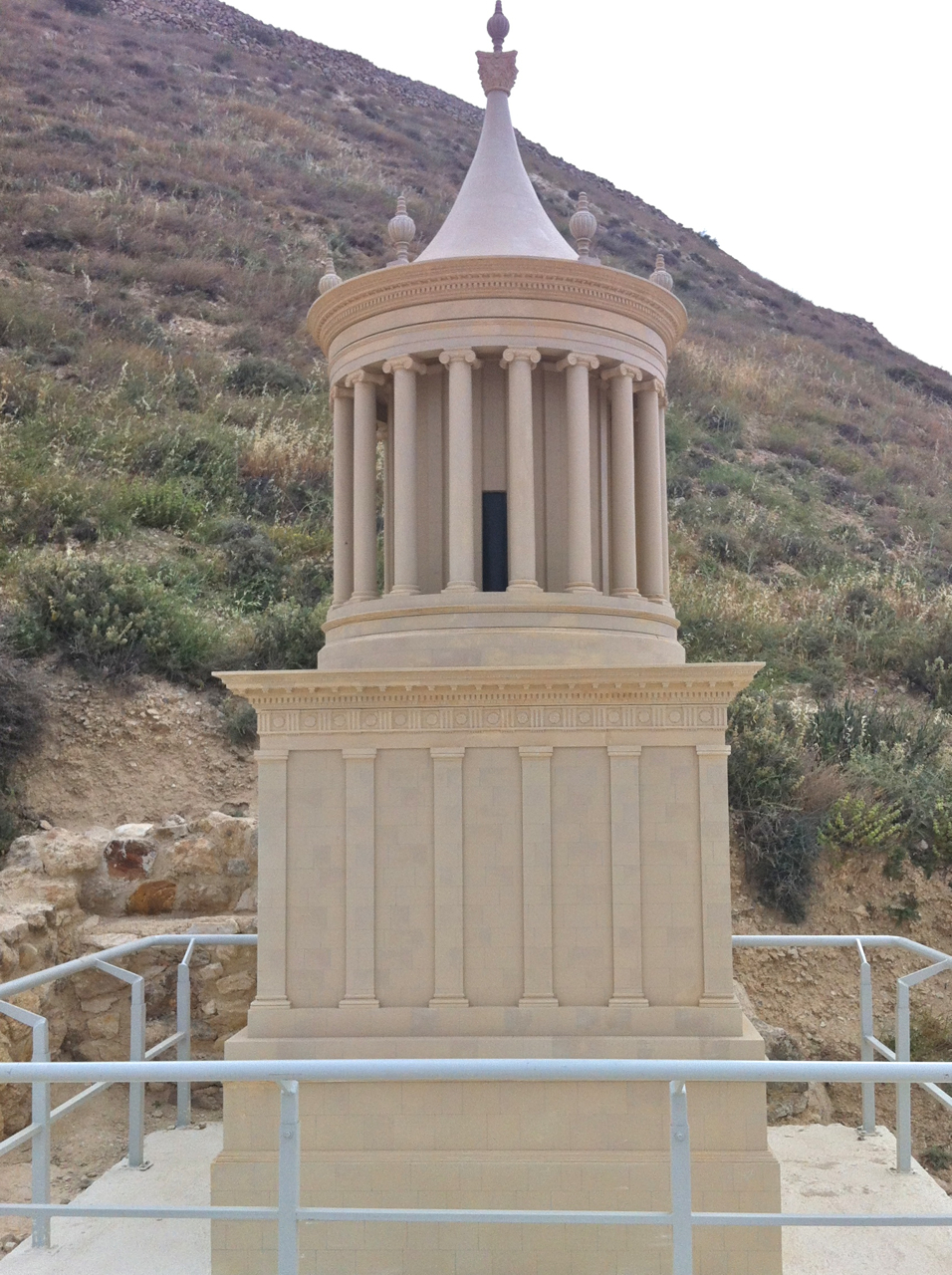
I was at Herodium today and took the opportunity to photograph the new smaller than life-size model of Herod’s tomb which has been installed by the path that leads to the palace-fortress. The model was built from drawings by Prof. Ehud Netzer based on the base of the mausoleum uncovered and Netzer’s expertise as both an architect and archaeologist on the Herodian period. Netzer estimates the nefesh as 25 meters high, with a cube-shaped lower level with two rows of decorations below the roof line, a row of egg and dart pattern and below it a row of medallions and vertical bars. On top of this cube sits a cylindrical second level, a tholos with columns and a conical roof. The model shows Nabatean funerary urns in four places along the roof line and the peak of the cone. We found two pieces of stone carved in the egg and dart pattern a few years ago when I volunteered at the dig.

There is also a short video, currently only in Hebrew, that attempts to illustrate the account by Josephus of Herod’s death.

Archelaus omitted nothing of magnificence therein, but brought out all the royal ornaments to augment the pomp of the deceased. There was a bier all of gold, embroidered with precious stones, and a purple bed of various contexture, with the dead body upon it, covered with purple; and a diadem was put upon his head, and a crown of gold above it, and a secptre in his right hand; and near to the bier were Herod’s sons, and a multitude of his kindred; next to which came his guards, and the regiment of Thracians, the Germans. also and Gauls, all accounted as if they were going to war; but the rest of the army went foremost, armed, and following their captains and officers in a regular manner; after whom five hundred of his domestic servants and freed-men followed, with sweet spices in their hands: and the body was carried two hundred furlongs, to Herodium, where he had given order to be buried.

There were a half dozen people working at the tomb site. I noticed the remains of some additional structures that have been uncovered. Unfortunately, access to the tomb area is still closed.