Category Archives: Architecture

Nymphaeum at Herodium?

I’m a tour guide who often does tours at Herodium, the palace complex built by King Herod about 15 km south of Jerusalem and where, according to Josephus, Herod was buried. Ehud Netzer, in excavating Lower Herodium, described a building that he called the Monumental building at the end of of an elongated course. He suggested that the building could have been Herod’s burial place. Since then Netzer has discovered the base of a mausoleum with finely carved decorations and 2 sarcophagi on the north-western side of the hill.

On p. 38 of his booklet entitled Herodium (published 1999) Netzer writes

“Present-day visitors are always puzzled by a series of grooves cut into all of the half-columns. These grooves were apparently carved to accommodate a piping system which was probably added later during the period of the Roman pro curators, who may have converted the hall into a nymphaeum.”

Interesting. The nymphaeum that comes to mind in Israel is the one in Bet Shean. So I looked up nymphaeum and came across a very interesting article about Hadrian’s Villa near Tivoli:

http://www.dartmouth.edu/~classics/rome2005/updates/week9_10/nov14.html

There’s a diagram of the Canopus/Serapeum complex, an open air triclinium/nymphaeum and water course. This is very reminiscent of the Monumental building and course that Netzer describes (course at Lower Herodium is ~300m in length and ~25m wide).
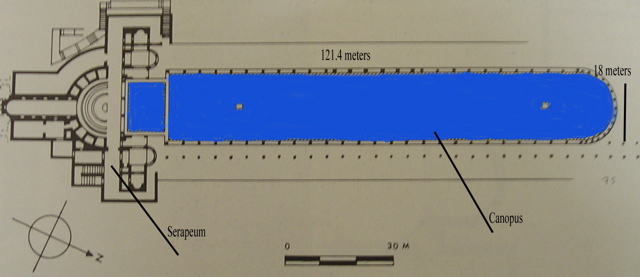
A plan of the Canopus/Serapeum complex (original image from Sear, p. 180.)

There is another nymphaeum in the plan, in the area called the Piazza d’Oro (based on Figure 103 on p. 177 of Sear’s Roman Architecture; the central dark grey area comes from Figure 114 on p. 96 of Macdonald and Pinto’s Hadrian’s Villa and its Legacy).

(A) A large colonaded pool with garden.  (B) The octagonal entrance vestibule.  (C) The eight-sided space on the southeastern side of the courtyard.  (D) The nymphaeum with five niches for fountains of flowing water.

The article includes a photo of the remains of this nymphaeum, made up of 6 niches (which would have held the fountains) separated by pilasters. There is a channel that would have allowed water to run from the nymphaeum to the pool in the courtyard.
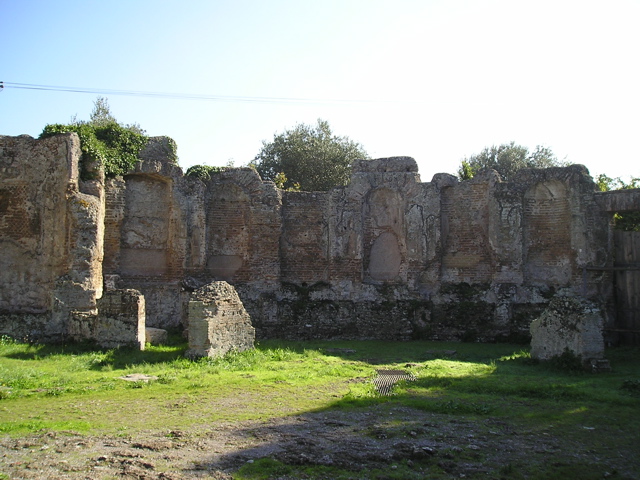
I was struck by how similar this is to the Monumental building, so I have included a photo of it here.

In guiding, I’ve had a number of tourists ask me what the curved cuts in the stone in the lower part of the pilasters (between the niches along the walls, 2 in the end, 3 on each side) were used for. If this was designed as a nymphaeum (either in the time of Herod or by later Roman governors) perhaps the channels were used for water. The course and building are just south of the large pool.
Roman Theater Box at Herodium

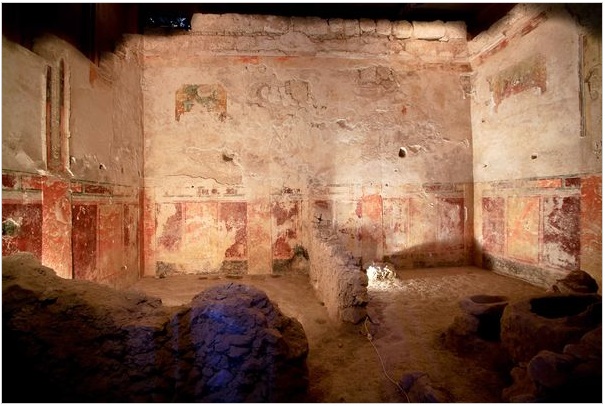
First discovered in 2008, the Royal loggia (theater box) above the regular rows of seats at Herod’s private theater has now been fully excavated.

Herod’s theater box, loggia; photo courtesy of Hebrew University

While ruling over Judea Herod wanted “to put Herodium on the map. In order to attract people, there were gardens and waterworks, and the place became famous.” said archaeologist Ehud Netzer, professor emeritus of archaeology at Hebrew University. “The theater indicates that the experiment worked: there was lots of life there. Hundreds, if not thousands, of guests would visit the place and there was justification to provide them with entertainment.”

On your next visit to Israel make sure that Herodium is on your itinerary. I can take you there and give you a comprehensive and fascinating guided tour.

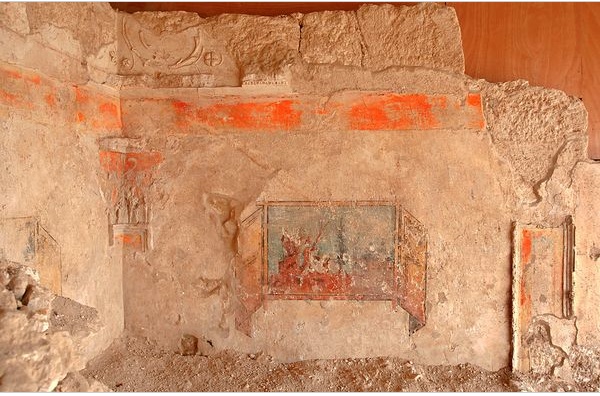
“There is nothing like this in any other location” in Israel, Netzer said of the paintings and intricate moldings in Herod’s theater box. But the style was fairly common across the Mediterranean and reflects the Roman origins of Herod’s power.

Herod’s theater box, loggia, Herodium; photo courtesy of Hebrew University

“Our art history expert said, ‘Hang on, this is something very familiar from Italy,'” in terms of both style and method, Netzer said. “The technique used here was not particularly accepted in this region; it was secco rather than fresco“—painted on dry, rather than moist, plaster.

Depicting natural landscapes, nautical scenes, animals, and the Nile River, the paintings most closely resemble others in the roughly contemporary Villa Imperiale at Pompeii.

According to Netzer, the pictures are not only Roman style but Roman made, perhaps executed in advance of the visit of Marcus Agrippa to Judea in 15BCE. Agrippa was Augustus’ deputy and the man responsible for many of the building projects in his empire.  “It was a one-time mission. The artists came, they painted, and they returned to Italy.” says Netzer. There are other examples from the same period where Roman techniques and presumably builders and architects were sent to Judea for a specified period of time to assist in building projects. Archaeological excavation have uncovered walls at three sites built using the Roman opus reticulatum and opus quadratum techniques. These sites are Herod’s winter palace at Jericho, a temple at Banias and a round structure north of Damascus Gate in Jerusalem, apparently the mausoleum to members of Herod’s family, all mentioned in Josephus’ writings.

New Israel Museum

Today I had the opportunity to visit the Israel Museum before its official opening to the public on July 26th. There have been a lot of changes, to the tune of $100 million and these improve the visitor experience immensely.

James Carpenter Design Associates built new entry pavilions at the entrance to the museum that are connected by a covered “route of passage” to a new gallery entrance pavilion which acts as the central hub giving access to the Museum’s 3 collection gallery wings, Archaeology, Judaica and Art, from a main Cardo. Each of the new buildings is basically a glass cube shaded by cast terracotta louvered shade panels that diffuse the bright Mediterranean light and still allow the visitor a view of and interaction with the exterior. With this design the new pavilions resonate with Alfred Mansfeld and Dora Gad’s original modular and modernist design. I am pleased to offer an architecturally focussed tour of the new Israel Museum, including highlights like the Shrine of the Book, that has been called “a milestone in the history of world architecture”.

In the above photo, the view from the Carter Promenade looking back towards the entrance pavillions; below, looking up the hill to how the new gallery pavillion fits into the plan.

Light and glass comprise the firm’s signature architectural focus. The passageway has a wall of glass and is covered by a swatch of translucent glass panels that were designed and made especially for the project. Outside above the passageway a stream of water cascades down the hill over the glass panels. During the day the water and glass let light into the passage which animates the wall with a moving pattern and at night the light illuminating the passageway lights up the water stream above.

Efrat-Kowalsky Architects redesigned the interior gallery spaces of the existing buildings and the way the museum has organized the art and artifacts suggests some interesting connections among objects and between the particular and the universal. The emphasis is on what cultures have in common and there is an attempt to place Jewish history and practices in a broader context.

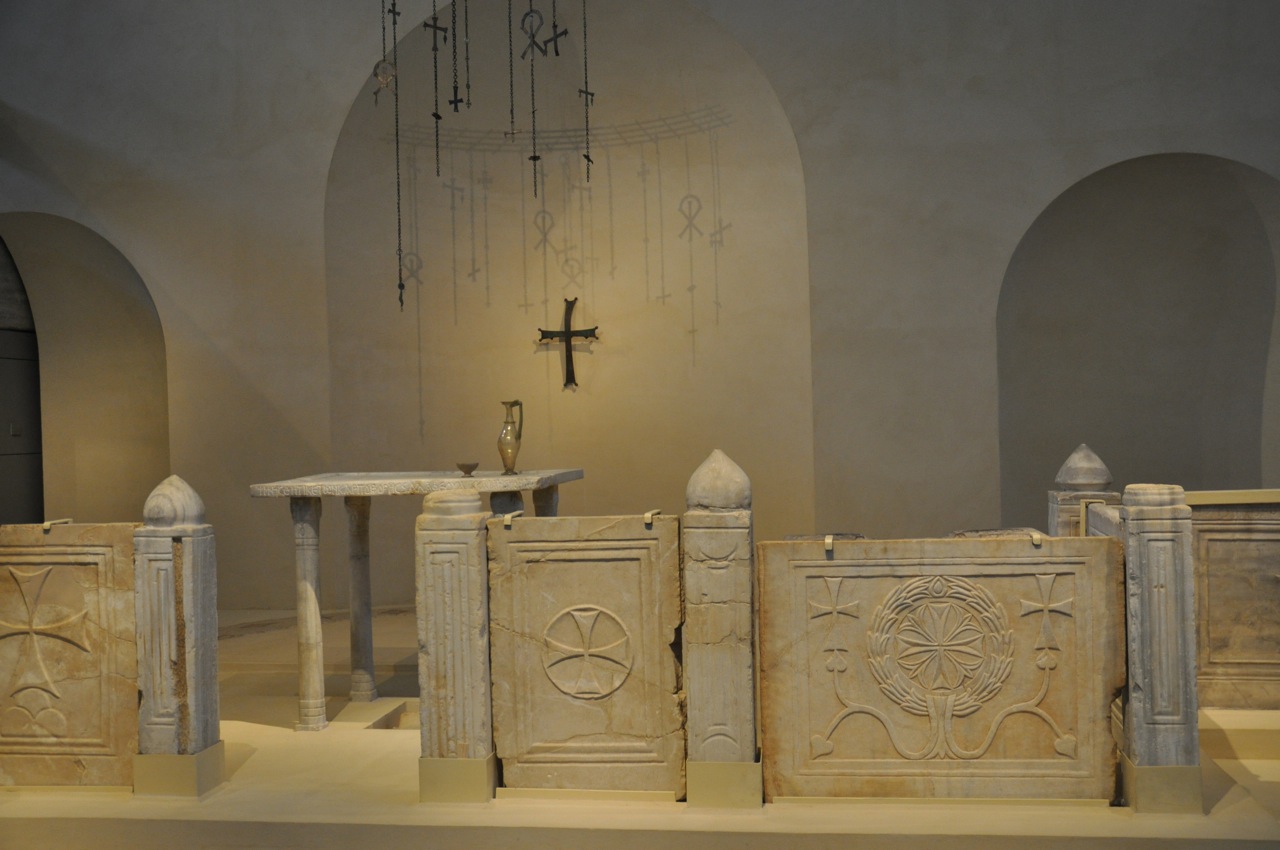
One example is a very impressive new installation in one large room that focuses on the 5th to 7th Century where part of a restored synagogue is displayed, the facade of the interior of the synagogue with its particular decorations and objects and a beautiful mosaic floor. Next to it a Byzantine church and across the room the michrab or prayer niche from a mosque. Roughly contemporary structures, they are placed in a way that highlights both their distinctiveness and their commonality.

The new galleries and displays are stunning. The museum is a wondrous place to explore.

Someone to Tour With – Kids Tour with a Golden Retriever

This is a tour of Jerusalem sites based on David Grossman’s prize-winning novel Someone to Run With/משהוא לרוץ איתו (written in Hebrew but translated into English, available at Amazon and made into a movie). The story is about two young people: Assaf, who gets a summer job with the Jerusalem municipality and is given the task of returning a lost and found dog to it’s master and Tamar, a talented musician who goes looking to rescue her brother who has gotten into trouble at the edge where youth, music and drugs overlap. As the dog, a golden retriever named Dinka, runs through Jerusalem with Assaf in tow, we too become entangled in the story.

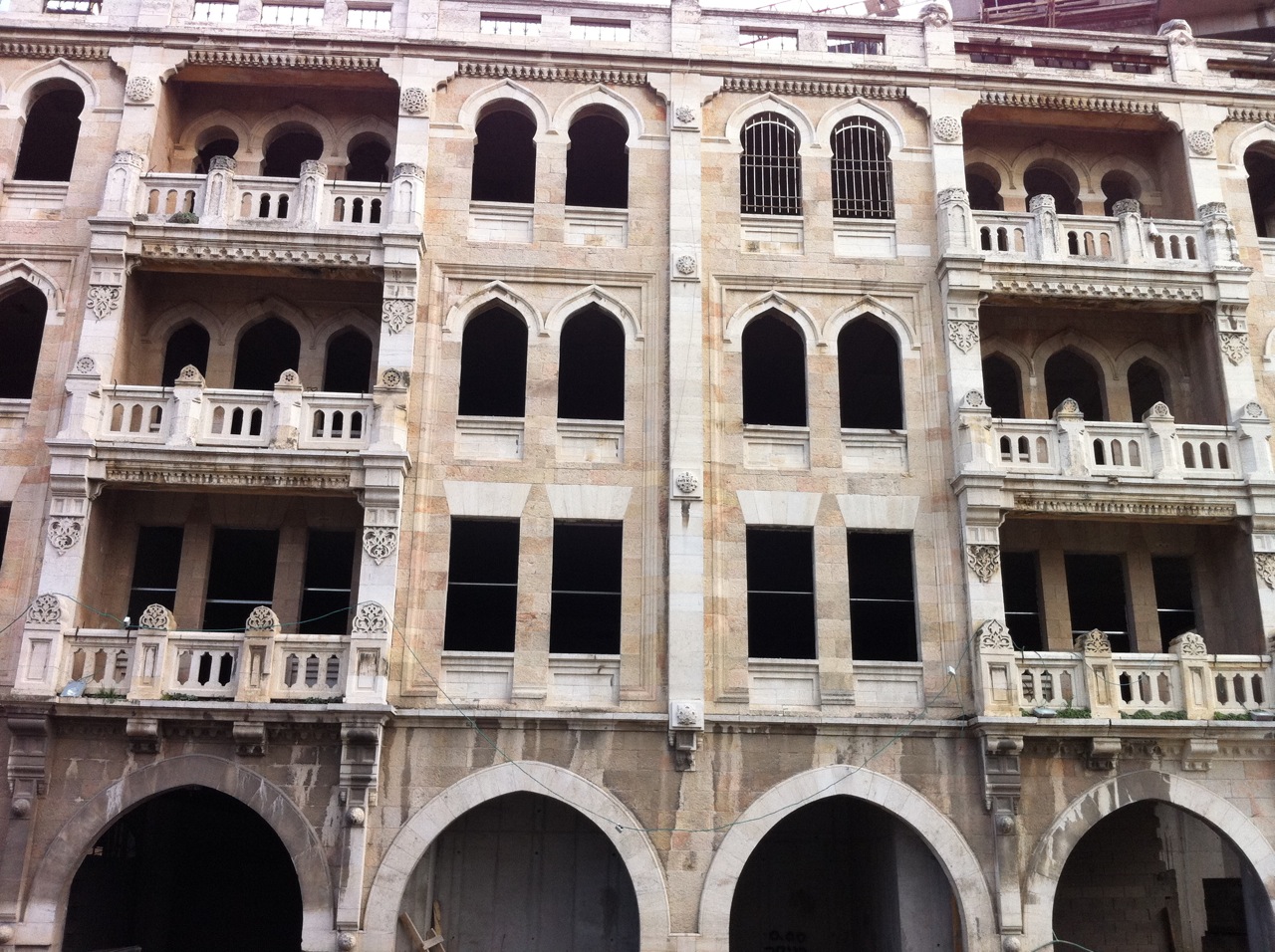
Familiar Jerusalem landmarks pass by: the midrahov/Ben Yehuda pedestrian mall, music store, Yoel Salomon neighborhood, Jaffa Street, Mahane Yehuda market, the Central bus station, Independence Park, the historic Palace Hotel.

The Palace was built in 1929 by the Waqf, Supreme Muslim Council headed by the mufti of Jerusalem, Haj Amin al-Husseini. In its day it was a beautiful building with stone carvings and arches, a combination of Moorish, Roman and Arab architecture. The Reichman Brothers and the Hilton chain renovated the hotel to the tune of $100 million, to become a Waldorf-Astoria, only the 6th in the world.

Another scene takes place outside the facade of Talitha Kumi (from Mark 5:41), all that is left of the girl’s orphanage and school and the Mashbir (the large department store) that stood on King George Street where Tamar sings HaTikva, the Israeli national anthem to her brother’s electric guitar accompaniment. To me it is reminiscent of Jimi Hendrix playing the Star Spangled Banner at Woodstock (unfortunately, the clip on YouTube has been removed).

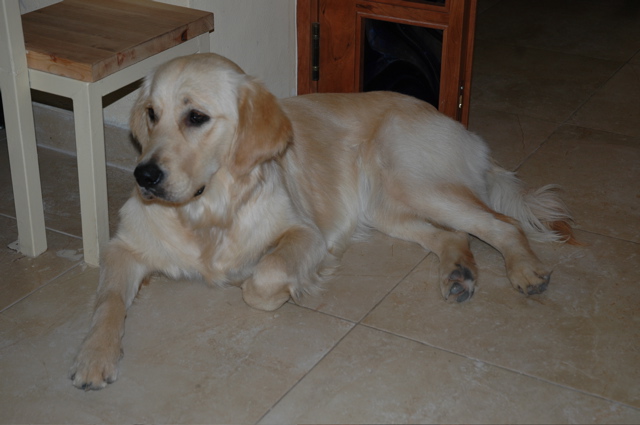
I have a golden retriever, whose name is Sumsum (which is Hebrew for sesame, the seeds that they make tehina from and also a kind of finish on Jerusalem stone which is her color) who is an offspring of one of the dogs who starred in the movie.

Sumsum1yr

Join me and Sumsum as we explore Jerusalem following in the footsteps of Assaf and Dinka, experience the Mahane Yehuda market, head down to Ben Yehuda Street to listen to the buskers, have pizza, walk through Independence Park, check out the Palace Hotel, have hummus and felafel at a local restaurant. Having read the book or seen the movie before taking this tour adds to the experience.