Category Archives: Archaeology

Siloam Pool

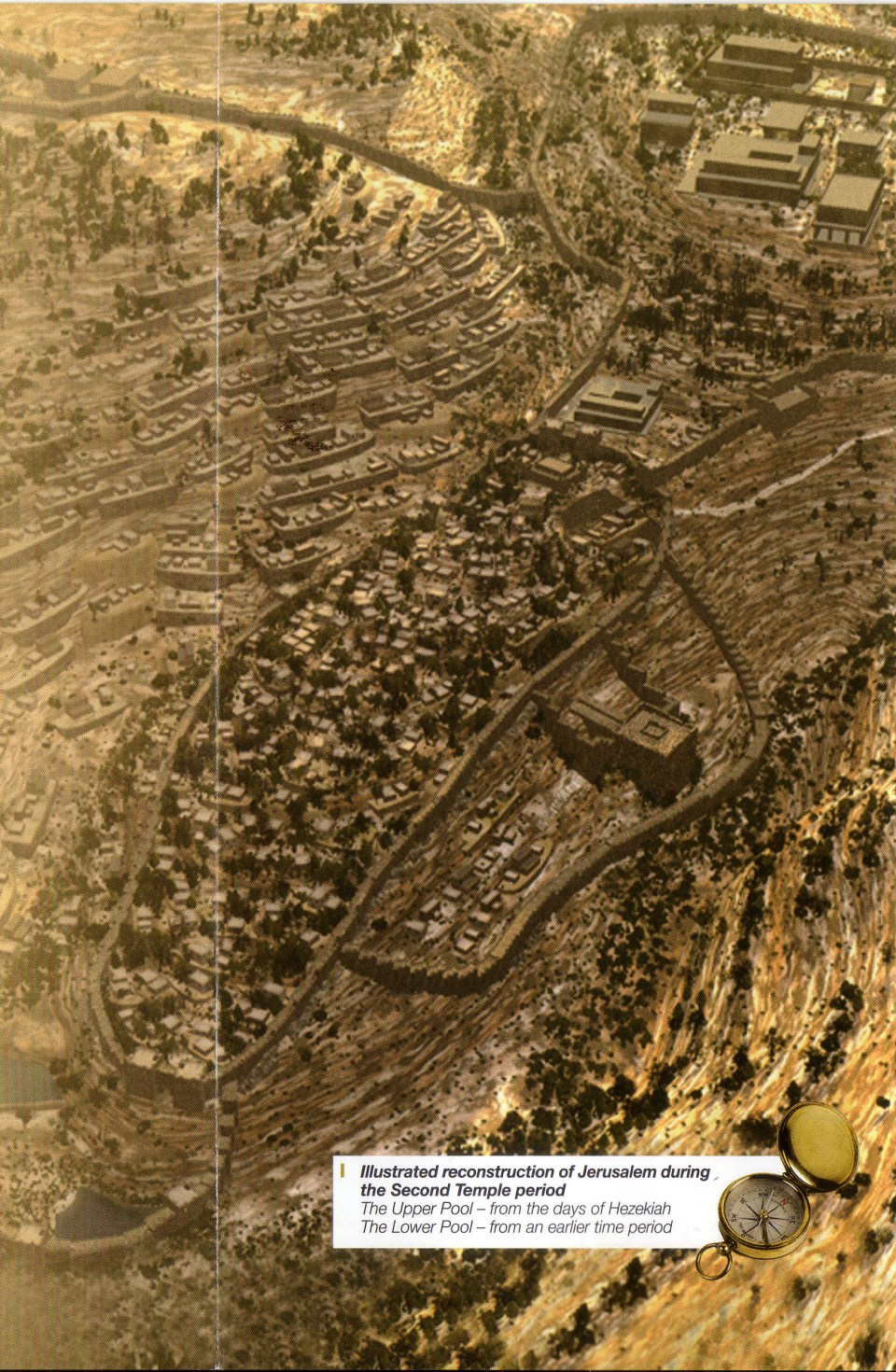
In summer 2004 Ronnie Reich and Eli Shukron uncovered the stone steps to a large (50m x 60m, 3 dunam) pool at the southern end of Ir David, the City of David, dated to the end of the Second Temple period and built by King Herod. Further excavations unearthed the north-east corner and northern edge of the pool and a promenade that ascends via steps to a square overlooking the pool and the beginning of a stepped street that runs 800 meters from the bottom of the City of David to the Temple Mount, connecting with the Herodian street below Robinson’s Arch. The stone surface covers an earlier pool from the Hasmonean period.
shiloach-pool21
For Jews, this is the Shiloach Pool, where the ‘living waters’ were used for ritual cleansing in the Temple and the Festival of the Water Libation during Sukkot. For Christians, the Siloam Pool is one of the two places in Jerusalem where Jesus performed miracles (the other is the Bethesda Pool in the Old City), see John 9: “The man called Jesus made mud, smeared it on my eyes and told me, ‘Go to Siloam and wash.’ So I went and washed, and was able to see.” Until this discovery, the Siloam Pool was thought to be the small pool at the end of Hezekiah’s tunnel, part of the Church of Siloam built by the Empress Eudocia between 400 and 450. The round parts of stone columns visible in the pool apparently came from the columns that adorned the promenade of the Herodian pool.

The site of yet another Pool of Siloam which would predate these two is still unknown. That first pool (Shelah Pool, mentioned in Nehemiah 3:15) was constructed in the 8th century BC by Judean King Hezekiah, in anticipation that the Assyrians would lay siege to Jerusalem to hold the waters of the Gihon Spring, brought to it by Hezekiah’s tunnel.

“Now the rest of the acts of Hezekiah, and all his might, and how he made the pool, and the conduit, and brought water into the city, are they not written in the Book of the Chronicles of the Kings of Judah?”                 (2 Kings 20:20)

Even earlier, in the 18th C BCE (MB II), the inhabitants of Canaanite Jerusalem collected both rainwater and runoff from the City of David hill and the Western hill in a pool at the mouth of the central valley. They also channeled the water of the Gihon Spring to the pool through a conduit (open to the sky), known as the Canaanite Tunnel which runs along the eastern slope of the city.
shiloach_pool

Illustrations are from the INPA-City of David brochure on the Shiloach Pool

Yatir forest

In 1964 the Jewish National Fund planted tens of thousands of trees in the barren lands just south of the Hebron hills on the edge of the Negev. Today Yatir forest is the largest of Israel’s planted forests, including pine trees, carob and pistachio. In the spring, this is one of the areas where you can see the yellow, crocus-like Sternbergia flower blooming (another place is the wadi below Maale Rehavam, near the site of Herodium).

dscn2506

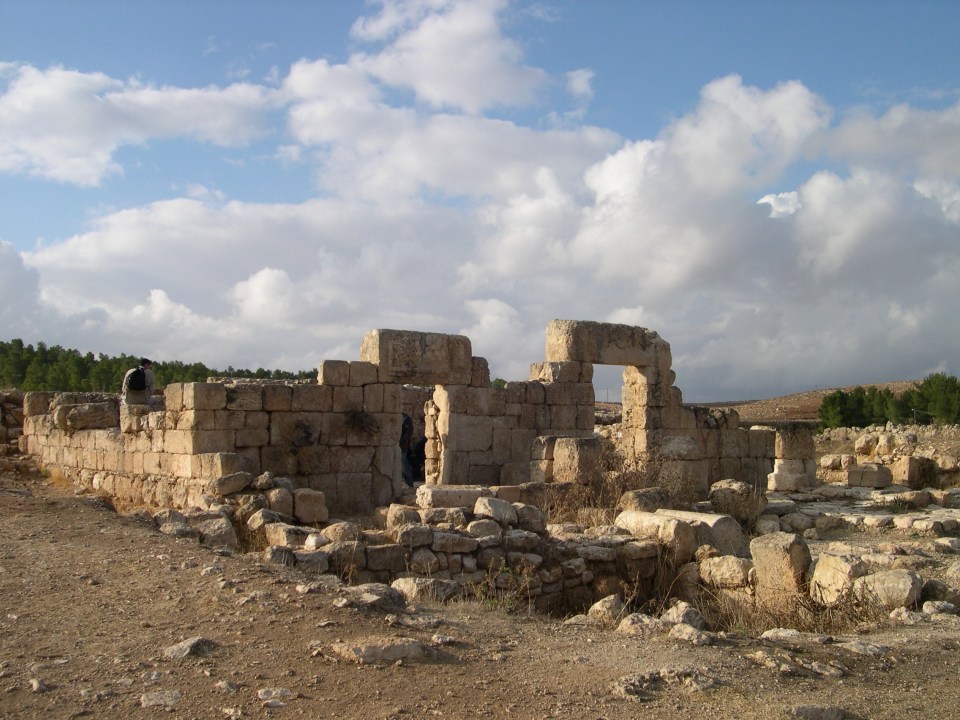
The area includes Jewish and Beduin settlements, a fine winery, vineyards, orchards, agricultural fittings from the 3rd and 4th C and the ruins of a synagogue at Hurvat Anime.
dscn2499

Yatir is just one of the JNF forests and recreational areas. Check their website at
http://www.kkl.org.il/eng/tourism-and-recreation/forests-and-parks/yatir-forest.aspx

Along the trails in the Yatir forest you will see ancient wine presses, cisterns and olive presses, evidence of settlement and wine and oil production 2500 years ago. Tel Arad, another archaeological site that goes back to the Chalcolithic period is nearby. On the upper hill is the only Judean temple discovered by archaeologists to date. The incense altars and two “standing stones” may have been dedicated to Yahweh and Asherah. The Yatir winery sits at the foot of Tel Arad and tours of the winery should be arranged in advance.

Related articles

Family Trip (7-day tour)

I’d like to share a 7-day tour that I created for a family’s first trip to Israel. They had 2 days in Jerusalem before I met them. Here is the itinerary I worked out with them:

Day 1

  • pickup 8am at hotel in Jerusalem, day trip
  • 9am Dig for a Day, archeological excavations at Tel Maresha
  • drive down to the Negev via Beersheva, picnic lunch at Park Golda
  • 2pm Sfinat Hamidbar for 1 hour camel ride
  • drive through Large Makhtesh, petrified trees and colored sand
  • back to Jerusalem, dinner recommendations: Fish & Olive, Ima, Darna, Eucalyptus

dsc_0012

Day 2

  • drive from Jerusalem to Masada
  • Ein Gedi nature reserve
  • Rachel, Charlotte and Celia enjoyed a winter float in the Dead Sea

Day 3

  • City of David tour, including walking through Hezekiah’s Tunnel where the water reached Celia’s (who is 6 years old) waist
  • braid challah & meet Sumsum, our golden retriever
  • Friday night dinner with family

Day 4, Shabbat

  • afternoon, walk to Israel museum to see Second Temple model and Shrine of the Book

Day 5

  • drive up the Jordan Rift valley
  • Old Gesher: Rutenberg hydroelectric project, kibbutz life in 1948
  • Bet Shean, Roman/Byzantine city and the tel, where Charlotte figured out that the clay brick buildings could be Egyptian and Michael asked how we knew it was a tel and not just a hill
  • Dinner at Decks in Tiberias – the sweet potatoes baked in a wood-fired oven were a hit, on to our B&B at Had Ness in the Golan

Day 6

  • tour the Golan Heights
  • Banias archaeological site, quiz on archaeology and layers at the entrance overlooking the excavations of Byzantine church; cave of Pan, temples, Herod’s temple, opus reticulatum, 7 species of Eretz Yisrael and what kind of tree is this? Linda figured out that it was a walnut and we tasted a nut
  • Banias nature reserve (w. waterfall) and then it started raining
  • planned to have lunch at Witch and the Milkman at Nimrod but instead drove to Druze village of Ma’asade for humus, salads, etc.
  • got some water from Kinneret/Sea of Galilee for our Yam l’yam/Sea to sea journey
  • dinner at Shiri in Rosh Pina

Day 7

  • Akko: underground Crusader Halls – for some reason there was a piano so Charlotte played a piece from her recital, Okashi museum, Turkish Bath-house, Templar tunnel
  • Haifa: Bahai gardens, German Colony
  • drive down the coast
  • stop at aquaduct at Caesarea, poured our water from the Sea of Galilee into the Mediterranean Sea, completing our Yam l’yam journey
  • drop off at airport

Finding a guide at the last minute

In Hebrew there’s an expression daka tish’im which means at the last minute. I’ve been able to help people who realized at the last minute that they wanted to see a particular site – the best way to do that is to hire a guide who can arrange everything. One couple hoped they would get to visit Herodium, King Herod’s palace/fortress in the desert but it was the day before they were leaving. They searched on Google and found an article I’d written and contacted me. I picked them up at their hotel, drove them to Herodium and guided them. This is what they had to say:

The tour of Herodium was awe-inspiring, largely because of Shmuel Browns, our guide. He is highly knowledgeable, and comes equipped with graphic documentation that fills the gaps of what one sees. He gave us a taste of the detective work of archaeologists. Further, Shmuel is very professional and a real “mensch”.

A businessman was flying to Zurich, Switzerland in the afternoon, but at the last minute he had the morning available so he contacted me to take him around the Old City before his flight (I ensured that we were back in time to meet his taxi to the airport; alternatively, after the tour I can take you to the airport, I’m a licensed chauffeur). So if you have limited time but want to have the fullest experience while here in Israel (good reasons for hiring a guide) I can guide you for as little as ½ day. The tour will be personalized to your interests and you can book at the last minute. If you’re staying in Jerusalem then phone me at +972 53 280 6537 (also WhatsApp or Telegram) when you wake up and tell me what you’d like to do, then you can go for breakfast. If I’m available, I’ll meet you within the hour to start your tour.

Here is what one traveler who hired me shared on TripAdvisor:

First off, I made the very grave error of only booking a private tour guide for one day. That caused me a lot of stress while on vacation. I did a lot of research prior to my departure and based on the forum discussions I decided that one day of touring with a guide would be enough and decided that I was enough of a ‘seasoned’ traveller to be able to guide my party on my own.

The other reason I was swayed away from hiring a guide was the costs involved. I’ve used private guides in China and Africa and the costs for a private guide were very very inexpensive compared to guides in Israel – I had a hard time justifying the $500. per day.

Boy was I ever wrong and was I ever sorry for having listened to the feedback that you can do Israel on your own with a good guide book. This was not the case for me or my travel companions. We found we really needed the professional assistance of a guide for there is just so much a guide book can teach you. Few sights have good signage telling you where you are and what you are seeing or much historical reference. The cost of a guide definitely reflects what you get, an organized and informative visit to a land filled with a very rich narrative history!

If you decide at the last minute that you really do need a guide whether for one day or a week contact me. You can hire an expert, licensed guide at the last minute and for less than $500. per day.

Dead Sea: Hiking and Qumran

For a great day trip from Jerusalem visit the archaeological site at Qumran in the Judean desert. It takes just ½ hour by car to travel the 42 km from Jerusalem and descend the 1170 meters to the northern shore of the Dead Sea. Another option is to take a jeep ride across the desert to the site. Qumran is where scrolls written on parchment were discovered in a cave by Beduin shepherds. Take a guided tour of the site to learn who lived at Qumran, how they were able to live in such an isolated place in the desert without a natural source of water and how they supported themselves.

The settlement at Qumran is named after the wadi (stream bed) that during the winter rainy season brings flood waters via channels to the pools and cisterns dug at Qumran. There is a nice hike in Wadi Qumran where you climb up to the top of the cliffs, along the plateau with great views of the Dead Sea and descend at Ein Feshka – the whole trek takes about 4 hours and can be done by families.

Hiking at Qumran

Hiking up above Wadi Qumran and the Dead Sea.

Hiking Qumran cliffs

Hiking the cliffs above Wadi Qumran with Sumsum.

Complete your day back in Jerusalem by visiting the Shrine of the Book at the Israel Museum to see the Dead Sea Scrolls and other artifacts discovered at Qumran. As your guide I will point out the conceptual design of the building by Kresler and Bartok, described as “a milestone in the history of world architecture”. The combination of experiencing the Qumran site and the very special artifacts discovered there on display at the museum is the key to understanding this historical period.

Tour of Herodium and Herod’s Tomb

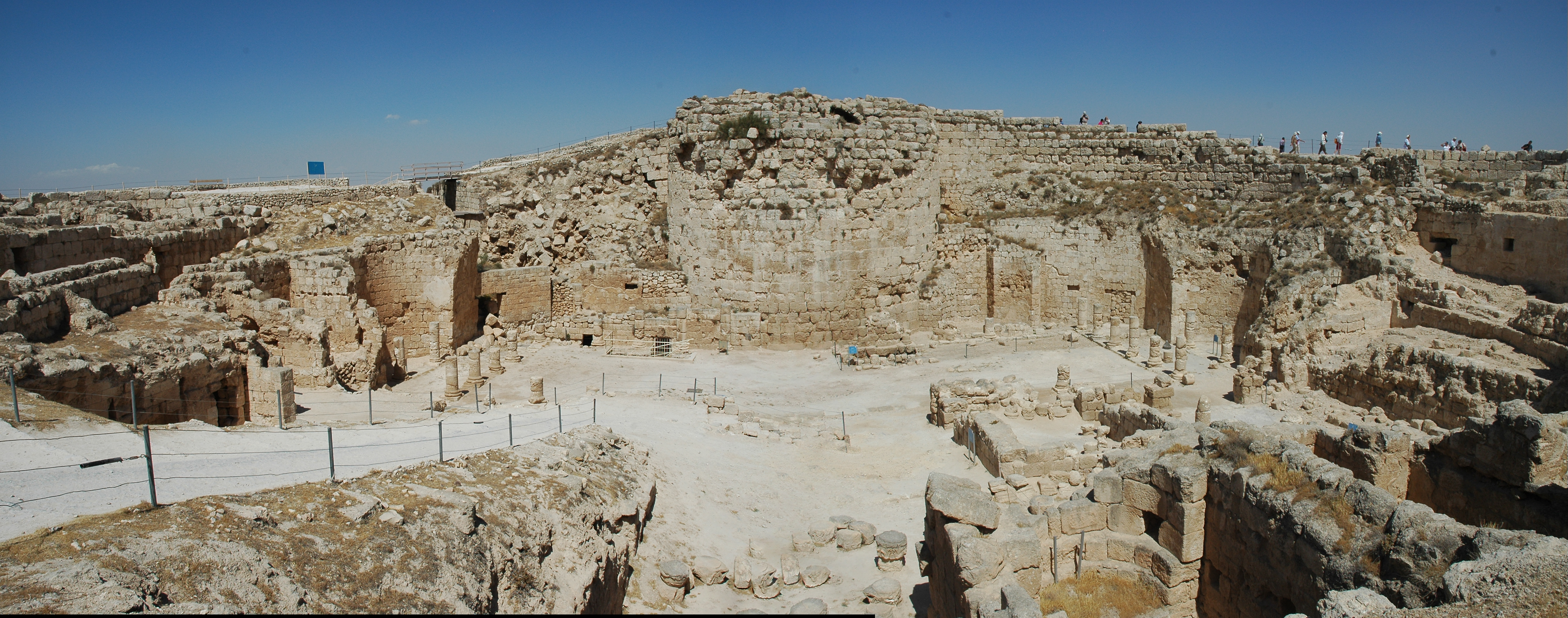
herodium mountain top palace fortress panorama

Panoramic view looking down into Herod’s palace-fortress

A guided tour of an archaeological site like Herodium can be a unique birthday present for a friend or family member. It was a hot and sunny day but there was a cool breeze on the mountaintop and you could understand one reason why Herod would have chosen this site.

When I guide Herodium I often start in the Old City to show people the remains of the buildings at the Wohl museum and the stones of the walls and streets from the Herodion period along the western wall below Robinson’s Arch. Also, the Herodion stones forming the base of the tower at the Roman Gate are impressive. Seeing examples of Herod’s architecture help people know what to look for when we get to Herodium.

Last summer, I participated for a few days in the latest excavations that Ehud Netzer is leading on the eastern side of the mountain, excavating the tomb area. We were working on the pool and besides many pottery shards we found some catapult stones (size of snowballs, not to be confused with the larger ones rolled down from the walls by the Jewish rebels) and some coins from the Great Revolt.

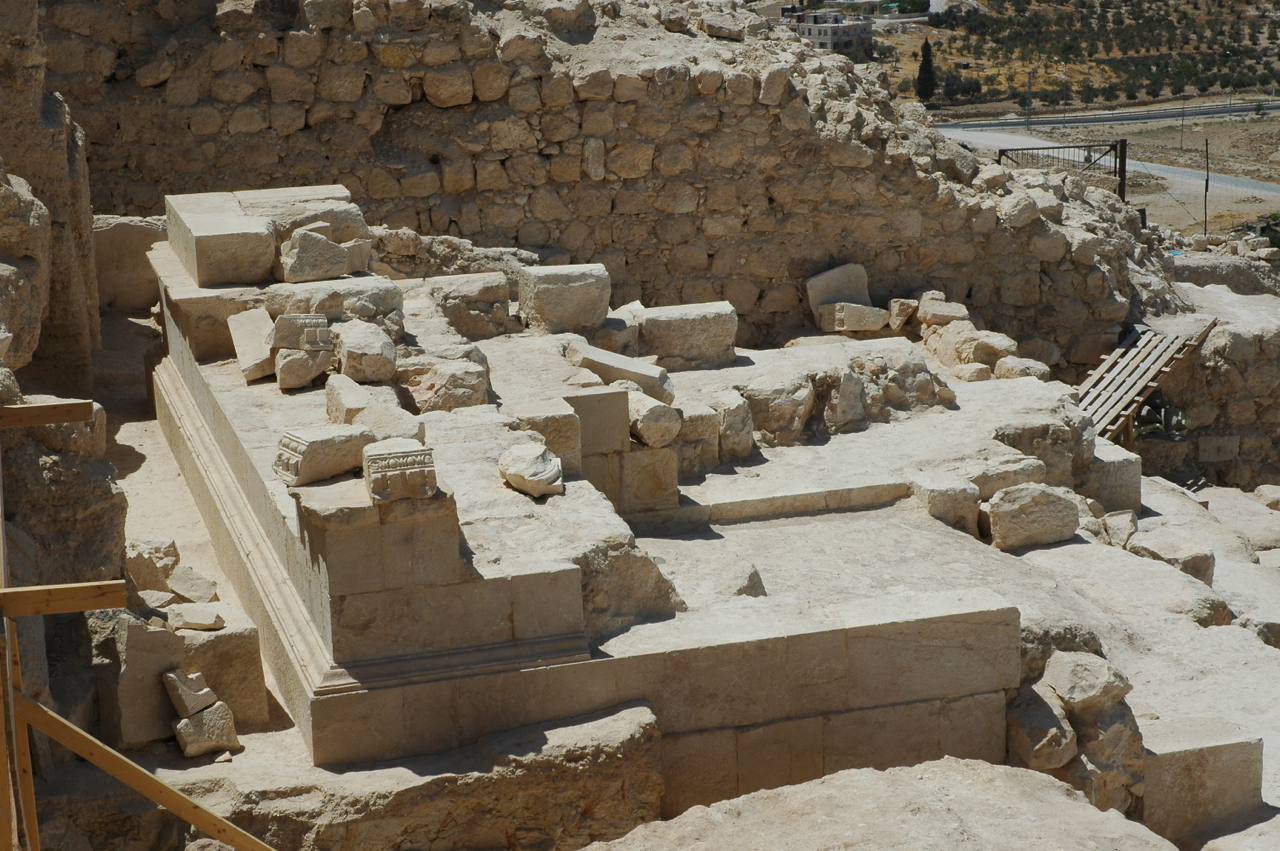
Excavations are continuing and they’ve excavated a much larger area now. More of the base of the mausoleum is now exposed. Additional stone architectural details of a very high quality can be seen. These are not of the local soft limestone but a more royal stone, called meleke, that would have been quarried some distance away and brought here. Netzer thinks that the base supported a nefesh or monument, cylindrical in shape, something like Yad Avshalom in the Kidron Valley.

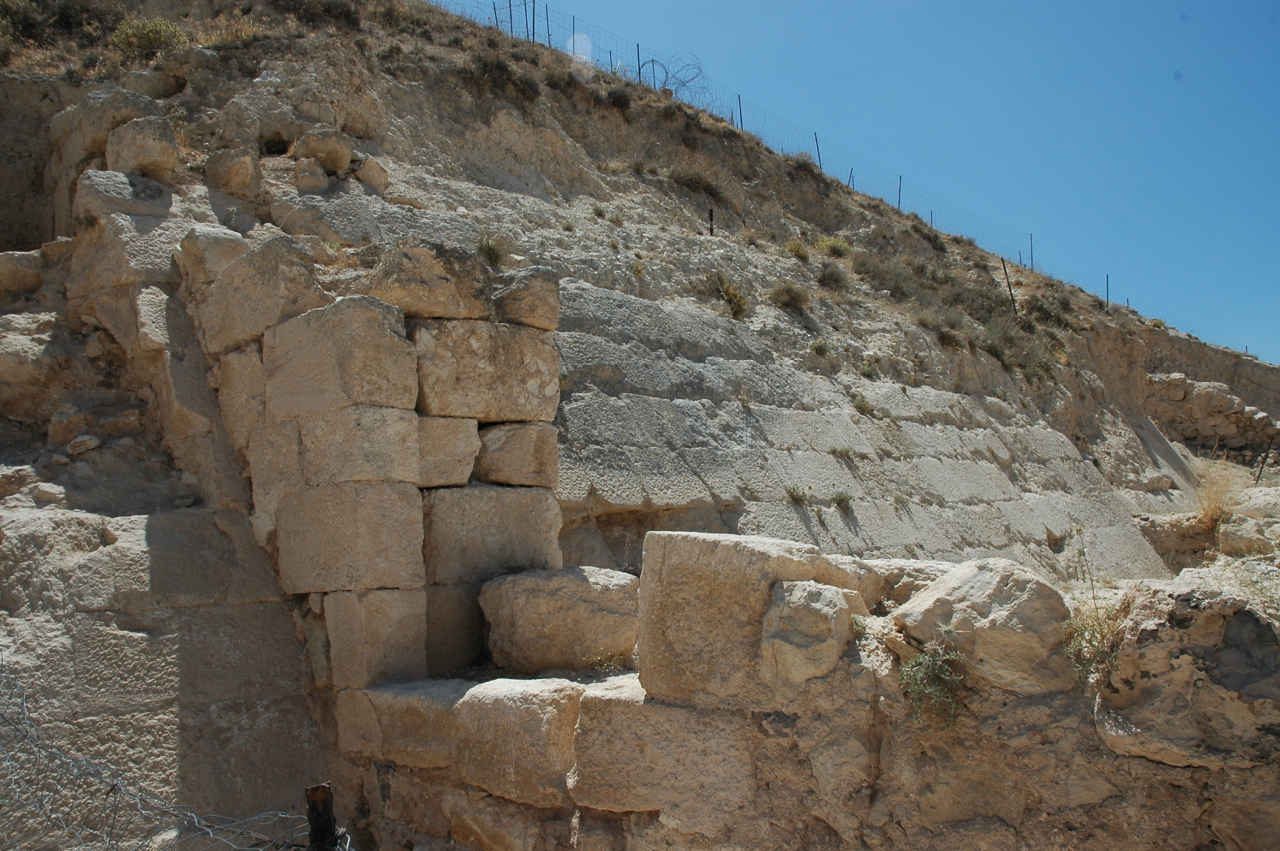
Tomb area at HerodiumThe latest findings are changing our understanding of Herodium. For example, it seems that the earth that was piled up around the mountain palace/fortress is not from the time of Herod but later. Originally, there was a glacis, a sloping wall, that circumvented the mountain.

Glacis at Herodium

Also, the archaeological evidence suggests that the staircase that is described by Josephus “and provided an easy ascent by two hundred steps of the purest white marble” was built later, that originally there was a “snake path” like at Masada. Archaeologists are left with some interesting unanswered questions: When was it done, why and by whom?

I’ve uploaded additional photographs of Herodium to Flickr at http://www.flickr.com/photos/27944012@N06/sets/72157615671440473/