Brandy

DSC_0023

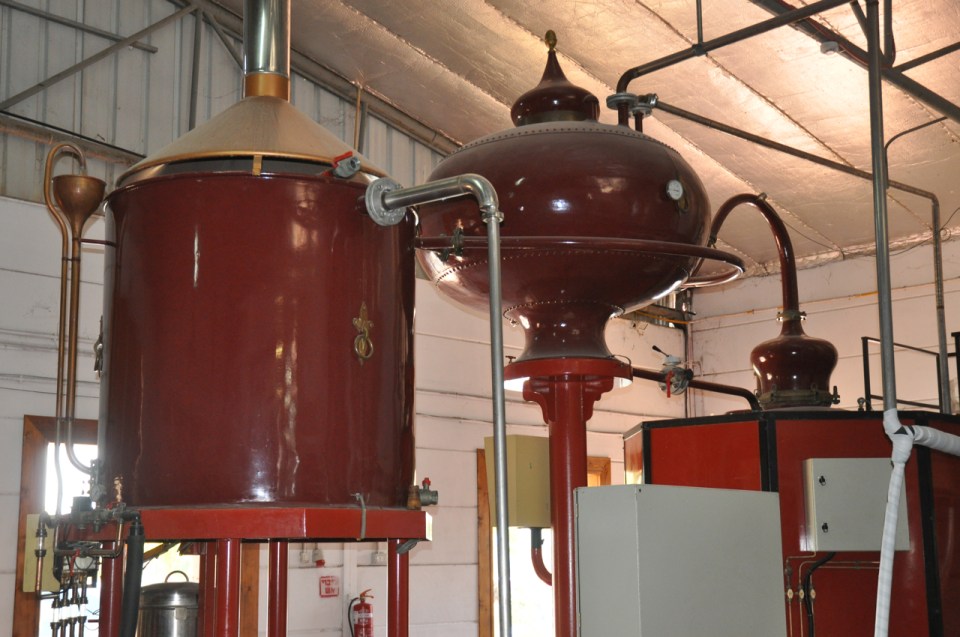
In a previous post about wine tours I mentioned that one of the unique things about the Tishbi winery is that it makes a fine brandy, 40% alcohol, aged 12 years in oak barrels giving it “a beautifully golden rich and smooth experience of oak and vanilla overtones, blended with delicate floral and hazelnut scents”. Tishbi does this by distilling its own wine from the finest Columbard grapes in a 1912 Remy Martin original charentais alembic (a fancy way to say a melon-shaped distilling apparatus), a contraption that looks right out of Willy Wonka.

Heap of the Wild Cat

Rogem Hiri (Rujm al-Hiri in Arabic, meaning stone heap of the wild cat) is one of the most intriguing archeological sites in Israel.

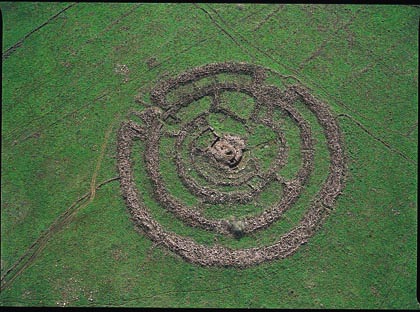
The megalithic complex is located in the central Golan, on the Golan trail, near Daliyot reservoir (32.908705°N 35.800705°E). It consists of four concentric circles of local basalt fieldstones (42,000 stones are the estimated number) of varying sizes enclosing a central, round cairn. The outer, largest circle is about 500 meters long and 156 meter in diameter. Several radial walls connect the circular walls, creating a labyrinth-like structure which has only two entryways, one facing northeast, the other southeast. At the center of the circles is a cairn, an irregular mound of stones 20-25 meters in diameter and preserved to a height of 6 meters. A geophysical survey using Ground Penetrating Radar (GPR) revealed the pile of stones to be hollow suggesting that it might be a burial chamber, a monumental commemorative tomb or the mausoleum of an Early Bronze Age ruler in the Golan.

Rogem Hiri, RogemHiri, megalithic complex in Golan (photo from Israel Ministry of Foreign Affairs website)

Rogem Hiri, Heap of the Wild Cat, megalithic complex in Golan (photo: Israel Ministry of Foreign Affairs website)

Archaeologists have proposed a variety of theories concerning the function of this structure, which has no parallel in the Middle East: a religious center; a defensive enclosure; a large burial complex; a center for astronomical observation, a sort of Middle Eastern Stonehenge since the northeastern entryway is roughly oriented towards the solstitial sunrise on 21 June and a calendrical device. The structure was even identified as the tomb of Og, King of the Bashan and last of the giants (see Deuteronomy 3:11).

The structure is not easy to appreciate from the ground so wouldn’t it be great to fly over it in a hot air balloon or glider?

Wine tour

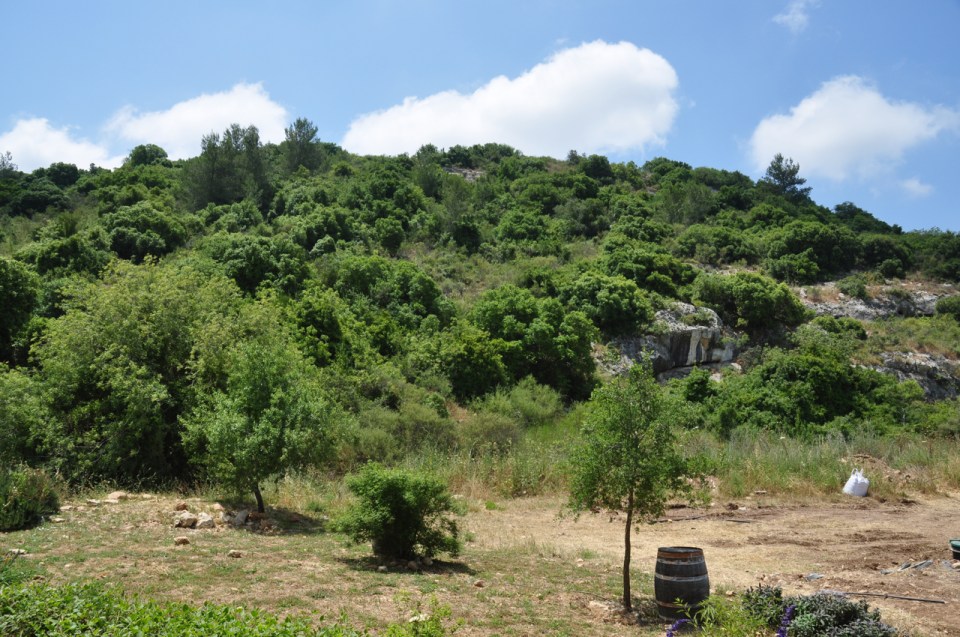
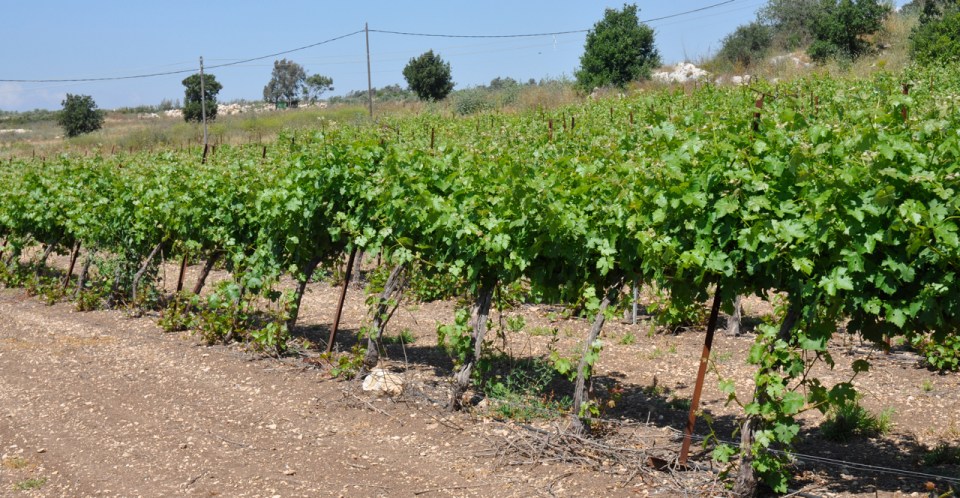
If you are interested in seeing Israel and nature, wine making and tasting, I would be happy to arrange a wine tour. Today we toured the Carmel area and Lower Galilee with some great views of mountains and valleys visiting 4 wineries: TishbiAmphoraeTulip and Yiftah’el.
DSC_0054

DSC_0055

A wineries tour is a special way to experience a piece of Israel today and learn about Israel in the 1880s and the impact of the Baron de Rothschild on its development.

The Tishbi Estate winery is a family run business established in 1984 offering 4 series of wines: Special Reserve, Estate, Vineyard and Series. The business is based on a tradition going back to 1882 when Michael Chamiletzki arrived in Zichron, settled in the nearby town of Shefeya and started growing grapes commissioned by Rothschild. The winery also makes a fine brandy. There is a kosher dairy restaurant and visitor’s center that besides wine sells a line of fine foods by Oshra Tishbi: wine jellies, fruit preserves, honey, olive oil and tehina (also organic).

DSC_0026

The Amphorae winery is situated by the Maharal River where it crosses the Shirr valley, part of Makura ranch that grows organic Merlot grapes, olives and lichee. The winery buildings of native limestone fieldstone were designed by well-known architect Diego Grasso who has designed wineries in northern Italy.

The Itzhaki family founded the Tulip winery in 2003 on Kfar Tikva, a residential community for adults with disabilities and special needs thereby making it part of a unique project to help enable these adults to reach their full potential. Tulip helps to support and contribute to the community. Tulip sponsored a contest for artwork from people with disabilities and the winning entry graces the label of one of their premier wines. Tulip is located next to Bet Shearim and the Sheikh Abrek ridge where the sculpture of Alexander Zaid, one of the founders of HaShomer (the Watchman organization), overlooks the Jezreel valley.

DSC_0066

Yiftah’el grows its own grapes, more unusual varieties, Petite Sira, Shiraz and Sangovese and makes it wine on Alon HaGalil. The visitor’s centre, which also sells honey from wildflowers, citrus, plum, clover and carob, is housed in a small cabin that was imported from Appalachia by an American who shipped it to Israel when he made aliyah.

It is worth including a visit to Zichron Yaakov, the HaMizgaga museum where no less than Meir Dizengoff (later mayor of Tel Aviv) was in charge of the glass factory making wine bottles and the park at Ramat HaNadiv where the Baron and his wife are buried.

Jerusalem Restaurant Recommendations

As a guide, I’m often asked for restaurant recommendations so here are some suggestions for restaurants to try in Jerusalem. There are many websites with lists of restaurants, reviews, etc. – my idea is to recommend a few (I’ve listed about 30) that I feel are special in some way (ethnicity, atmosphere, cuisine, location, view, food) and that are likely to be close to where you are. Those marked [NK] are not kosher, usually means that they are also open on Shabbat.

If you’re at the Mabada theater check out the restaurants in the mitkham rakevet, the old train yards: HaSadna (NK), Hahatzer (meat/fish), Guta (French) actually close by on Derekh Bet Lehem. Try Terasa at the Begin Heritage Center or Lavan [NK] (same owners as Adom) a stylish bistro at Cinemateque that have a lovely view of the walls of the Old City.

Nearby on Emeq Refaim Street are all the restaurants and cafes of the German Colony: Luciana (Italian), Joy (meat/fish), Olive (meat/fish), Taiku (Asian), Ryu (Asian), Caffit (dairy), Masaryk (dairy), Coffee Mill and the list goes on and on and changes often – it’s hard to go wrong.

In town, off Jaffa Road at number 31 enter Feingold Court through an arched passageway and find a bunch of restaurants: Dagim B’Hatzer (fish), Eldad V’zehu, Sakura (Japanese) [NK], Barood [NK], Adom [NK].

In the Nahalat Shiva neighborhood there is Tmol Shilshom (dairy/fish) in the courtyard and others along the street; at the bottom on Hillel Street there is Spaghettim [NK] with more than 50 sauces.

Farther up Jaffa Road on the right take HaRav Kook Street and you can find Anna Ticho House, Darna (Morroccan); Moshe Basson’s restaurant Eucalyptus (Israeli fusion) has moved to Hutzot HaYozer below Jaffa Gate.

In the Mahane Yehuda area and along Agrippas Street down to Gan Sacher there are a wide selection of restaurants Topolino (Italian), Ichikidana (Indian vegetarian), Mizrachi, Azura, Rachmo, MahaneYuda (NK), Ima (Kurdish). To help you find your way around Mahane Yehuda check out my map.

B’tayavon!
Jerusalem Underground

Jerusalem and the Old City are great places to walk around but there’s also a Jerusalem underground (not to be confused with the light rail :-) ). Remember that in archaeological sites as you go to lower layers you go back in history, for example, under Damascus Gate from the Ottoman period is the Roman gate to the city from the time of Hadrian. Not far is Zedekiah’s Cave, also known as Solomon’s Quarries, a 5-acre (20,000 m2) underground meleke limestone quarry that runs under the Muslim Quarter as far as the Sisters of Zion. According to legend, King Zedekiah escaped from the Chaldeans who had surrounded Jerusalem by fleeing through the cave all the way to the plains of Jericho.

If you like caves, there is also a very fine stalactite cave not far from Jerusalem, Soreq cave in the Avshalom Reserve that you can visit about 2 km from Beit Shemesh. Since you will be nearby this would be a good opportunity to visit Tel Maresha and explore underground, the caves, columbarium and tombs from the Hellenistic period.

Herodium has a series of tunnels dug in the mountain during the Great Revolt and then extended during the Bar Kochba Revolt. Near Herodium in Nahal Tekoa the Haritoun Cave is great for spelunking.

In the Jewish Quarter go underground to the Wohl Archaeological museum to see the remains of mansions from the Second Temple period. You can also take a guided tour of the Western Wall tunnel (you must reserve places in advance) that uncovers the part of the western support wall of the Temple Mount built by Herod that runs under the Muslim Quarter. Afterwards walk down the Via Dolorosa and enter the Sisters of Zion to see the Lithostratus and Struthion pool, from the time of Hadrian.

If you like tunnels, exit Dung gate and walk over to the City of David. There you can walk underground in the passageway from the Canaanite period – then you have 2 options: 1) walk the Canaanite tunnel (dry) and exit in Area E park 2) wade through Hezekiah’s tunnel (wet) and exit at the Byzantine Siloam pool. This site contains a lot of history and archaeology and is worth doing with a knowledgeable guide.

Theses are some ideas for exploring underground Jerusalem. Contact me if you would like me to take you exploring.

City of David: Inscription & bulla

I just received the latest newsletter from Ir David (in Hebrew) and they have a riddle which I’ve modified slightly and include here.

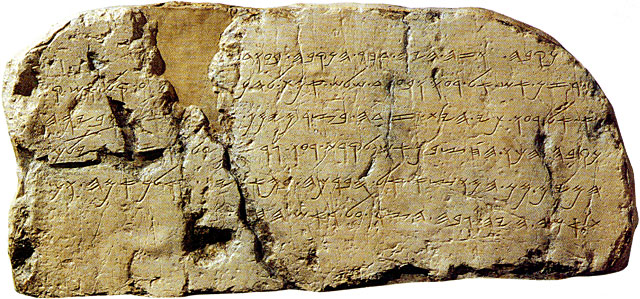
This inscription, carved in stone in proto-Hebrew was discovered in 1880 by chance at the southern end of Hezekiah’s tunnel in the City of David by a young boy named Jacob Eliahu who was playing hooky from school. Because Israel was part of the Ottoman Empire at the time, the Turkish authorities took the stone (which broke when it was pried off the wall) to the Istanbul Archaeological museum, Turkey.

siloam-inscription

Photo: from the Internet

Subtract the sum of the numbers mentioned in the text of this inscription from the year that it was discovered and then add the units digit of the year that Parker began his excavations in the City of David and you’ll get a year that is important in Jewish history and in relation to the bulla (a seal impression in clay affixed to legal documents) of Gedalya ben Pashur that Eilat Mazar found in her recent excavations below the stepped support wall in Area G. Explain the relationship. Email me your answer. Have fun. 8-)

bulla

Photo: Gabri Laron/Hebrew University/Dr. Eilat Mazar

Hints: Who was Gedalya ben Pashur and where in the Bible is he mentioned?