Madaba map

A few weeks ago I was guiding in the Old City and was explaining about the Madaba map, a graphical representation based on the Bishop Eusebius’ Onomasticon that lists cities and towns in the Holy Land during the Byzantine period. It is the oldest map we have of the area and includes a detailed map of Jerusalem. It was one of the first things that Haim Karel, who taught us in the guides course, impressed on us. It’s like having a map for buried treasure, the Madaba map shows archaeologists where to dig and guides what to guide.

Two summers ago while flying back from Nepal via Jordan we stopped in the sleepy Jordanian town of Madaba and got to see the original map in mosaic on the floor in St. Georges Church, a very special treat. I took this photo in the church.

Because Jerusalem is so important in Christianity the map includes a large and detailed depiction of Jerusalem. Note that in the Byzantine period it was customary to show north on the left (just as we show north up today). Hence, from left to right you can clearly see the Cardo running north-south from Damascus gate. In Arabic, this gate is called Bab el Amud which means the “gate of the column” because inside the gate was a plaza and a column with the statue of the emperor (today the column is gone but you can walk on the Roman flagstones of the plaza). The Madaba map shows that the Cardo joins the Church of the Holy Sepulcher, the holiest site to Christianity,  to the 5th C Nea Church of Justinian and there were religious processions along the Cardo between the two churches. Other things to notice are the gates of the city and the myriad of churches, any building with a red roof is a church: Holy Zion, Saint Sophia, Santa Anna, Siloam church.

Unusual for a Roman city there is another main north-south road, a secondary Cardo that follows the route of the Tyropean valley, part of which runs along the back of the Western Wall plaza. When plans were being made to build a visitors center for the Tunnel tour they knew that they would be building right on the secondary Cardo. What began as a salvage dig has become an important archaeological excavation. Although not yet open to the public you can view the excavation from a lookout point in the Jewish quarter.

Eclectic Style Architecture

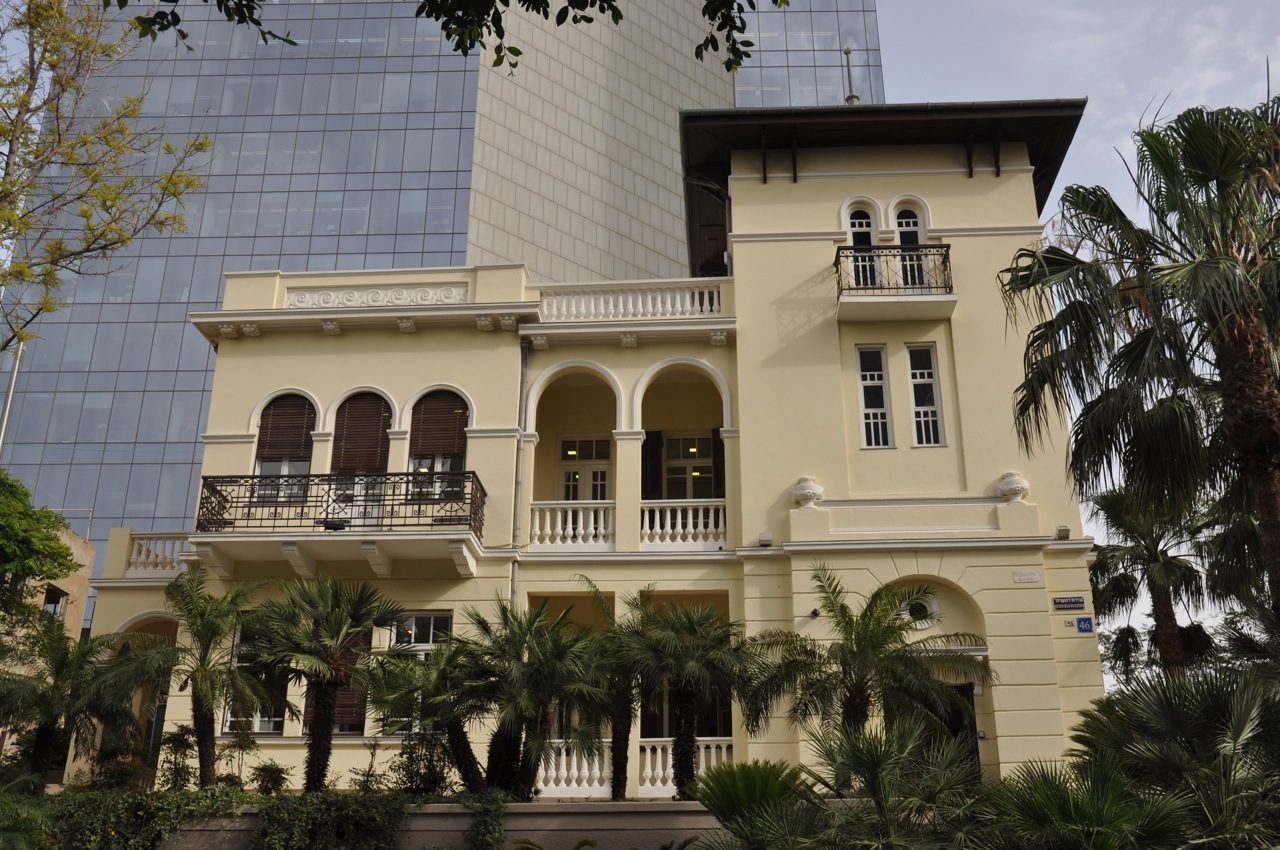
If you pay attention to the buildings while walking around Tel Aviv you may notice that you could divide them into two distinctly different styles. Those built in the 1930s are influenced by the International (Bauhaus) style, clean lines without much ornamentation whereas, the earlier buildings were designed in an eclectic style, a combination of neo-classic architecture with other styles, for example, romantic or oriental. With the establishment of the Bezalel School, Jewish artists created art and craft with Jewish symbols in various media, metalwork, ceramic tile, glass, stone that were used as architectural details. Buildings in the eclectic style tend to be uniquely interesting and are significant landmarks. There are many examples, it is worth taking a guided tour to find them, including the beautiful Pagoda House (Alexander Levy, 1924) on the corners of Melchett, Nachmani and Montifiori, the Levine House (Yehuda Megidovich, 1924) on 46 Rothschild Boulevard and the Palm House (Tabachnik, 1928) at 8 Nahalat Binyamin.

Pagoda House

The building was inspired by southern Asian pagodas, and is the first building in Tel Aviv to have an elevator. The building is composed of Doric pillars, Arabic style arches, and other elements that connect East and West, in a combination of styles. Impressively situated off King Albert Square.

Levine House

This magnificent urban villa was built on a 1700 sq m plot on a small hill on Rothschild Boulevard for Yakov Levine in 1924. The Levine family lived on the second floor and rented out the first. One of its special features is a turret with a mechanically operated roof that could be opened to create space for a sukka.

The architect was Yehuda Megidovich who was Tel Aviv’s first city engineer. Between 1919 and 1951 he designed more then 500 buildings in Tel Aviv, among them the House of Pillars (1925), Nordau Hotel, Ben Nahum Hotel (1921) and the Great Synagogue. Look at buildings he designed for one of his signature trademarks up at the roof line, a tower or dome.

The building was almost demolished in 1943 by a developer who wanted to build a six storey building in its place and was badly damaged by a bomb planted by members of Lehi protesting Jewish discrimination in the USSR in 1953 (when it was the Soviet embassy). In 1995 the developer Akirov bought the property and renovated the building in exchange for permission to build a 26 floor skyscraper, Elrov Tower, on the site.

Palm House

The architect Tabachnick wanted to create an architecture grounded in Israel that would emphasize Jewish motifs often blended with art-nouveau style. In the center section of the building is a window in the shape of a palm tree from which the building gets its name. Note the use of the Star of David, the grillwork of the railings in the shape of the menorah (Jewish candelabra) and the tops of the 3 towers in the shape of an altar.

Art and Architecture, Jaffa

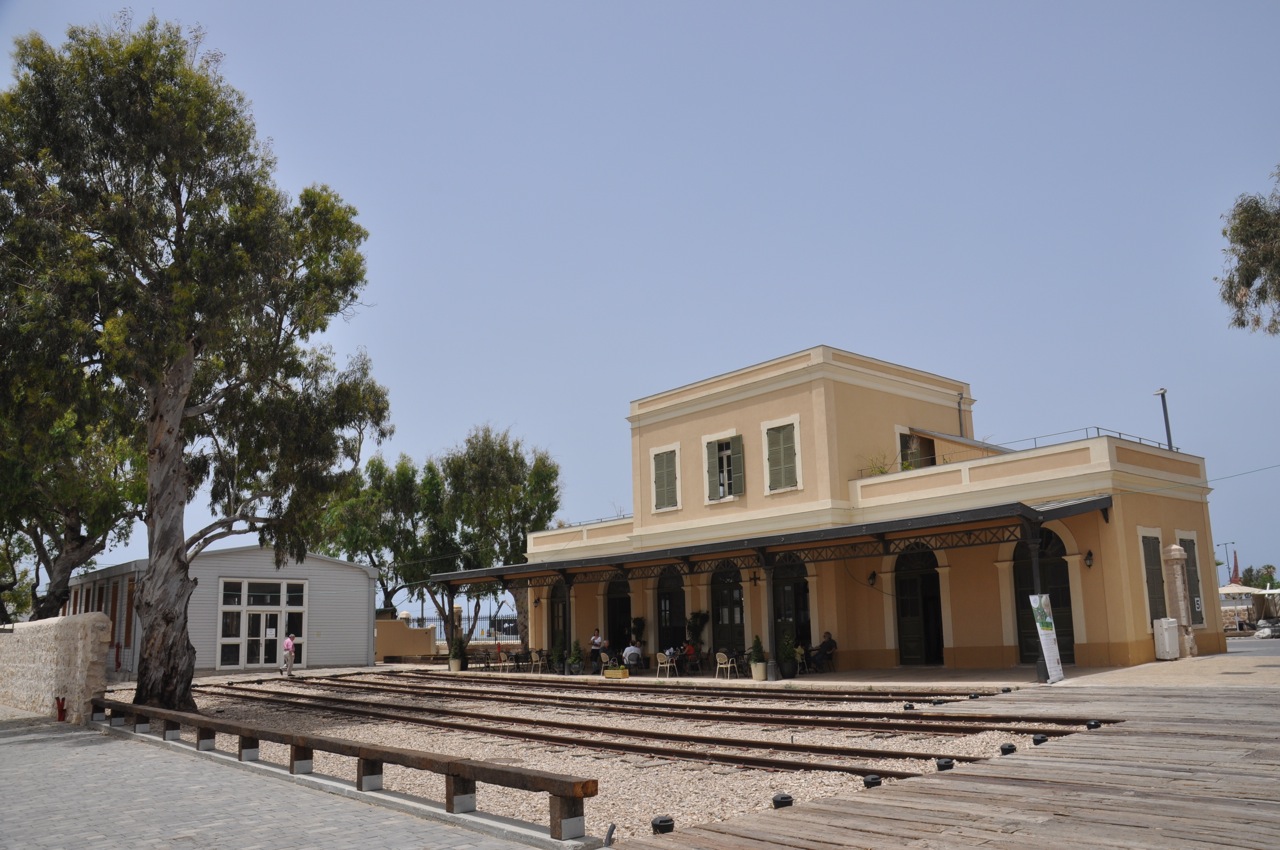
The Tachana (“Station”) complex includes the historic train station built in 1892, the freight terminal, German Templer Hugo Wieland’s tile factory and cement works and the Wieland family’s home. Today the complex has been renovated and houses restaurants and cafes, fashion, art, antique and jewelry boutiques, a large art bookstore, galleries and every Friday an organic food market. Notwithstanding the commercial aspect, it’s still a historic site and standing on the station platform it’s easy to imagine being transported back to a time of steam engines, pilgrims and pioneers.

The German Templers Society (Tempelgesellschaft) were a Protestant sect who originally settled in Haifa and established the German Colony there; subsequently they built settlements in Sarona and Jerusalem. After the visit of the German Kaiser Wilhelm II in 1899, another wave of pioneers founded Wilhelma, Walhalla, Bet Lehem HaGlilit and Waldheim. The colony’s oranges were the first to carry a “Jaffa Orange” brand, one of the better known agricultural brands in Europe, used to market Israeli oranges to this day. The Templers established a regular coach service between Haifa and other cities and made an important contribution to road construction. They  were architects and engineers, ran hotels, beer gardens and promoted the country’s tourist industry.

The Wieland family came to Israel in 1900 and established its building materials factory beside the Jaffa train station and the nearby Templer neighborhood. The patriarch, Hugo Wieland, built the villa in 1902 as a single storey structure; a second storey was added a few years later to accommodate the family of 12. The building was designed in the Templer style, stone buildings with a tile roof, wooden shutters, balcony. The front room served as a lounge and was the most beautiful and impressive room in the house, it had a painted ceiling and coal fireplace for heating. The floors were made of decorative tiles produced by the family factory.

During restoration work, some paintings of scenes of women, drinking and dancing, were discovered on walls in one of the rooms. Originally the thought was that these were copies of caricatures from a German magazine. In further investigation it was discovered that these painting were done by Gerd Rothschild, partner with Zev Lipman in Roli Graphic Studio, between 1942-1946. Rothschild learned graphic design in the first class of the Bezalel School of Art in Jerusalem. He was enlisted into the British army as a cook but when his artistic talent was discovered he wandered from British base to base in the region – Palestine, Libya, Egypt, Transjordan, Syria, Lebanon and Cyprus painting on walls. In later years, Rothschild used art therapy to work with children with disabilities and painted murals in pediatric psychiatric wards. He died in 1991 at the age 72. The British used the buildings in the Jaffa rail yard as a base for supplies after the German Templers were deported to Australia during WWII.

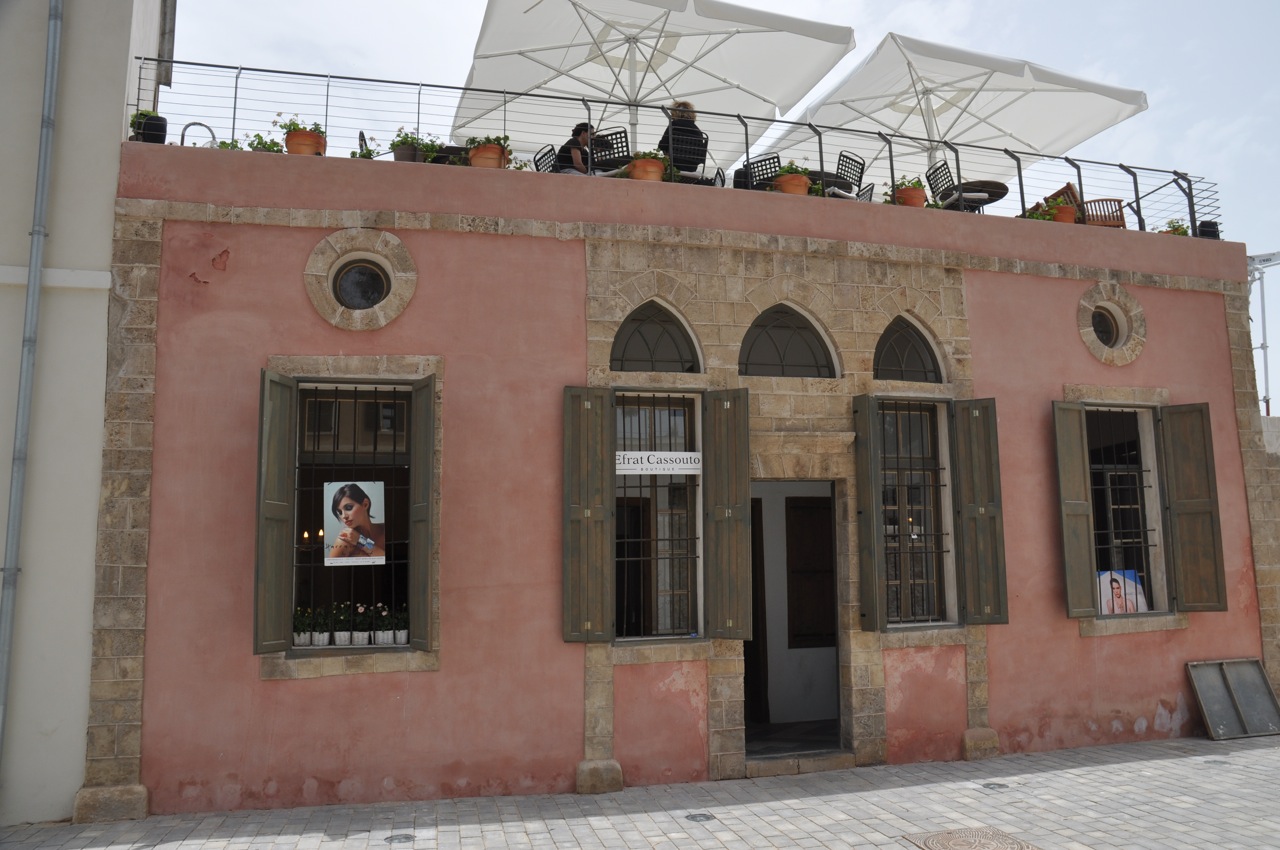
Another atmospheric building is the Red House, an example of typical Arab construction in the Jaffa area that got its name from the red plaster used on its walls. This building was probably built before the Wieland villa as part of the Manshiya neighborhood, adjacent to the train station complex. A unique feature is the western entrance accented with chiseled sandstone left unplastered which frames the symmetrical series of three openings. Two round openings on the facade, common in Arab buildings are for ventilation.

Jaffa railway station

The Jaffa railway station, in Hebrew התחנה, was one end of the 86 km rail line that joined Jaffa and its port to Jerusalem. The Tel Aviv municipality in partnership with private investors have invested approximately $1 million to renovate the complex, an area of 20 hectares (49 acres) which includes 22 buildings of 3 types, station, Arab and Templer buildings. The buildings were restored by a team of professional architects (Jaffa-based architects Eyal Ziv and Amnon Bar Or were responsible for the lengthy and meticulous restoration process), engineers and contractors, experts in their fields, in order to maintain its historical and architectural integrity and give visitors an authentic sense of the place. Having visited I can say enthusiastically that they’ve done a superb job.

If only someone would do the same for the Jerusalem railway station at the other end of the line.

It is easy to combine a visit with a guided tour of Jaffa or the original neighborhoods of Ahuzat Bayit and Neve Zedek that became Tel Aviv; another possibility is to take a guided tour of the White City of Tel Aviv – all tours that I would be happy to lead.

This station, located between the sea shore and the Neveh Zedek neighborhood, operated from 1892 to 1948. From the beginning, even though pilgrims, tourists and locals alike flocked to ride the train the railroad ran at a deficit and the trip took between 3 1/2 to 6 hours, allowing only one return trip a day. In A Practical Guide to Jerusalem and its Environs, a guidebook written around that time, the author wrote: “It requires only an ordinary amount of activity to jump out and pick the flowers along the line, and rejoin the train as it laboriously pants up the steep ascent — a feat I myself have occasionally performed.” Besides passengers, the train transported freight, by 1913, 43,000 tons annually passed through Jaffa station but only one way.

The idea to build a railroad was first proposed in the 1830’s by British financier, banker and philanthropist Moses Montefiore, who was interested in developing modern industry in Israel, but ran into difficulties in relation to the transport of machinery and raw materials. It took more than 50 years until 1888 and a long process of entrepreneurship, vision and international politics, for the Turkish Sultan Abed el-Hamid to grant the concession to Joseph Navon from Jerusalem and Joseph Amzalak of Jaffa, backed by the Protestant banker Johannes Frutiger and the Greek Lebanese engineer George Franjieh. Unable to raise sufficient capital in Europe, Navon sold the license to a group of Catholic businessmen in Paris, who established the Société du Chemin de Fer Ottoman de Jaffa à Jérusalem et Prolongements.  When in October 1890 the first locomotive a Baldwin 2-6-0 was tested on a short length of track at Jaffa, some 10,000 onlookers, half the population of Jaffa turned up to witness the event, such was the novelty. It took another two years to execute the immense railway construction project, laying narrow gauge track through the Judean mountains taking advantage of the deep, winding river bed of Soreq valley to mimize the steep grade and its completion heralded the beginning of the age of modern transportation in Israel.

Bauhaus Architecture Tour

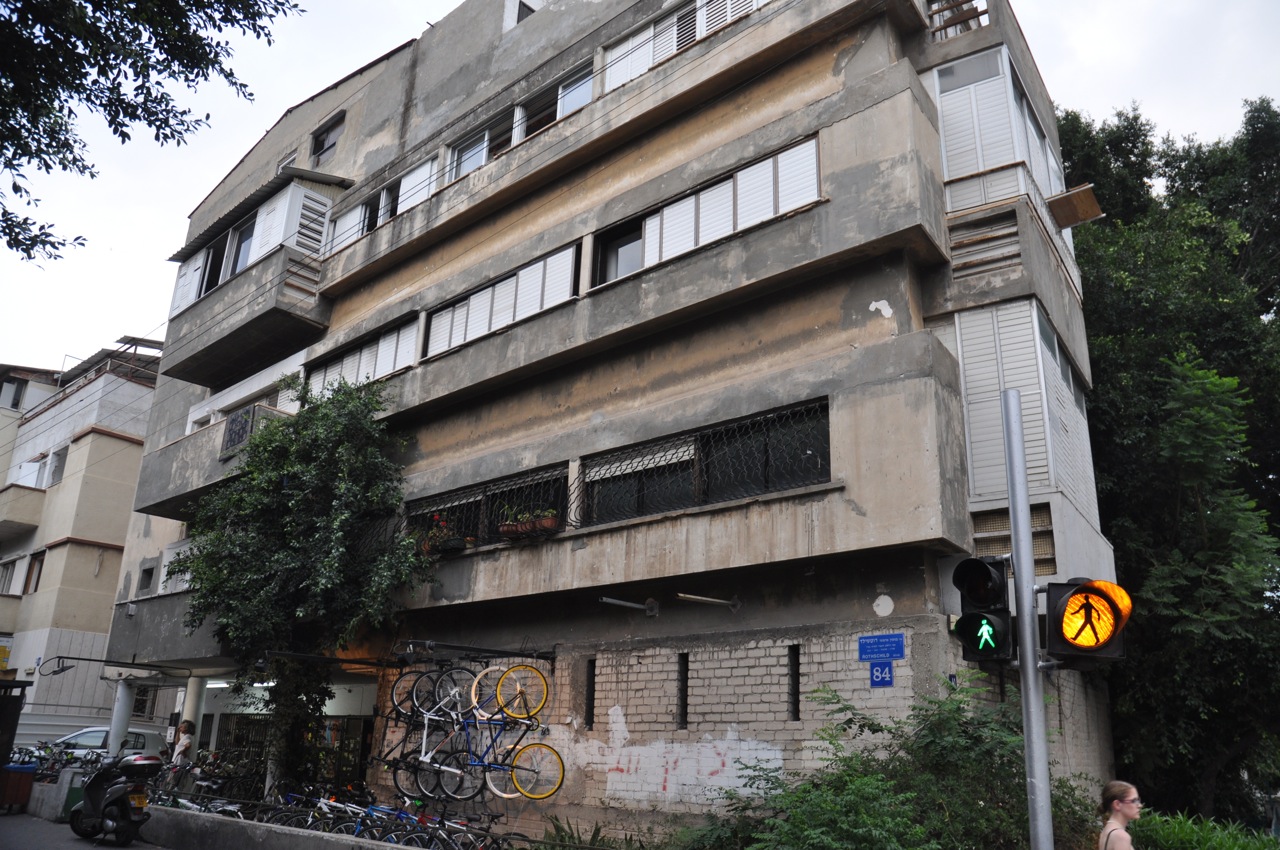
Bauhaus style was influenced by the 19th century English designer William Morris who argued that art should meet the needs of society and there should be no distinction between form and function. It was marked by radically simplified forms, the absence of ornamentation, by harmony between the design of an object or building and its function and the idea that mass-production was reconcilable with the individual artistic spirit. These criteria were a good match for the modern city of Tel Aviv, a new Israeli city built in 1909 on sand dunes of the Mediterranean coast.
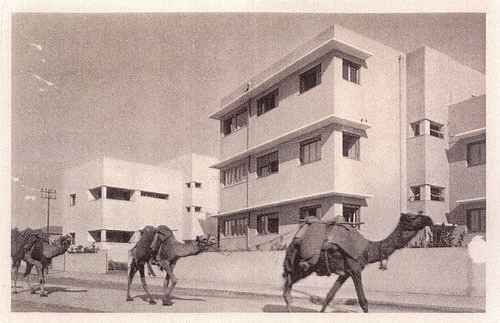
From a postcard, published by S. Adler, Haifa  Photo by J. Benor-Kalter

In 1925 as Tel Aviv grew, the innovative Scottish urban planner Patrick Geddes submitted a master plan for the city where he laid out the streets and decided on block size and utilization – Geddes did not prescribe an architectural style for the buildings in the new city. The impetus for large-scale construction came from the rapid influx of Jewish immigrants from Europe who grew in numbers from about 2,000 in 1914 to about 150,000 in 1937. In the 1930s, Jewish architects who had studied the architectural ideas of the Bauhaus school fled the rise of Nazism in Germany and converged on Tel Aviv. The residential and public buildings were designed by these architects, who took advantage of the absence of established architectural conventions to put the principles of modern architecture into practice. With their emphasis on functionality and inexpensive building materials, it was perceived as ideal for Tel Aviv. The result is that Tel Aviv has the largest concentration of International style buildings, recognized by UNESCO in 2003 when the “White City” was declared a World Heritage Site.

Here on the shores of the Mediterranean the “International” architecture had to be adapted to suit the hot and sunny climate.

  • White and light colors reflected the heat.
  • Walls not only provided privacy but protected against the sun.
  • Large areas of glass that let in the light, a key element of the Bauhaus style in Europe, were replaced with small recessed windows that limited the heat and glare.
  • Long narrow balconies, each shaded by the balcony above it, allowed residents to catch the breeze blowing in from the sea to the west.
  • Slanted roofs were replaced with flat ones, providing a common area where residents could socialize in the cool of the evening.
  • Buildings were built on pillars (pilotis) to allow the wind to blow under and cool the apartments, as well as providing a play area for children.

Here are 2 highlights from the Bauhaus tour.

Soskin House (1933, Ze’ev Rechter)

In 1934 Avraham Soskin closed his photographic studio at 24 Herzl Street and moved his family and typesetting business to the two winged house at 12 Lilienblum Street. Considered Tel Aviv’s first and foremost photographer because his work provides a rich documentation of the city’s early years [another idea for a tour: photographs by Matson, Soskin, Phillips, Rubinger and the sites today], Soskin (1884-1963) immigrated to Palestine in 1905.

Architect Ze’ev Rechter (1898-1960) returned from his studies in Paris in late 1932 and designed the house for Soskin.

The facade is divided into two major fields defined according to Golden Section proportions: the first is located on the east, shaped as a vertical rectangle that anchors the structure to the ground; the second is a horizontal rectangle pulled from the vertical rectangle. The building was renovated in 2005 and made into a number of apartments.

Engel House (1933, Ze’ev Rechter)

IMG_2013
A large residential building of apartments this is the first structure in the city that was built on pillars, a modification to Bauhaus style to address the hot Tel Aviv weather, so that air could flow under the building to cool it. The space under the pillars was closed-in during WW II for use as a British headquarters but re-opened in the renovation. Located on the roof was an exercise room and a roof garden and concrete pergola in the style of Le Corbusier for the enjoyment of the tenants. Engel House was built in a u-shape around an inner courtyard, facing Mazeh St. Horizontal emphasis was created by protruding window frames around the wide, strip windows (another modification for climatic conditions). The convergence between the balconies of the two facades creates plays of mass and light and shade. For many years the building was not well-maintained but now a serious renovation has brought the building back to its roots.

Ze’ev Rechter designed the building and rented a spacious apartment there.
UN Partition Plan – November 29, 1947

On November 29, 1947, the UN General Assembly voted in favor of resolution 181 (33 states in favor, 13 against and 10 abstentions), the plan for the partition of Palestine, recommended by the majority of the UN Special Committee on Palestine (UNSCOP). This is the most important date in Israel’s path to independence, and many Israeli cities commemorate the date in their streets’ names (in Jerusalem, 2 blocks from our house). UNSCOP was appointed seven months earlier, after Great Britain, which ruled the country on the basis of a League of Nations Mandate, decided that in light of the growing resistance and violent opposition to its rule, it was unwilling to continue on the existing basis, and handed the whole issue over to the UN. The UN Committee reached the conclusion that the Mandate for Palestine should be terminated, and most of its members recommended the establishment in the territory of Mandatory Palestine of an Arab state and a Jewish state, while internationalizing the Jerusalem-Bethlehem area. The resolution sought to address the conflicting objectives and claims to the Mandate territory of two competing nationalist movements, Zionism and Arab nationalism, as well as to resolve the plight of Jews displaced as a result of the Holocaust.

The majority of the leadership of the Jewish community in Palestine (Zionist Organization and the Jewish Agency) agreed to accept the plan, since it recognized the right of the Jewish people to a state and not only a “national home” as stated in the 1917 Balfour Declaration and the 1922 Mandate for Palestine. The plan was rejected by leaders of the Arab community (the Palestine Arab Higher Committee) who were supported in their rejection by the states of the Arab League.

The adoption of the partition resolution by the General Assembly was received by the Jewish community with great joy and thousands went out to the streets to celebrate (my parents were in Tel Aviv that night), even though it was clear that the Arab states and the Palestinian Arabs would embark on a relentless war against the realization of the plan to establish a Jewish state.  War (1947–1948 Civil War in Mandatory Palestine) broke out the next day and the partition plan was never implemented by the Security Council.

Jerusalem,

Sunday morning, 11:00 a.m.

November 30, 1947

Dearest Mother, Dad and Naomi,

I walked in a semi-daze through the crowds of happy faces, through the deafening singing, “David, Melech Yisrael, Chai, Chai ve Kayam” [David, King of Israel, Lives, Lives and Exists.] past the British tanks and jeeps piled high with pyramids of flag-waving, cheering children. I dodged motor cycles, wagons, cars and trucks which were racing madly up and down King George V Street, missing each other miraculously, their running boards and headlights overflowing with layer upon layer of elated happy people. I pushed my way past the crying, kissing tumultuous crowds and the exultant shouts of “Mazal Tov” [congratulations] and came back to the quiet of my room ….to try to share with you this never to be forgotten night…

Your loving daughter,

Zippy

The complete letter is at
http://www.zionism-israel.com/ezine/Partition_A_Night_To_Remember.htm

The United Kingdom announced its intention to unilaterally withdraw from Palestine by 15 May 1948. On Friday afternoon, just before Shabbat, the day before the British were to complete their withdrawal, the Jewish community in Palestine declared independence and the establishment of the State of Israel and five Arab armies crossed into the former Mandate as the start of the 1948 Arab–Israeli War or Israel’s War of Independence.

And now 63 years later, we reach November 29, 2010.