Photo of the Week – Lower Herodium

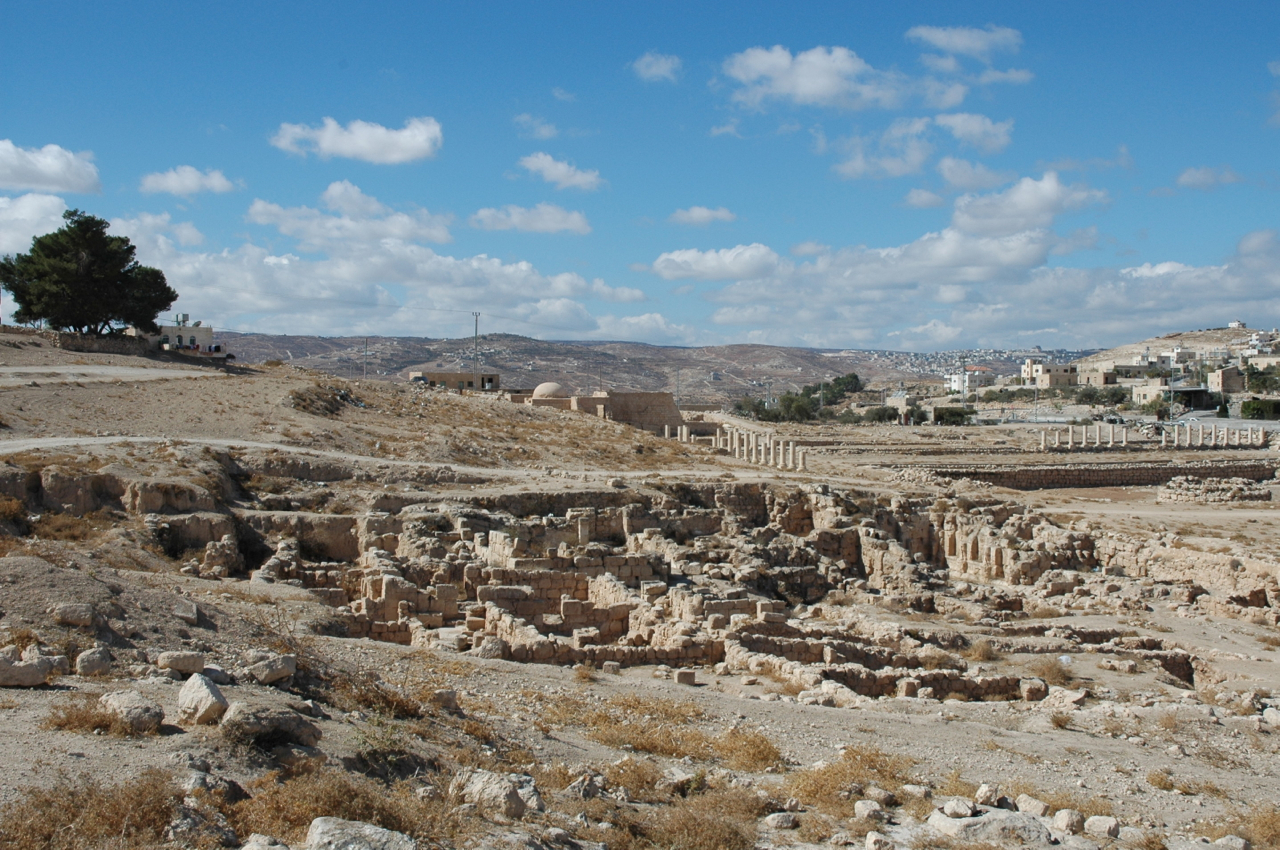
Another photo of an archaeological site, one of my favorites, not far from Jerusalem. Many tours of Herodium take you straight to the park skipping the area of Lower Herodium that was excavated by Prof. Ehud Netzer ז”ל in 1970s. Here you can see the remains of the Monumental building – was this structure built as King Herod’s final resting place? Take a guided tour with me to find out. You can click on the image for a larger view (which may take some time to load depending on your Internet connection). Please share this post with your friends by clicking on the icons at the end of this message.

The technical details – the photo was taken with a Nikon D70 digital SLR camera on November 2 (ISO 200, 25mm, F10 at 1/400 sec).

To read more about the Monumental building check out my post at https://israeltours.wordpress.com/2010/11/11/nymphaeum-herodium/

FYI, the Israel Museum has announced that the exhibit on the latest finds at Herodium, including sarcophagi and secco wall paintings from the loggia of the theater will open February 2013.

Photographs on this website are © Shmuel Browns (unless marked otherwise) – if you are interested in purchasing one of my photos or using one of my photos for your own project please contact me.

Other Church at Capernaum

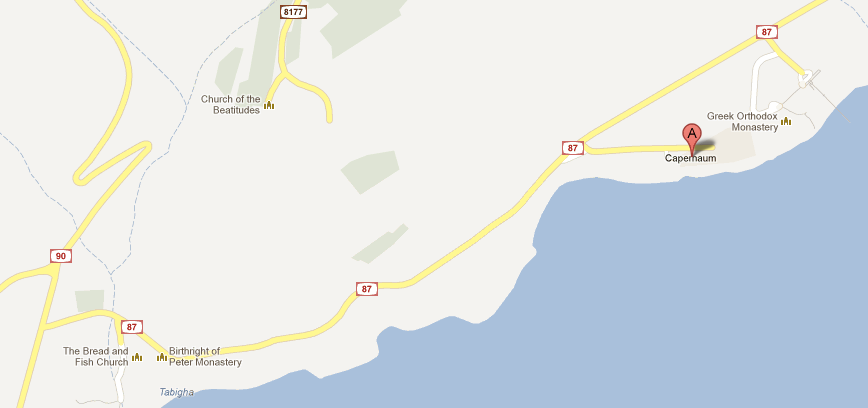
Capernaum is an important place to visit because not only is it an interesting archaeological site but it has historical importance in understanding Jewish life in the time of Jesus. According to the Gospels Jesus lived in Capernaum during much of his ministry in the Galilee.

The site was first discovered in 1838 by the American biblical geographer Dr. Edward Robinson. British explorer Captain Charles Wilson identified the ruins of the synagogue in his survey of 1866, and in 1894 a part of the ancient site was purchased by the Franciscan Custody of the Holy Land – this is the site most often visited.

Archeological evidence (from excavations by the Franciscans between 1968-84) indicates that the fishing village of Capernaum was established at the beginning of Hasmonean rule – the earliest coins found at the site date from the 2nd C BCE. The town, near the border of the province of Galilee, was on a branch of the Via Maris trade route. At the time of Jesus, Capernaum included a customs post and a small Roman garrison commanded by a centurion. Although the natural building material was black basalt, from the remains that we see today we know that the town had an impressive synagogue in white limestone (the floor plan is similar to the 4th C synagogue at Korazim and the 3rd C synagogue at Baram, a comparison would make an interesting subject for another post) and an octagonal church (5th C), a short distance from one another.

Since the town did not participate in either of the two major Jewish revolts against Rome village life continued quietly until a winter day in 749CE . On January 18th Capernaum was badly damaged by the Golan earthquake and was rebuilt a short distance to the northeast but little is known of its  history, decline and eventual abandonment sometime in the 11th century. Despite the importance of Capernaum in the life of Jesus, there is no evidence of any construction during the Crusader period.

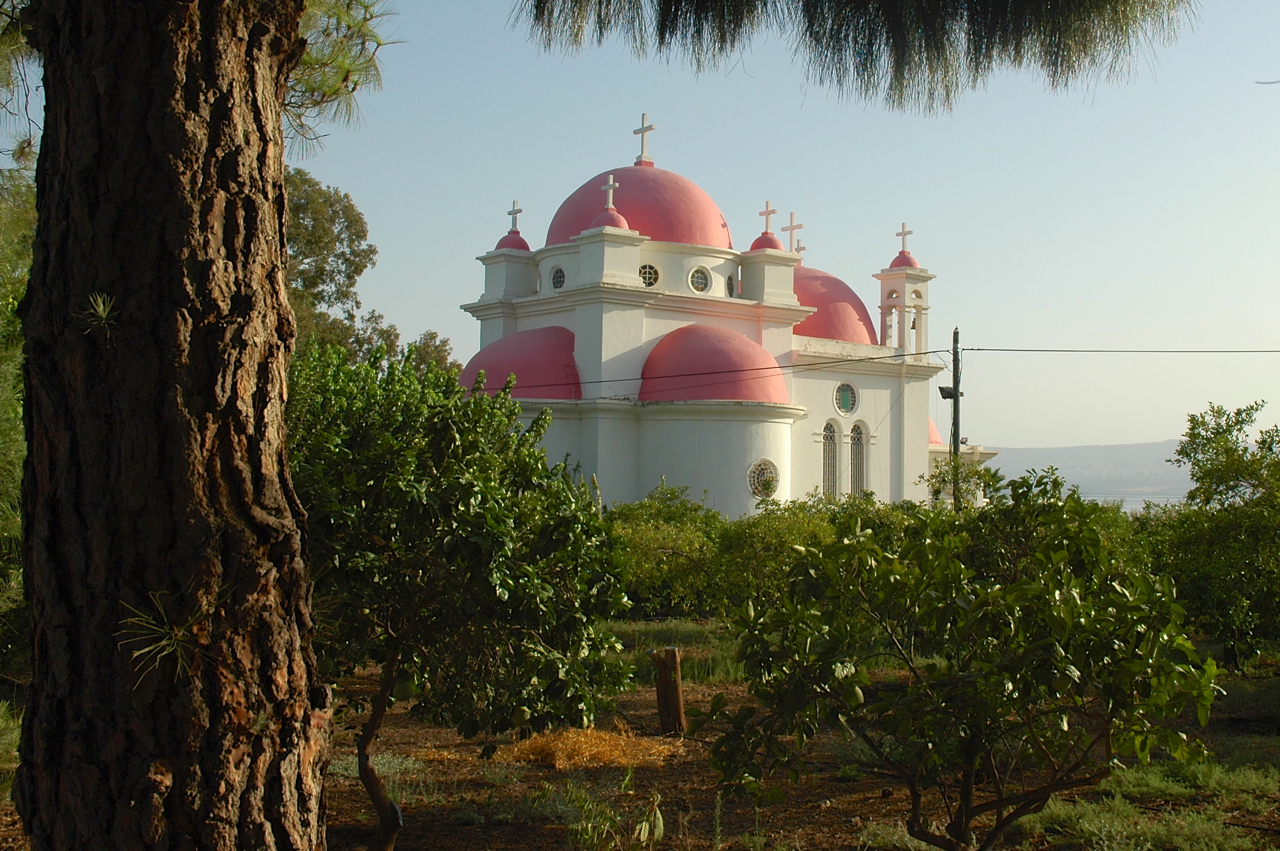
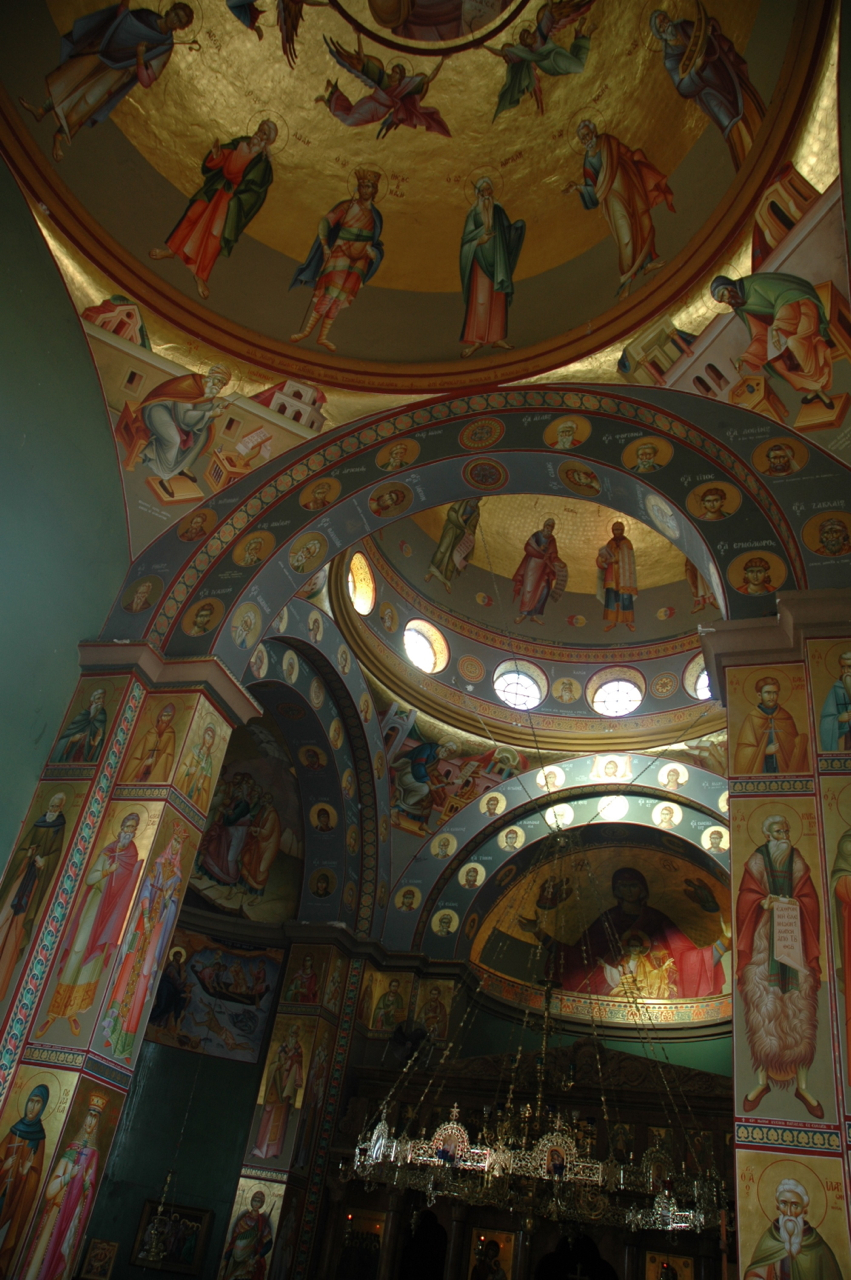
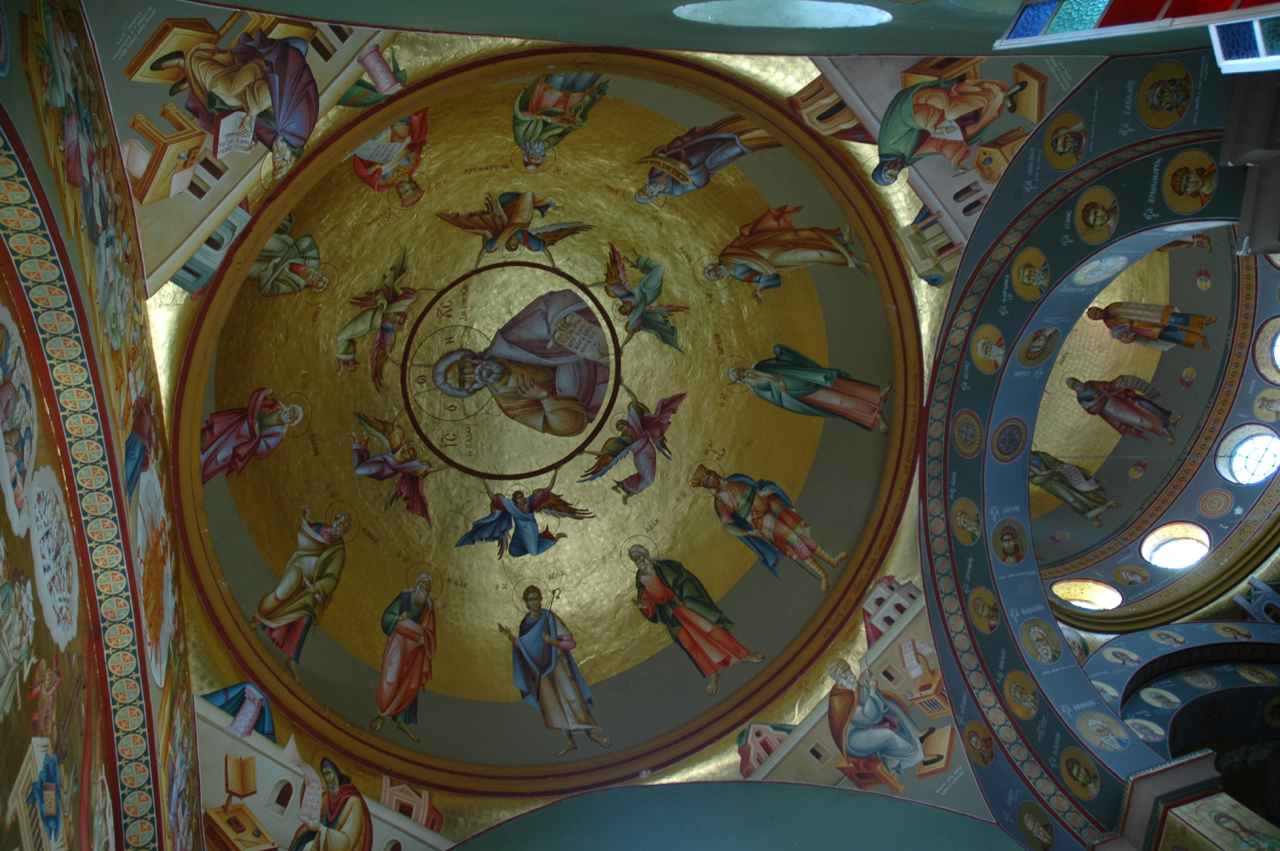
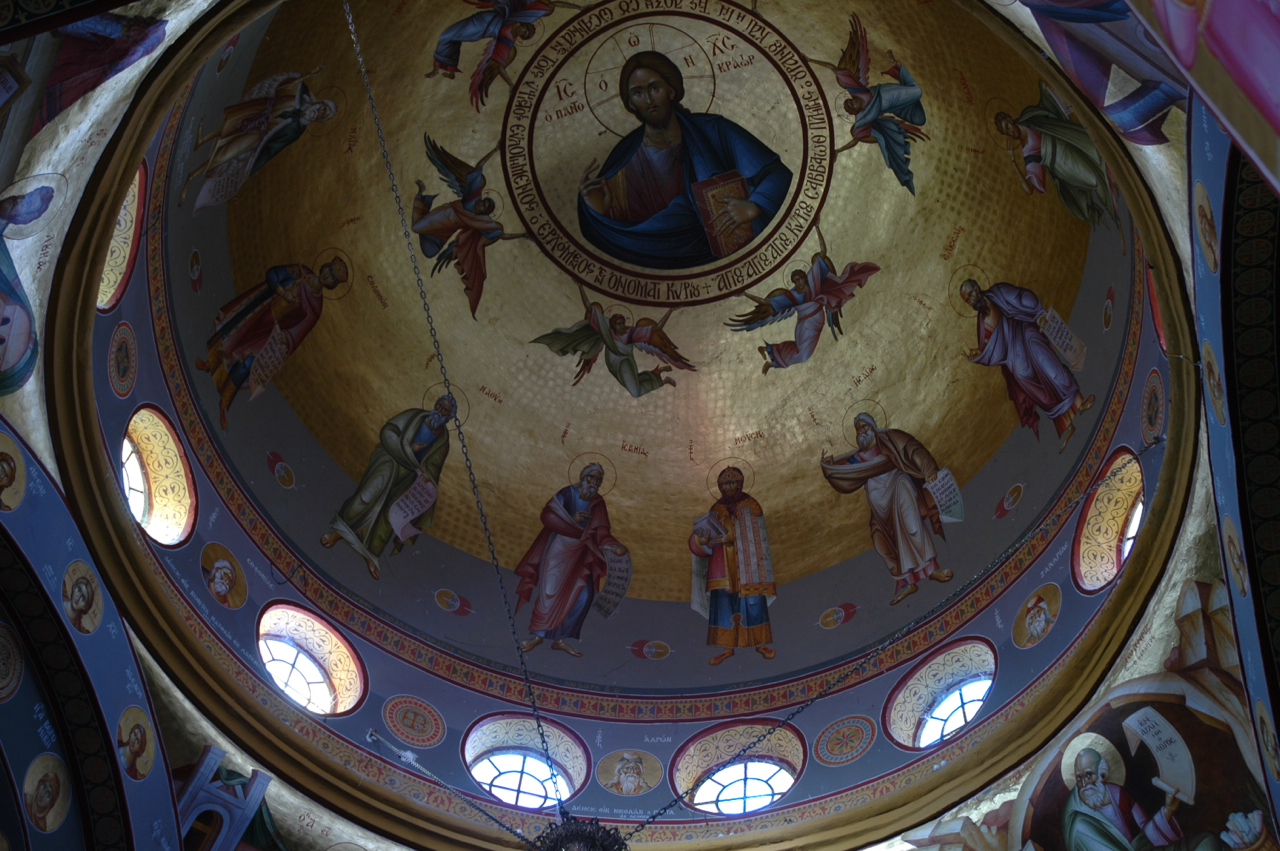
The small, pink-domed Greek Orthodox Church of the Seven Apostles (built in 1931) marks the site to which the village of Capernaum was relocated after the earthquake. A monk greeted us when we entered so we asked why the church had pink domes – he replied that it was the paint they had found at the local hardware store. The church is dedicated to the seven apostles (Simon Peter, Thomas called Didymus, Nathanael from Cana in Galilee, James and John, the sons of Zebedee, and two other disciples not recorded (John 21). Jesus appears for the third time, this time by the Sea of Galilee. The interior of the church is covered with paintings and I got some photographs of them.

Archeological excavations carried out at four locations on the site between 1978-82 revealed the foundations of residential dwellings with the same black basalt dry-stone walling as the earlier constructions in Capernaum. Of special note are the remnants of a two-meter-wide basalt wall along the shoreline that may have been part of a quay along the entire lakefront of the village and two stonework jetties extending at right angles into the lake. This would have provided both sheltered anchorage and a slip for hauling boats out of the water.


This post is especially for a friend, Alex Koch who is an art historian and guide who lives in Munich and loves Israel.

Photographs 1900

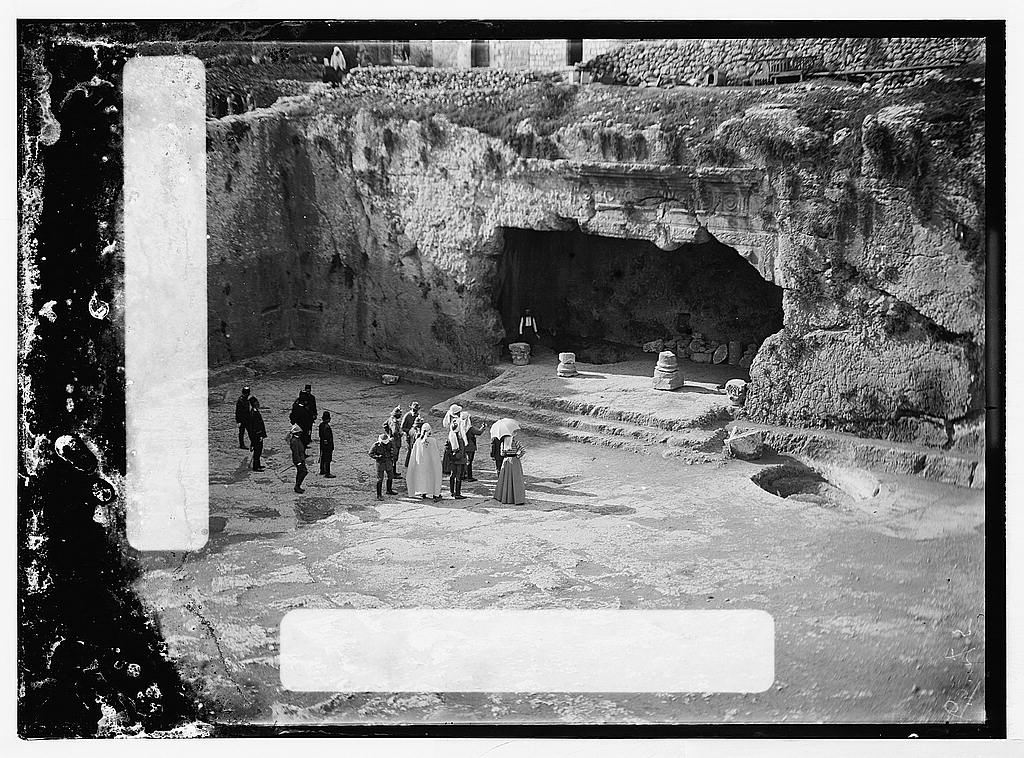
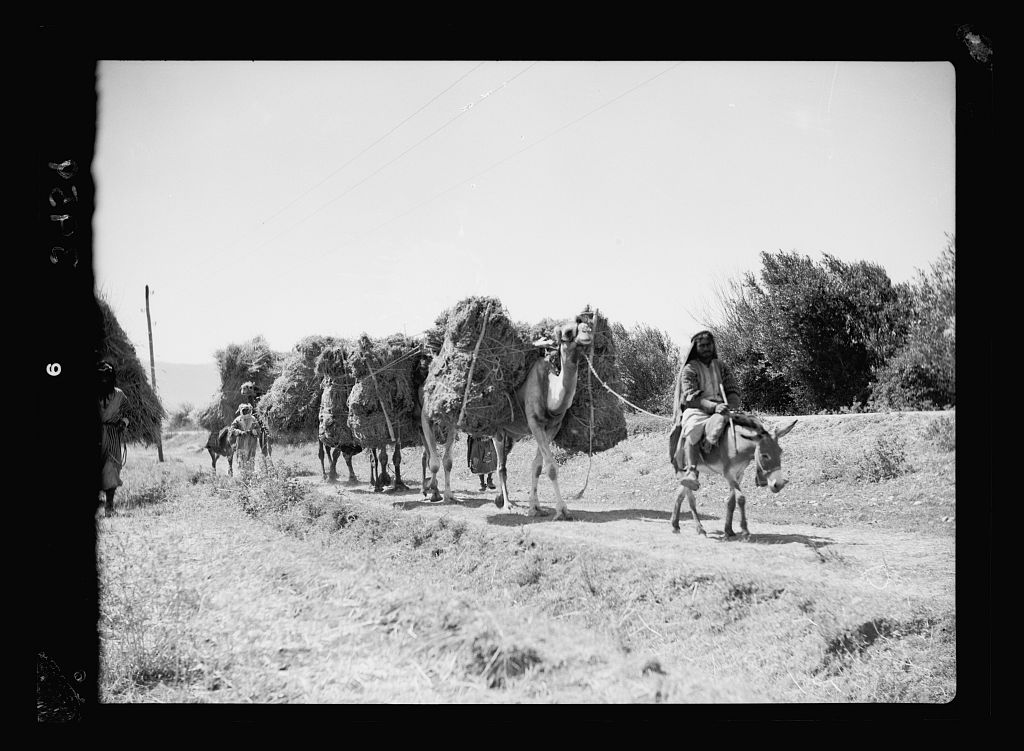
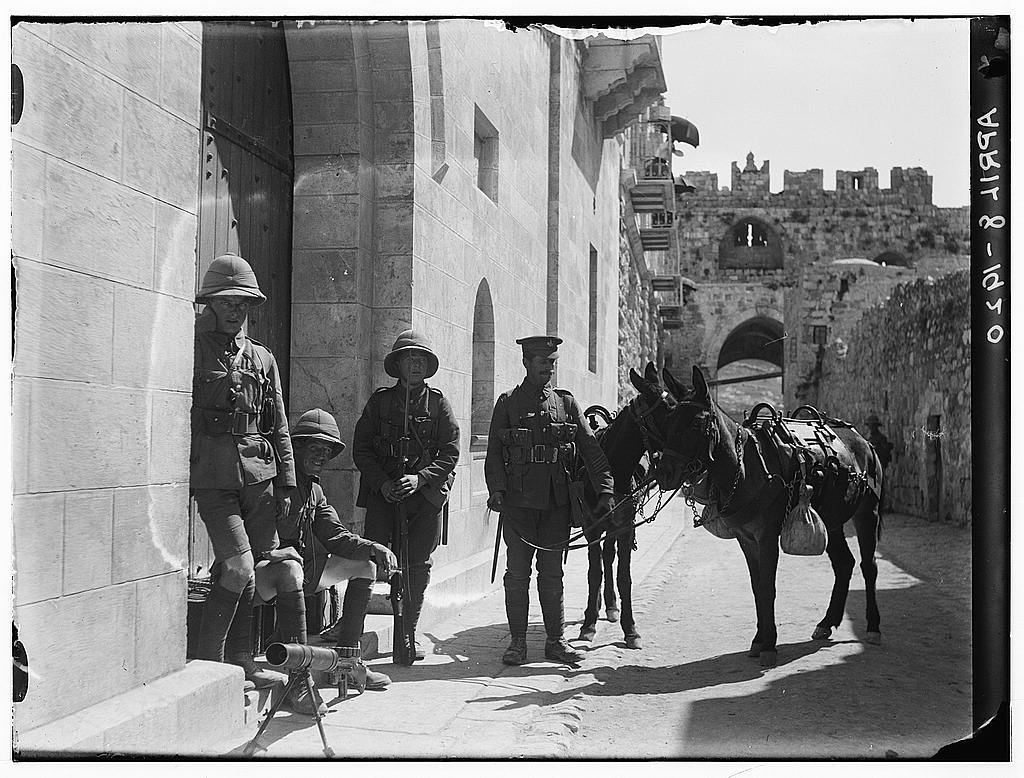
Walking around in the Arab shuq you might notice that many of the shops have matted black and white photographs from the turn of the century of Jerusalem and Israel for sale. It’s not clear who the photographers are or when the photos were taken but you can learn a lot about how Jerusalem developed at the end of the Ottoman period and transition to the British mandate from these photos. It’s interesting to compare a photograph taken today at the same place with the similar early photo.
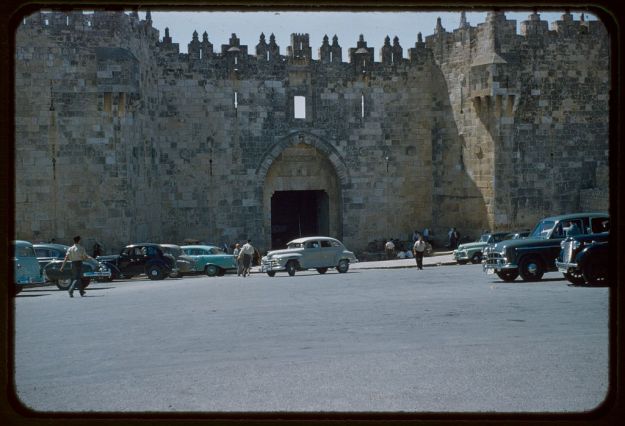
If you are walking through the Muslim quarter toward the Church of the Holy Sepulcher on Al Khanka Street you will find the shop Elia’s Photo with black and white photographs going back to the 1920s in the window. On entering you will meet Kevork Kahvedjian a delightful gentleman who I’ve heard speak English, Hebrew and Arabic (he’s Armenian so most likely he speaks that too) who will be happy to talk with you and show you the photographs. Most of the photos on display were taken by his father Elia (reprinted from the original negatives) but some are even earlier that Mr Kahvedjian has collected. There is also a hardcover book of 131 of his father’s photographs, “Jerusalem Through My Father’s Eyes” (their website lists it at 230 NIS, on Amazon  it’s $200. – it makes a great present or souvenir).

Elijah Meyers founded the American Colony Photo Department in 1898 (though some photos are earlier). Meyers, who emigrated from India, was a Jewish convert to Christianity. 1898 was the year of the German Kaiser Wilhelm II and Augusta Victoria’s visit, an auspicious start to the photographic enterprise as people were interested in photos of the visit.
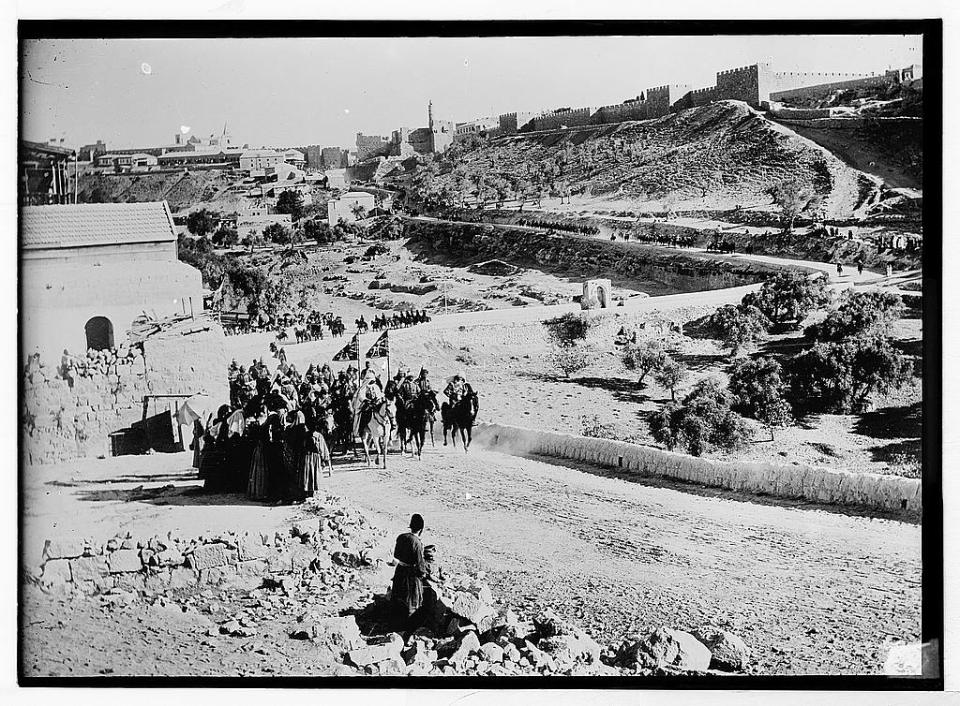
Meyers instructed the young Swede Lewis Larsson in photography. Larsson (1881?-1958) was among the original group of Swedish colonists who arrived in Jerusalem in 1896 and became one of the most skillful of the photographers. Not only a keen observer, Larson travelled extensively in the Middle East between 1903 and 1910.
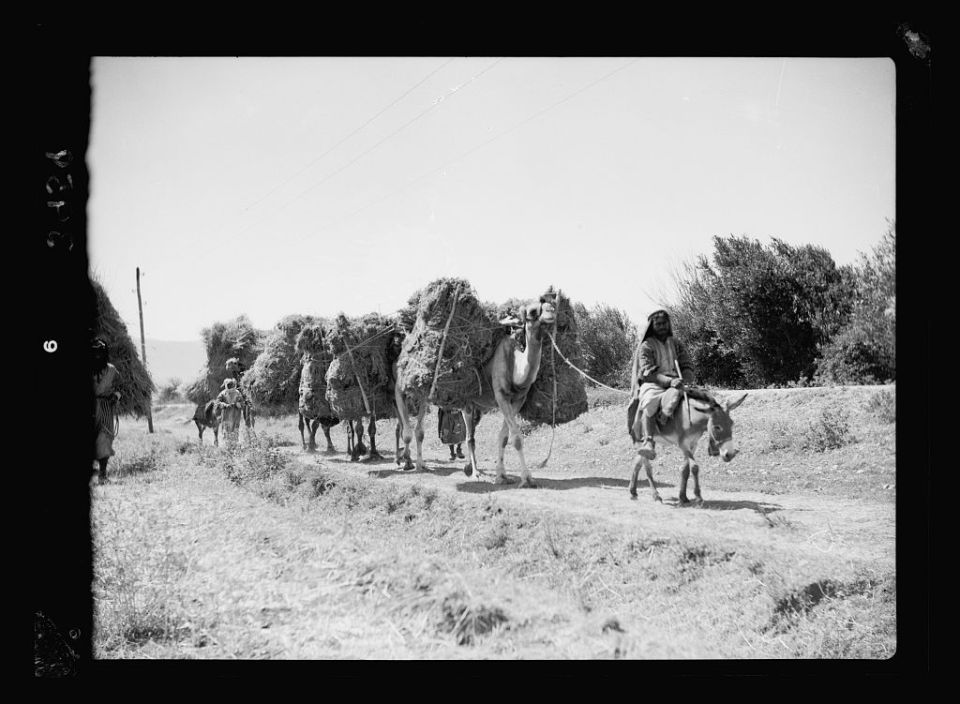
Larson knew what scenes were important to capture visually – he photographed landscapes, scenes of village life, the violent struggles at the end of World War I with the collapse of Ottoman empire. In 1904, Lewis Larsson succeeded Elijah Meyers as head of the Photo Department. Larsson ran the department for the next thirty years, even while he served as Vice Consul and later Swedish Consul for Palestine from 1920 to 1925.

G. Eric Matson (1888-1977) also came to the American Colony from Sweden in 1896 with his family as a young child. He began working in the Photo Department darkroom as a teenager in the early 1900s, although it is uncertain when he actually began taking photographs. Matson married an American, Edith Yantiss who also worked in the darkroom.
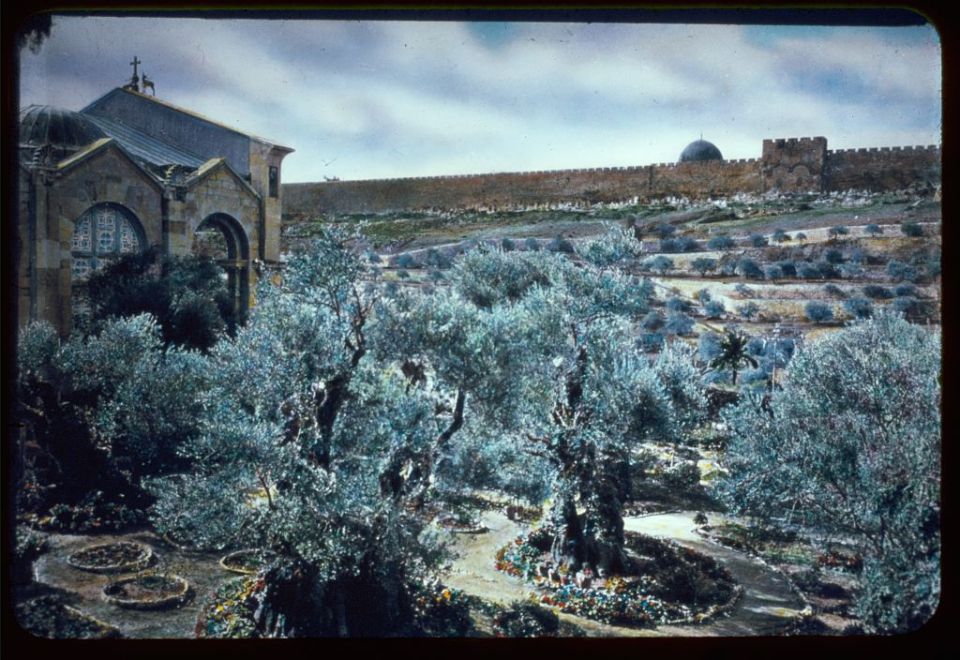
Together the Matsons excelled in innovative techniques, such as coloring photographs with oil paint, producing double stereoscopic photographs to create 3-D pictures, taking photographs with infrared film and aerial shots.

In 1934, the original colony disbanded and Matson gained control of the Photo Department with its large collection of photographs. The Matsons continued their photographic work under the American Colony Photo Department name until 1940, when they renamed the business the “Matson Photo Service.” In 1946, in the face of increasing violence in Palestine, the Matsons left Jerusalem for southern California. The staff shipped the bulk of the glass plate negatives to the United States, with the remaining negatives relocated to the basement of the International YMCA for safekeeping (unfortunately when retrieved in 1970 they had sustained water damage). By the early 1950s, with tourism on the decline, the Photo Service’s staff dispersed, forcing the closing of the Jerusalem operation.

Realizing the Collection’s historic value, in 1966 Eric Matson donated the thousands of negatives and 11 albums of contact prints to the Library of Congress who have digitized the images and made them freely available on the Internet at http://www.loc.gov/pictures/collection/matpc/ – a great record of Jerusalem and Palestine during the first 50 years of the 20th century.
Photo of the Week – Bet Shean

For the last 12 weeks I’ve posted photos of Israel landscapes, today’s post is a photo of an archaeological site in the north of Israel. You can click on the image for a larger view (which may take some time to load depending on your Internet connection). Please share this post with your friends by clicking on the icons at the end of this message.

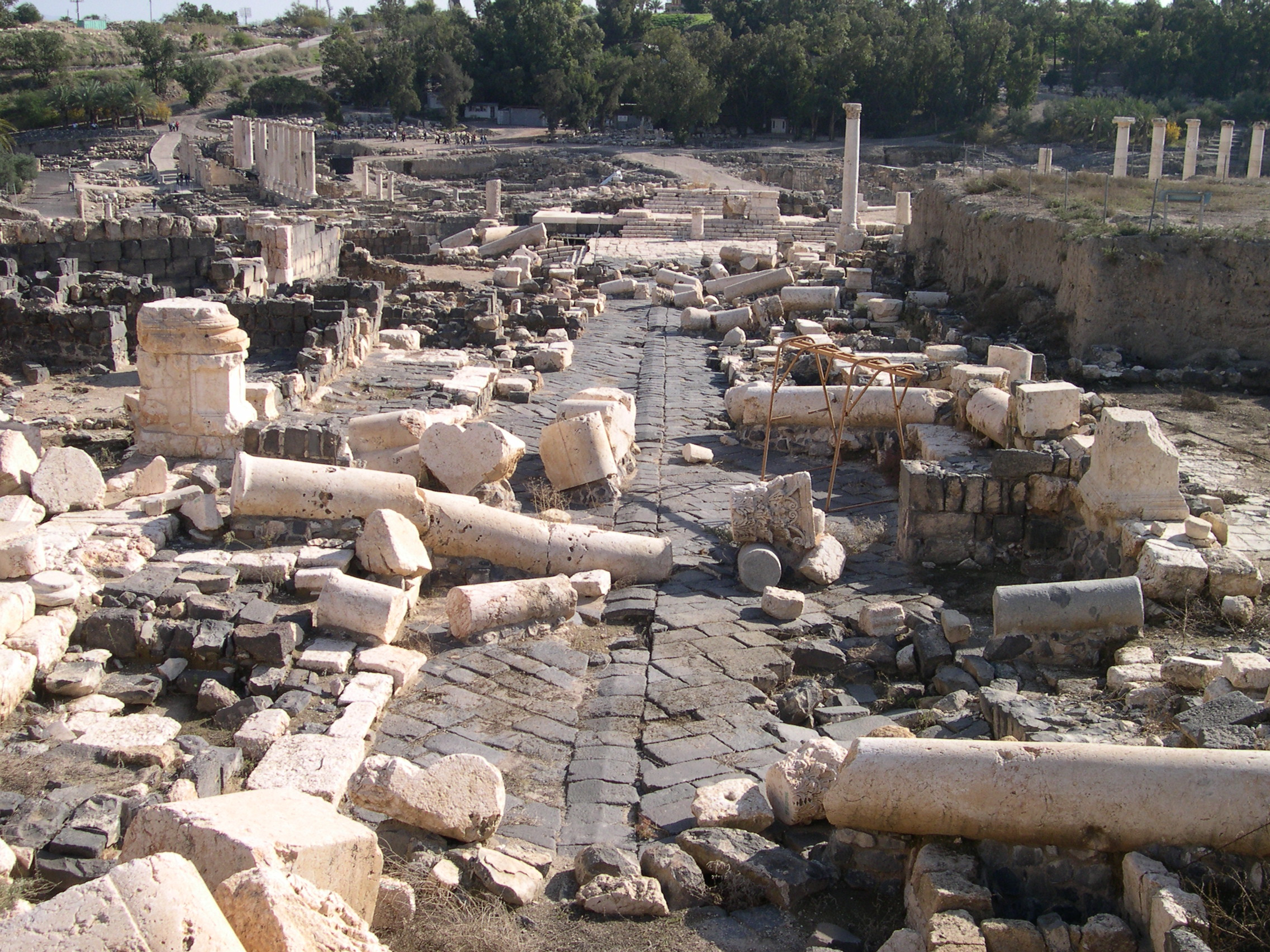
The photo was taken at Bet Shean in the archaeological park and shows the destruction of the city by the earthquake of 749CE. The technical details – the photo was taken with a Nikon digital point and shoot camera on January 2 (ISO 100, 8mm, F7.6 at 1/135 sec).

Bet Shean is a great site to visit, see my post at
https://israeltours.wordpress.com/2011/01/16/bet-shean-scythopolis/
and if you’re interested in more about earthquakes check
https://israeltours.wordpress.com/2011/01/10/earthquakes-history-archaeology/.

Photographs on this website are © Shmuel Browns (unless marked otherwise) – if you are interested in purchasing one of my photos or using one of my photos for your own project please contact me.

Photo of the Week – Red Sinkhole

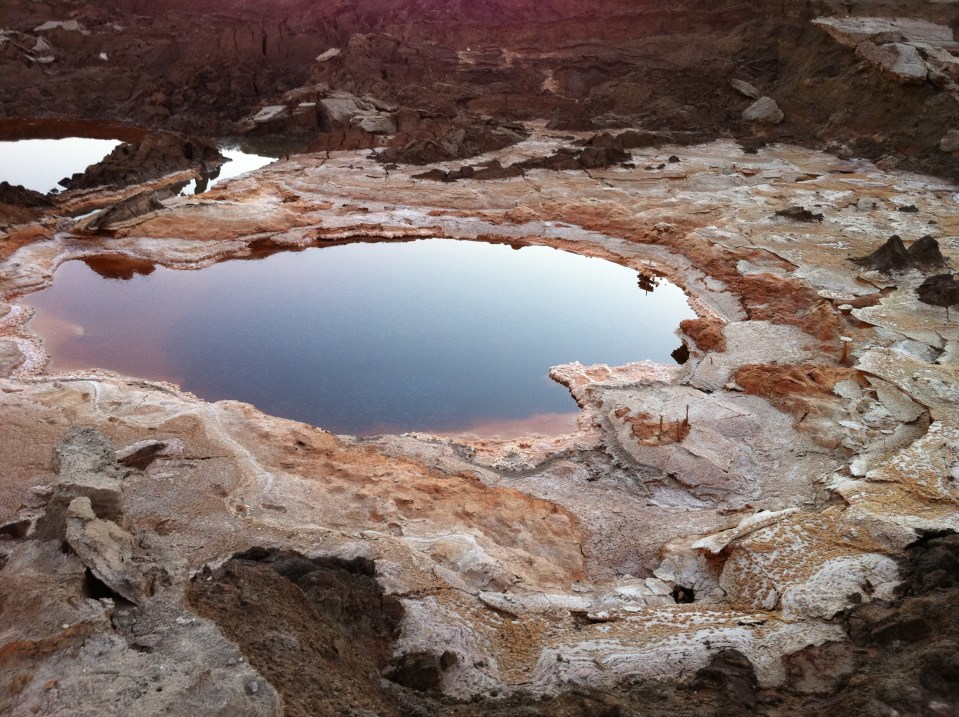
Two weeks ago I posted a photo of a blue-green pool in Nahal Saar on the Golan. This photo of a water filled sinkhole by the Dead Sea was taken across from Ein Gedi with my iPhone (that’s the camera I had with me).

Sinkhole pool
You can click on the image for a larger view (which may take some time to load depending on your Internet connection). Please share this post with your friends by clicking on the icons at the end of this message.

Sinkholes along the Dead Sea are a serious ecological problem, check out my post at https://israeltours.wordpress.com/2009/10/28/dead-sea/.

Photographs on this website are © Shmuel Browns (unless marked otherwise) – if you are interested in purchasing one of my photos or using one of my photos for your own project please contact me.

Photo of the Week – Nahal Darga

WordPress has a Weekly Photo Challenge and this week the subject is BIG so I’m submitting a photo. BIG is not what comes to mind when you think of Israel, the country is very small, about the size of New Jersey and whether it is a lake, a river, a canyon or a mountain it’s not very BIG. The photo was taken on a hike – the young man under the BIG rock is our youngest, AdirChai. If you think you know where the photo was taken leave a comment below; at the end of the week I’ll post the answer so check back.

In the winter during the rainy season, there are flash floods in desert areas and the water is able to move BIG stones which can then get lodged between the walls of the canyon. The water fills depressions in the floor of the canyon so on this hike you have to swim across pools of water. Make sure to put your camera (I brought along a smaller one), car key and cell phone in a watertight container so they won’t get wet. Please share this post with your friends by clicking on the icons at the end of this message.

The technical details – the photo was taken with a Lumix (point and shoot) digital camera on March 26 (ISO 80, 9.7mm, F3.9 at 1/500 sec).

Photographs on this website are © Shmuel Browns (unless marked otherwise) – if you are interested in purchasing one of my photos or using one of my photos for your own project please contact me.