Category Archives: Tomb

Jerusalem Underground

Jerusalem and the Old City are great places to walk around but there’s also a Jerusalem underground (not to be confused with the light rail :-) ). Remember that in archaeological sites as you go to lower layers you go back in history, for example, under Damascus Gate from the Ottoman period is the Roman gate to the city from the time of Hadrian. Not far is Zedekiah’s Cave, also known as Solomon’s Quarries, a 5-acre (20,000 m2) underground meleke limestone quarry that runs under the Muslim Quarter as far as the Sisters of Zion. According to legend, King Zedekiah escaped from the Chaldeans who had surrounded Jerusalem by fleeing through the cave all the way to the plains of Jericho.

If you like caves, there is also a very fine stalactite cave not far from Jerusalem, Soreq cave in the Avshalom Reserve that you can visit about 2 km from Beit Shemesh. Since you will be nearby this would be a good opportunity to visit Tel Maresha and explore underground, the caves, columbarium and tombs from the Hellenistic period.

Herodium has a series of tunnels dug in the mountain during the Great Revolt and then extended during the Bar Kochba Revolt. Near Herodium in Nahal Tekoa the Haritoun Cave is great for spelunking.

In the Jewish Quarter go underground to the Wohl Archaeological museum to see the remains of mansions from the Second Temple period. You can also take a guided tour of the Western Wall tunnel (you must reserve places in advance) that uncovers the part of the western support wall of the Temple Mount built by Herod that runs under the Muslim Quarter. Afterwards walk down the Via Dolorosa and enter the Sisters of Zion to see the Lithostratus and Struthion pool, from the time of Hadrian.

If you like tunnels, exit Dung gate and walk over to the City of David. There you can walk underground in the passageway from the Canaanite period – then you have 2 options: 1) walk the Canaanite tunnel (dry) and exit in Area E park 2) wade through Hezekiah’s tunnel (wet) and exit at the Byzantine Siloam pool. This site contains a lot of history and archaeology and is worth doing with a knowledgeable guide.

Theses are some ideas for exploring underground Jerusalem. Contact me if you would like me to take you exploring.
Herod’s Mausoleum and Sarcophagus at Herodium

So they went eight furlongs to Herodium; for there by his own command he was to be buried. And thus did Herod end his life.

Josephus, Antiquities of the Jews

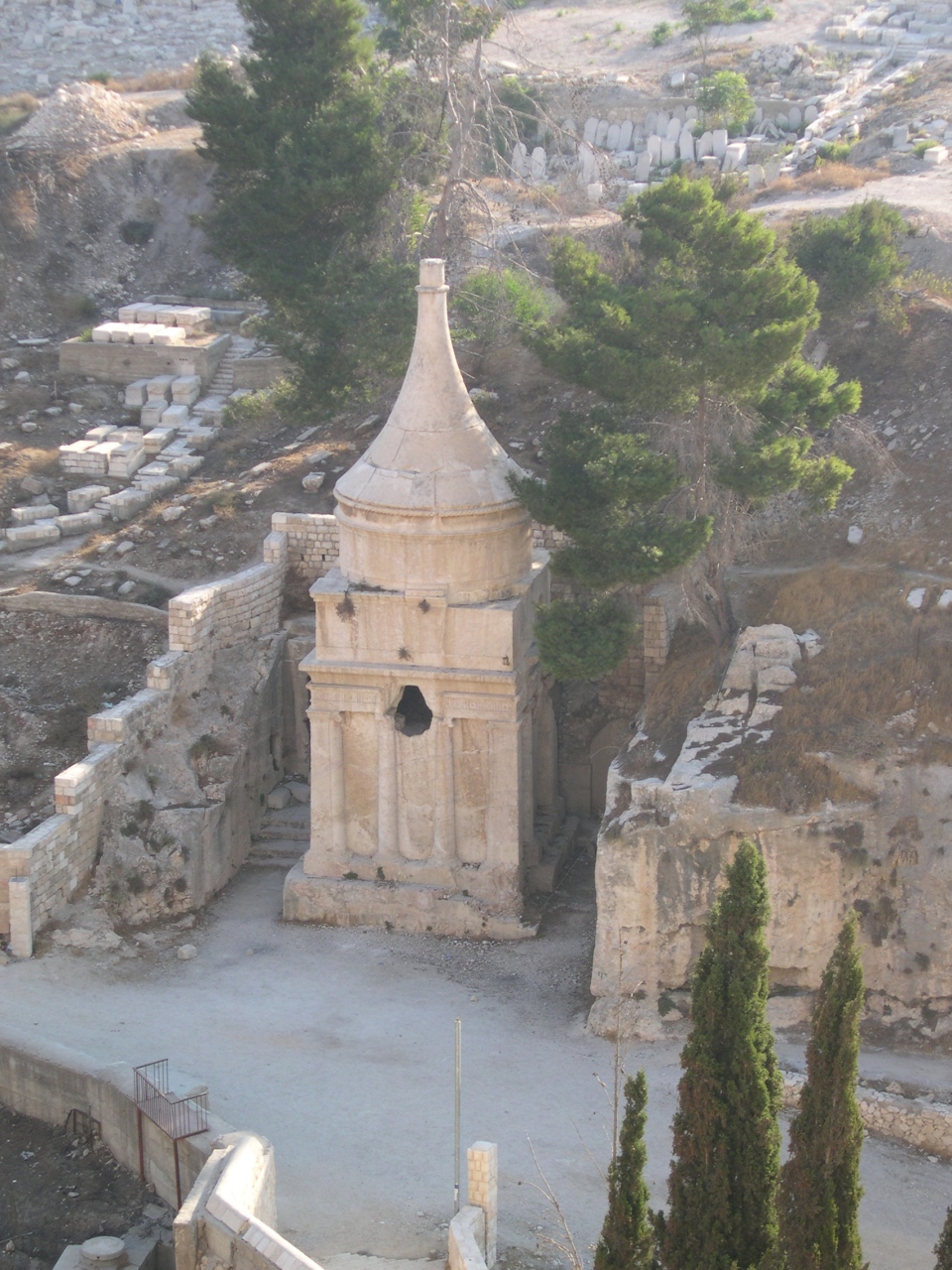
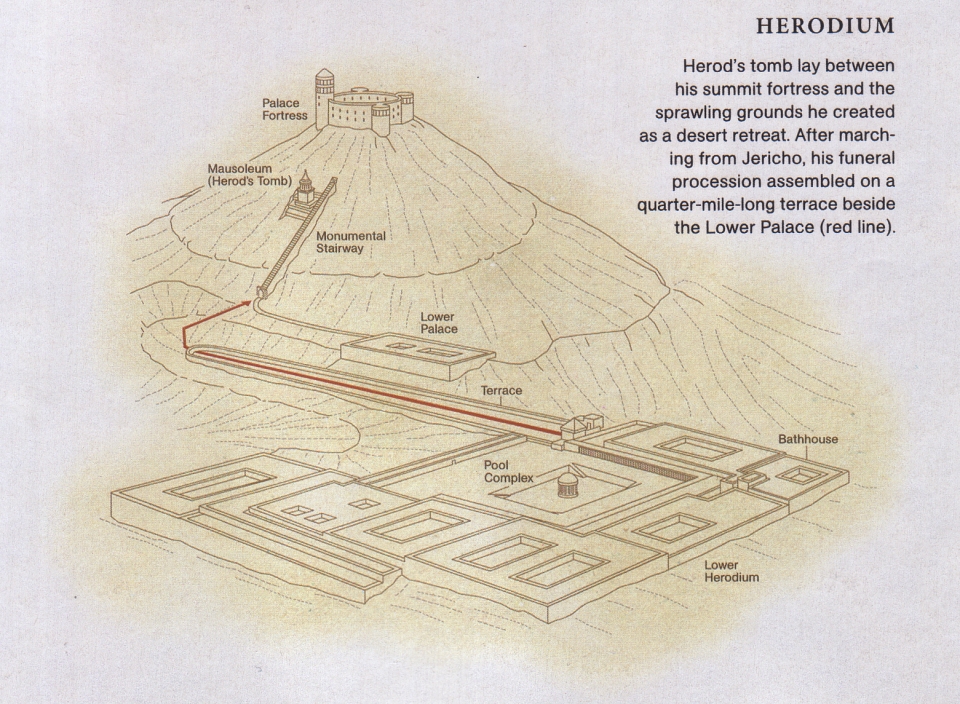
In 1972 Professor Ehud Netzer began his excavations at Lower Herodium. In May 2007 after 35 years of looking for King Herod’s tomb at Herodium, Netzer announced at a press conference that he had uncovered the base of Herod’s mausoleum halfway up the manmade mountain, on the northeast side. Netzer, both an architect and archaeologist and an expert in the Herodian period, has drawn up his reconstruction of the mausoleum, a monument 25 meters high, with a cube-shaped first floor, a cylindrical second floor and a soaring, peaked roof. Note that the photo below is of Yad Avshalom in the Kidron valley – it is an impressive nefesh from the same period so it’s likely that Herod’s monument could have looked similar.

Yad Avshaom, tomb from Second Temple period in the Kidron valley, Jerusalem

Yad Avshalom, tomb from Second Temple period in the Kidron valley, Jerusalem

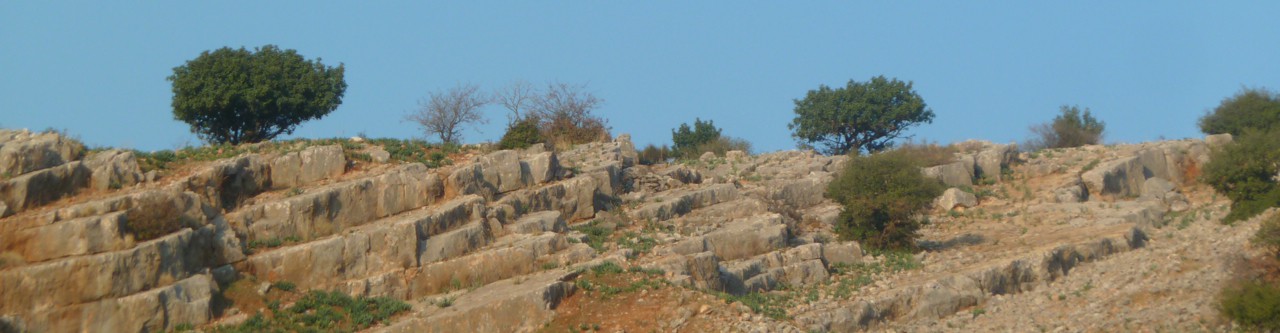
herodium

National Geographic, December 2008

I’d be delighted to guide you at the site, including the palace complex at the foot of the hill excavated by Netzer in the 1970s and the palace-fortress at the top (in the archaeological park) built by Herod. Although the tomb area is not yet open to the public, they’ve made a temporary path that takes you close, to a lookout of the remains of the mausoleum. Excavations are continuing.

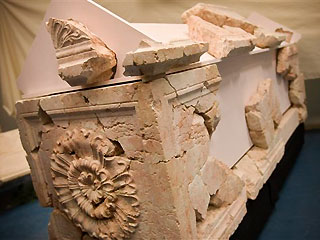
Discovered was an ornate, pink limestone sarcophagus that had been smashed to pieces in antiquity that Netzer claims was King Herod’s.

herods-sarcophagus

Photo: AP (from the Internet)

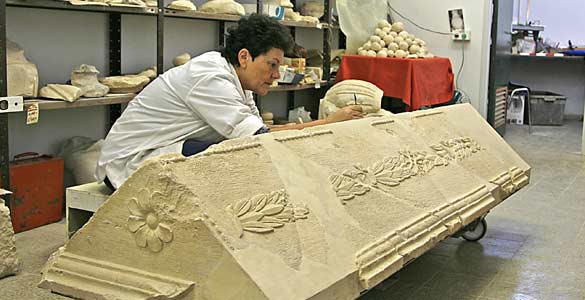
Later two other sarcophagi were discovered that Netzer claims belong to other members of Herod’s family.

herodium-sarcophagus

Photo: Gabi Laron (from Internet)

Herodium is unique among the sites like Masada, Caesarea, Cypros associated with Herod – it was an entire palace complex originally built by Herod in the desert, the only site to bear his name and where he decided to be buried. Herodium gives us a key to understanding Herod and Jewish life during the Second Temple period.

For additional information about Herodium check my blog post at https://israeltours.wordpress.com/2008/06/07/tour-herodium-herod-tomb/

For a sample tour that I do of Herodium check https://israeltours.wordpress.com/tours/herodium/