Category Archives: Museum

Immigration to Palestine and Israel

Sarig and Rabin

Sarig and Rabin

Under Britain’s White Paper of 1939 Jewish entry to Palestine was restricted to 10,000 immigrants a year. Aliyah Bet was the code name given to the clandestine immigration of Jews to Palestine under the British Mandate that operated from 1934-1948. In total, over 100,000 people attempted to illegally enter Palestine, using 120 ships that made 142 voyages. More than half were stopped by Britain’s Royal Navy, only a few thousand refugees successfully got through the blockade and entered Palestine. Originally the British held the illegal immigrants at the Atlit detention camp built in 1938 just south of Haifa. The Atlit camp was surrounded by three barbed wire fences and guarded by armed sentries in six watch towers and held men, women and children. The camp is eerily reminiscent of the Nazi concentration camps.

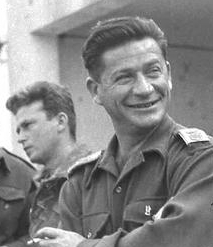
On the night of October 9, 1945 Palmach special forces led by Nachum Sarig, later commander of the Negev Brigade, and a youthful Yitzhak Rabin broke into the camp and led the 208 detainees on foot to freedom. After that the British sent the would-be immigrants to internment camps in Cyprus.

My parents entered Palestine on May 7, 1947 ostensibly as visitors but intending to make aliya; the British allowed them entry as they were Canadians and hence, British subjects.

Captured off Haifa by the HMS Pelican on April 26, 1948 after fierce resistance which left a number of people injured, the Nakhson with 553 passengers on board was the last ship stopped by the British. On the morning of May 15, 1948 the British left Palestine.

There is a story that on Saturday, May 15, 1948 Ben Gurion went to the port at Tel Aviv to personally meet the first boat with immigrants to the newly declared State of Israel. The question is “What was the name of the ship?”

This is one account  that I found, submitted to a newsgroup, http://newsgroups.derkeiler.com/Archive/Soc/soc.genealogy.jewish/2008-12/msg00266.html by Rony Golan.

I believe that the first legal boat of immigrants to the State of Israel was the Orchid (“Orchidea”) that left Italy from Gulf Gaeta on May 8, 1948 and was supposed to arrive to the shores of Palestine in mid May 1948. The British discovered the ship while at sea. The boat received a radio transmission from an Israeli radio operator of the Gideon network (used by the Mossad l’Aliya Bet) to stay a day at sea and to change its name to “Medinat Yisrael” (Hebrew of the State of Israel). Hence, the ship entered the port of Tel Aviv on Shabbat May 15, 1948, while the State was proclaimed on Friday.

Some sources say that the ship arrived to Haifa, but this is incorrect, since Haifa port was proclaimed a closed military zone, as the British had not finished withdrawing their troops from Palestine.

There are photos of the arrival of the ship both in the Central Zionist archives in Jerusalem as well as in USHMM in Washington, D.C..

More details and a photograph may be found at the Pal-Yam site (although not all the details are the same as what I have provided): http://www.palyam.org/Hahapala/Teur_haflagot/hf_Medinat_Israel

The source of the above information is my father, who was a crew member of this ship.

Rony Golan
Israel

Medinat Yisrael

The account on the Pal-Yam site which I’ve translated from the Hebrew is somewhat different:

The British discovered the ships (Medinat Yisrael with 243 passengers and LaNitzachon with 189 passengers) that had left Brindisi, Italy on May 8th on May 15th near Tel Aviv but did not intercept them as they had already announced the end of the British Mandate and were departing the country. The next morning the two boats reached the port but were forced to keep away from the shore because of bombing by Egyptian planes. The following day, May 17th the Jewish immigrants disembarked openly on the shore of Tel Aviv in the sovereign State of Israel.
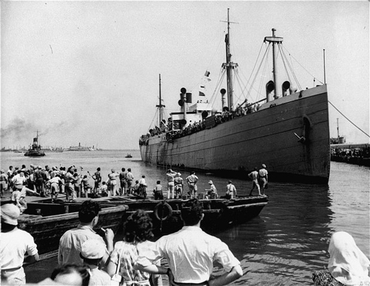
Pan York ship

Photo from the Holocaust Museum in Washington at http://www.ushmm.org/wlc/en/media_ph.php?MediaId=729

There is record of a ship “Pan-York,” carrying Jewish refugees from southern Europe to the newly established State of Israel, via Cyprus, docking at Haifa on July 9, 1948.

In 1987 Atlit was declared a National heritage site. It’s a site very worth visiting to better understand the period that lead up to the establishment of the State of Israel.

Technology at Israel Museums

The Google Art Project spent months mapping the Israel Museum with cameras mounted atop bicycles and photographing 520 objects, artifacts and artwork from the Museum’s collection. The outcome is an online compilation of high-resolution images accessible over the Internet and a virtual tour of the museum using Google’s Street technology. The Israel Museum was among 151 museums in 40 countries taking part in the second phase of the project. Currently more than 30,000 high-resolution objects from museums around the world are available for viewing and items can be found by various keywords, location, artist, collections, etc.

Archaeological items included are the only dedicatory inscription mentioning Pontius Pilate, the procurator of Judea in the time of Jesus found at Caesarea, the oldest Biblical text, Priestly Blessing from Numbers 6:23 on silver amulet found in tomb at Ketef Hinnom in Jerusalem (you can read my blog post at https://israeltours.wordpress.com/2011/03/16/ketef-hinnom-silver-amulet/ ) and Theodotus synagogue inscription in Greek found near the Temple Mount. There is also artwork, for example, the triptych Gates of Jerusalem by Mordecai Ardon (you can read my blog post on the Ardon Windows at https://israeltours.wordpress.com/2011/02/09/ardon-windows-isaiah-vision-peace/).

The Google Art Project creates images larger than 1 billion pixels in size, the zoom-in feature allows viewers to get inside cracks in the parchment and other details that are not visible to the naked eye – a really fascinating collection of treasures worth exploring. Kudos to the Israel Museum for making these images available.

The project follows last year’s collaboration with Google to make the famed Dead Sea Scrolls accessible in high resolution on the Internet. When announced the site drew a million viewers within the first few days. Five of the Scrolls, including the Great Isaiah Scroll 1QIsaone of the original seven Dead Sea Scrolls discovered in Qumran in 1947 are viewable at http://dss.collections.imj.org.il/isaiah.

Google has also partnered with Israel’s Holocaust memorial, Yad Vashem, to make its photographs and documents searchable on the Internet.

“Mendel takes out his camera. No more flowers, clouds, natures, stills or landscapes. Amid the horror all around him he has found his destiny: to photograph and leave behind a testimony for all generations about the great tragedy unfolding before his eyes.”

Mendel Grossman’s photos constitute a small portion of the historical photos in Yad Vashem’s collection. The project will facilitate preservation of and access to the world’s largest historical collection on the Holocaust. Google implemented experimental optical character recognition (OCR) technology to carry out this project, making previously difficult to locate documents now searchable and discoverable online. As of today, 130,000 photos from Yad Vashem’s archive, the largest of its kind in the world, are viewable in full resolution online. The collections are visible at http://collections.yadvashem.org/photosarchive/en-us/photos.html. This is a first step towards bringing the vast Yad Vashem archive online over time.

Yad Vashem has also launched a YouTube channel to showcase a series of videos of Holocaust survivor testimonials. The YouTube channel is available at www.youtube.com/yadvashem. There is also a YouTube channel with more than 400 hours of original video footage from the landmark 1961 Jerusalem trial of Nazi mastermind Adolf Eichmann at http://www.youtube.com/user/EichmannTrialEN.

If you know of other technology projects that are being developed in Israel please share by leaving a comment about them. If you peruse the images leave a comment here of your impression.

“Top Ten” Jerusalem Sites

The first 3 must see sites in Jerusalem are associated with the 3 monotheistic religions that make up Jerusalem’s religious fabric:

1) the Western wall (Judaism) built by Herod 2000 years ago during his renovation of the Second Temple,

2) the Church of the Holy Sepulcher (Christianity) built originally by Emperor Constantine and extensively rebuilt by the Crusaders in 1149 and

3) the Haram el Sharif, with the Dome of the Rock and Al Aqsa mosque (Islam) built originally in the 8th century by the Umayyad caliph Abd al-Malik.

Here is my personal list of 7 other sites not to be missed. Add a comment to suggest sites you think should be in the “Top Ten”.

4) For a unique view of Jerusalem, take the Ramparts Walk starting at Jaffa Gate where you actually walk on the stone walls built in 1540 by the Ottoman Turkish sultan, Suleiman the Magnificent for a birds eye view of the city. Check out the 8 gates in the city walls, including the remains of the Roman gate below today’s Damascus gate.

5) Visit the Church of Santa Anna in the White Father’s compound, the ruins of a Byzantine church and a Crusader chapel resting on a dike between two pools (there’s no water in them today). This is where Jesus performed one of the two miracles he did in Jerusalem, curing the cripple of 38 years (John 5). There is also a complete Crusader church with incredible acoustics (try it out by singing Amazing Grace or other liturgical melody).

6) Visit the archaeological park at the Davidson Center and see the massive stones that were hurled down onto the Herodian street by the Romans and the steps to the Temple Mount where Jesus would have walked, the Umayyad palaces from the Early Arab period and Byzantine and Crusader ruins.

7) Reserve a Western Wall Tunnel tour and see a model of King Herod’s Second Temple (there is also a model up on the roof of the Aish HaTorah building and a model of Jerusalem in 66CE including the Temple on the grounds of the Israel Museum) and walk 488 meters under the city along the Western Wall on the Herodian street to the spot closest to the Holy of Holies, the holiest site to Judaism.

8) Tour the ancient City of David to understand the importance of water in the history of Jerusalem. Bring “water” shoes and a flashlight and walk 45 minutes through Hezekiah’s Tunnel a manmade canyon cut in the limestone with water up to your knees – quite an experience. The tunnel brought the water of the Gihon Spring to the Siloam Pool, inside the walls of the city. This is where Jesus performed the second miracle in Jerusalem, curing the blind man (John 9).

9) After extensive renovations the new Israel Museum has been open a year and one million people have visited – the Archaeology wing has been completely redone, the Ethnography section has been expanded and the Art gallery includes a new section on Israeli art. The museum includes the Shrine of the Book, where the Dead Sea Scrolls and other artifacts from Qumran are on display. Beside it is the 1:50 model of Jerusalem in 66 CE just before the Jewish Revolt against Rome which led to the destruction of the Second Temple and Jerusalem by TItus. Walk around and enjoy the Billy Rose sculpture garden designed by the Japanese-American sculptor Isamu Noguchi.

10) Take a guided tour of the Mahane Yehuda market or participate in a scavenger hunt. More than an outdoor vegetable market, it is a great place to walk around to get a feel for the characters and local cuisines of Jerusalem. You can request a detailed map of the market at https://israeltours.wordpress.com/2008/05/31/map-mahane-yehuda-market/

Moshe Castel and Israel Art

In Maale Adumim facing the panoramic view of the hills of Jerusalem sits a building that houses the art of Israeli artist Moshe Castel. Castel himself chose the site located between Jerusalem and the Judean desert symbolizing Israel’s past and future and his own connection to Jerusalem and the land of Israel and its history. (http://www.castelmuseum.com) The Israeli architect David Resnick designed the building with input from Castel. Resnick is well known for other architectural landmarks, Yad Kennedy, the “Mushroom” synagogue at Hebrew University, Givat Ram and the Mormon university in Jerusalem.

Moshe Castel (1909-1991) was born in Jerusalem to a Sephardi family from Castile with roots that go back to the expulsion from Spain in 1492. At the age of 13 he began to study at the recently opened Bezalel Art School where he learned the rudiments of painting and painted locally inspired landscapes and images. In 1927 at age 17 he traveled to Paris to study at the Academie Julian. Quickly he exchanged his hat and black tie for vagabond clothing and hung out with his fellow artists in the cafes. He rented a small apartment above the sculptor Giacomettti and joined the circle of great artists, Picasso, Matisse, Miro, Soutine and Chagall.

At the Louvre, he sat before the works of the Old Masters and copied their paintings, paying attention to the technique of layering the paint on the canvas. There Castel learned “That art is not symbolic, but rather material, the material is the main thing, the way the paint is placed, the way the layers are placed on the picture, this is the most essential thing.”

In the 1940s he returned to Israel, settled in the Artist Colony of Tzfat and established the New Horizons group of artists that broke way from the established Artists’ Union to focus on universal artistic elements and a more abstract European style. You can visit the house he lived in, newly renovated as a gallery.

He found basalt rocks on his hikes through the Galilee, in the area of Korazim, and began to use them as raw material – the stones were crushed, mixed with a bonding agent and pigment and applied in a thick coat with a palate knife. This material was applied as the textured background for scrolls, letters, figures that became his signature and unique artwork.

There are three other museums in Israel that are dedicated to the works of a single artist. The former residence of the Israeli painter Reuven Rubin at 14 Bialik Street in the heart of Tel Aviv has been made into a museum that displays his paintings from the different periods in his artistic development and preserves the artist’s studio. There is also an audio-visual slide show on Rubin’s life and work. (http://www.rubinmuseum.org.il/home.asp)

The Nahum Gutman Museum was opened to the public at the reconstructed Writers’ House at 21 Rokach Street in Neve Zedek in 1998 and encompasses works in oil, gouache and watercolor, as well as several thousand drawings and illustrations. (http://www.gutmanmuseum.co.il/Default.aspx)

The Janco Dada Museum in the center of the Ein Hod Artists’ Village south of Haifa exhibits the prolific work of Marcel Janco chronologically from his early works as a boy of fifteen. (http://www.jancodada.co.il/en/ar_01.php)

For other museums in Israel check out http://ilmuseums.com/

“Top Ten” Biblical Archaeological Discoveries

Several months ago Tim Kimberley of the Parchment and Pen posted his “Top Ten” list of biblical discoveries in archaeology. I found the link via Todd Bolen’s Bibleplaces blog who wrote that the list corresponds closely to what he would have suggested. So drumroll please, here is the list in reverse order of importance:

10. Sennacherib’s Siege Reliefs of Lachish

9. Black Obelisk of Jehu’s Tribute to Shalmaneser III

8. Caiaphas Ossuary

7. Hezekiah’s Tunnel

6. Pontius Pilate Inscription

5. The Crucified Man (nail through heel)

4. Ketef Hinnom Silver Amulet Scroll (Priestly Blessing)

3. Jericho (Tel es-Sultan)

2. Tel Dan Stele with House of David

1. Dead Sea Scrolls

To see most of these finds, specifically #1, 2, 4, 5, 6, and 8 only requires a visit to the Israel Museum in Jerusalem. The British Museum holds #9 and 10 but there is an excellent replica of #10, Sennacherib’s Siege Reliefs at the Israel Museum. You can experience #7 Hezekiah’s Tunnel by visiting the City of David archaeological park. Just last week I took a family, we started at the sifting project at Emeq Tsurim, walked along the Jerusalem trail to the Kidron to the City of David and walked Hezekiah’s Tunnel – everyone had a great time. Site #3 Jericho is off limits for a lot of Israeli guides but I am authorized to take tourists to Jericho – there is a lot of discussion about whether the archaeology supports the Biblical account.

One of the things Tim talks about is provenance, where the artifact was found. Besides seeing the objects at the museum, this is where you would have to go to see where they were discovered:

#1 Qumran, 2 Tel Dan, 3 Jericho, 4 Ketef Hinnom, 5 Givat haMivtar, a suburb north of Jerusalem, 6 Caesarea, 7 City of David, 8 Peace Forest at tayelet/promenade, 9 and 10 you’d have to go to Iraq; you can visit Tel Lachish off of highway 3415 between Jerusalem and Tel Aviv.

You might want to add these places to your itinerary on your next trip to Israel, you’ll learn a lot. I can take you to and guide these sites except for Iraq.

Acre Prison Break

“The first encounter with Acre Prison was terrifying. With your hands and feet shackled, you get off the truck next to a deep moat that reminds you of images of medieval castles that you may have seen in the movies. A fortress wall of seemingly infinite height towers before you. A narrow bridge leads to an opening in the wall. This is the bridge to a place that none has ever escaped from…”

Mendel Malatzky, Irgun prisoner, 1947

The fortress was built by the Bedouin sheikh Daher el Omar in the mid 18th century on the ruins of the Crusader citadel and was further fortified by al Jazzar. Under the British mandate, the fortress served as a jail, where Jewish underground fighters were imprisoned and where 8 Irgun members went to their death on the gallows. Acre was the most secure prison in the country.

Despite this, the Irgun looked for a way to enable their escape. The break came when an Arab inmate mentioned that he had heard women’s voices while working in the oil storeroom (in the south wing of the prison). This was reported to Eitan Livni (father of Tzipi Livni), the most senior Irgun prisoner, who deduced that the south wall of the prison bordered on a street or alley of Old Akko. The information was conveyed to the Irgun general headquarters where they concocted a plan to exploit this weakness for a break-in.

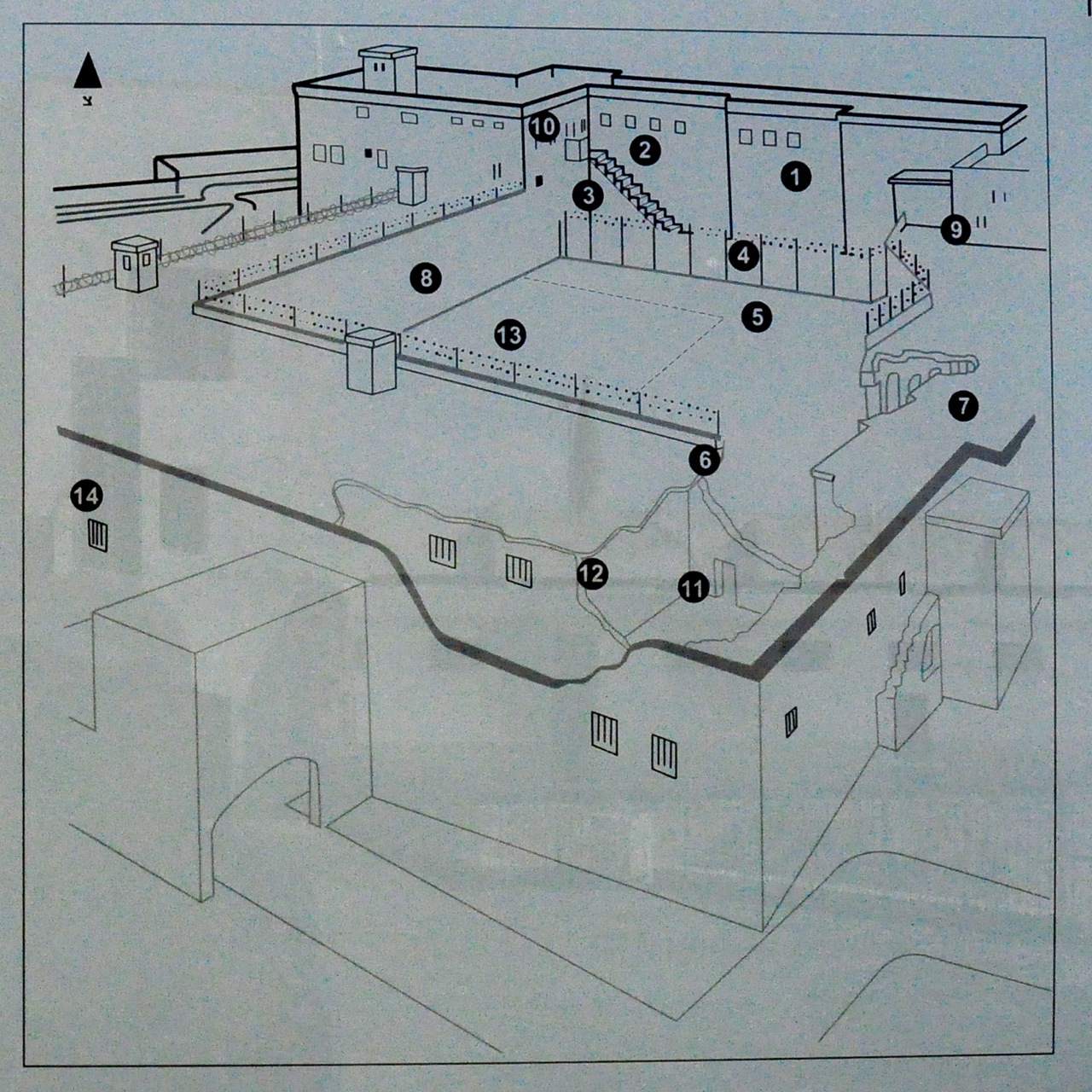
  1. Administration Wing
  2. Hospital
  3. Gallows and Memorial Floor
  4. Visitors’ Wall
  5. Prison Yard
  6. Arab Prisoners’ Wing
  7. Jewish Prisoners’ Wing
  8. Service Wing
  9. Workshops
  10. Jabotinsky Wing
  11. Iron gates that were broken through during the break-in
  12. Archaeological excavations
  13. Prison yard
  14. Break-in point

The logistic preparations were complicated: the Irgun had to purchase a truck, a jeep, two military pickup trucks and make them look like British army vehicles, British army uniforms were acquired and the men were given “English” haircuts. They set out in the convoy of vehicles for Akko to get into position, the two military vans entered the market, while the 3 ton military truck waited at the gate.

The jailbreak was planned for May 4th, 1947 when prisoners would be exercising in the yard to occupy the guards and the cells would be open, the same day the United Nations General Assembly convened to discuss the Palestine issue.

A military engineering unit of the Irgun made its way to the hamam, the Turkish bath house, and pretending to be telephone technicians used ladders to climb onto the roof with the explosives and placed them against the window bars. At 4:22pm there was a loud explosion that blew off the windows and made a hole in the southern wall.

Forty-one prisoners ran from their cells and using explosives that had been smuggled into the prison blew off the iron gates closing the corridors to reach the place of the break-in. From there they went out onto the roof of the hamam and into the alleyways of Old Akko.

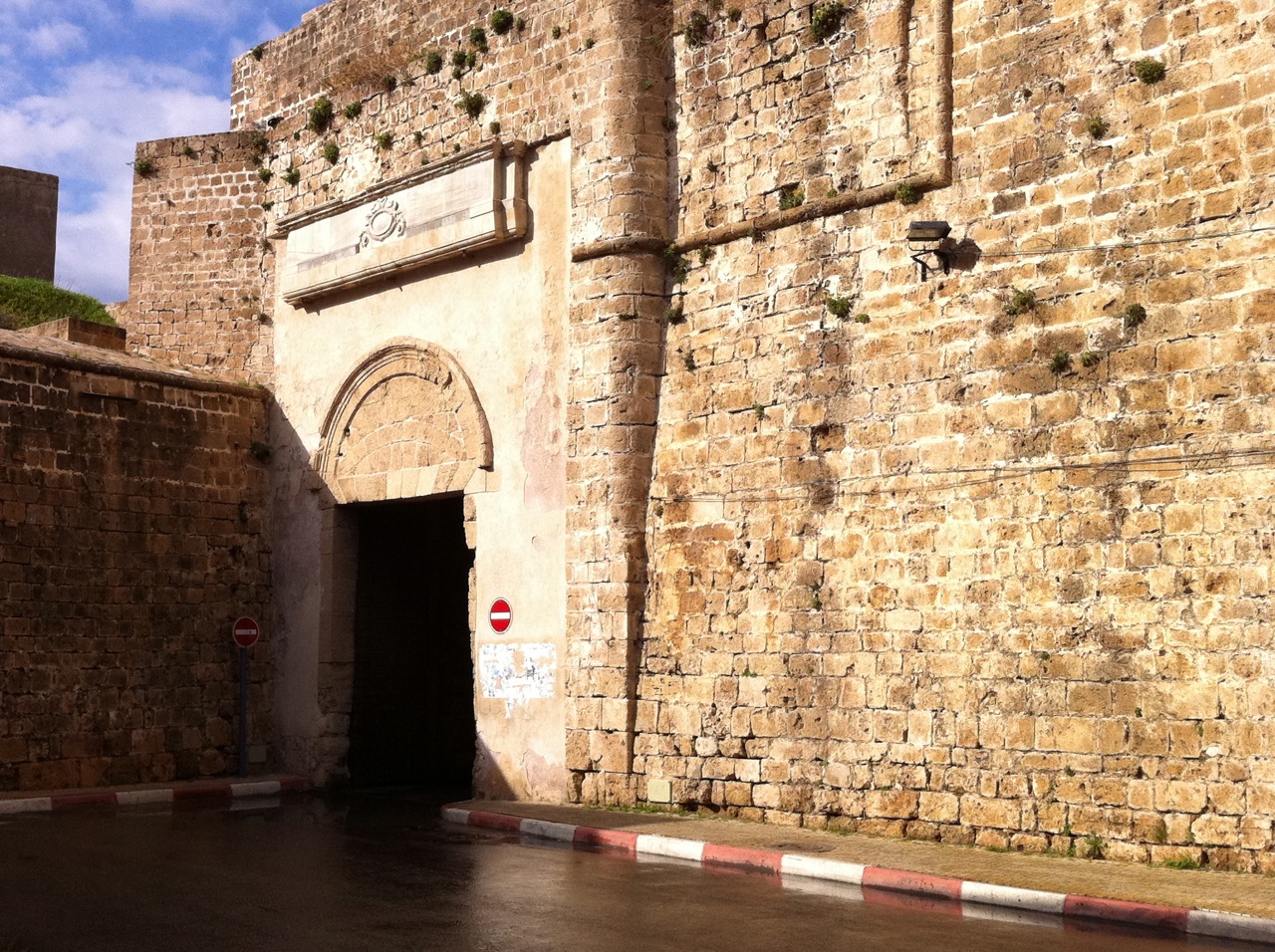
Some jumped into the van, others ran through the streets of the market to the Land Gate where the truck was waiting.

Of 41 escapees (30 Irgun, 11 Lehi), 27 inmates succeeded in escaping (20 Irgun,7 Lehi), 6 escapees and 3 fighters were killed and 8, some of them injured were caught and returned to jail; also arrested were five of the attackers. The Arab prisoners took advantage of the commotion and 182 of them escaped.

The action was described by foreign journalists as “the greatest jail break in history.” The New York Herald Tribune wrote that the underground had carried out “an ambitious mission, their most challenging so far, in perfect fashion”, while in the House of Commons, Oliver Stanley asked what action His Majesty’s Government was planning to take “in light of the events at Acre prison which had reduced British prestige to a nadir”.

Three out of the five men captured (Avshalom Haviv, Meir Nakar and Yaakov Weiss) were sentenced to death and died on the gallows in the Acre prison. In retaliation, the Irgun kidnapped two British sergeants, Clifford Martin and Mervyn Paice. When the British did not relent and executed the Irgun men, the Irgun hanged the two sergeants.

Today the Acre Prison is a museum where you can walk through the different cells, offices and workshops of the prison and through a series of dramatic videos experience what it was like. The tour ends at the room with the gallows.

From the prison you can visit the hamam and and learn about the tradition of the Turkish bath and some history of Akko. There is much to see and I’d be happy to take you exploring Akko.